












Fast, precise, and affordable
Acoustic panel laser cutting
Info on acoustic panels
What's more fun than designing and laser cutting your own acoustic panel? Order from a single piece, or create a design with a series of tiles, for example. But which material is best for your acoustic panels? And what should you look out for when designing? Read on, we'll explain.
Materials for acoustic panels
Filters
6 products
Material tip
New material: acoustic PET felt
PET felt is made from recycled PET bottles. In addition to being color and wear resistant, it has excellent acoustic properties. Namely, it is sound-damping and sound-absorbing. In addition, it is ...
Which material should I choose for my acoustic panel?
Want to reduce noise pollution in the office? Or reduce echo in a large room? A panel or object for acoustic insulation can be easily laser cut.
PET Felt
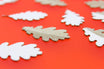
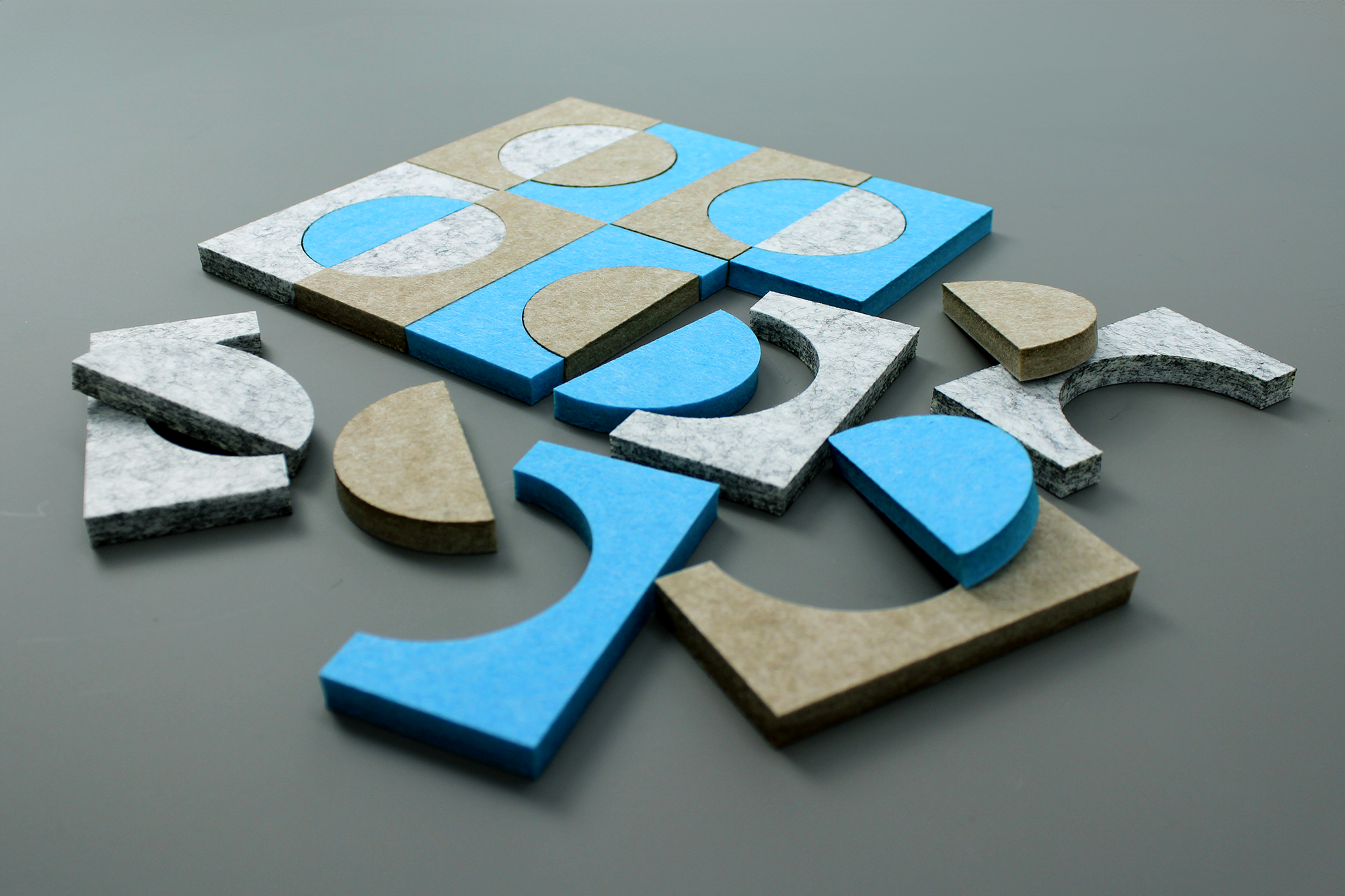
The first choice for acoustic panels is PET felt. These sheets, made from 70% recycled PET, dampen sound waves; their porous surface absorbs and breaks sound. This reduces the impact of loud noise and reverberation.
PET felt is available in many colors, from cheerful to neutral tones. Many combinations are possible, and there's a suitable option for every design.
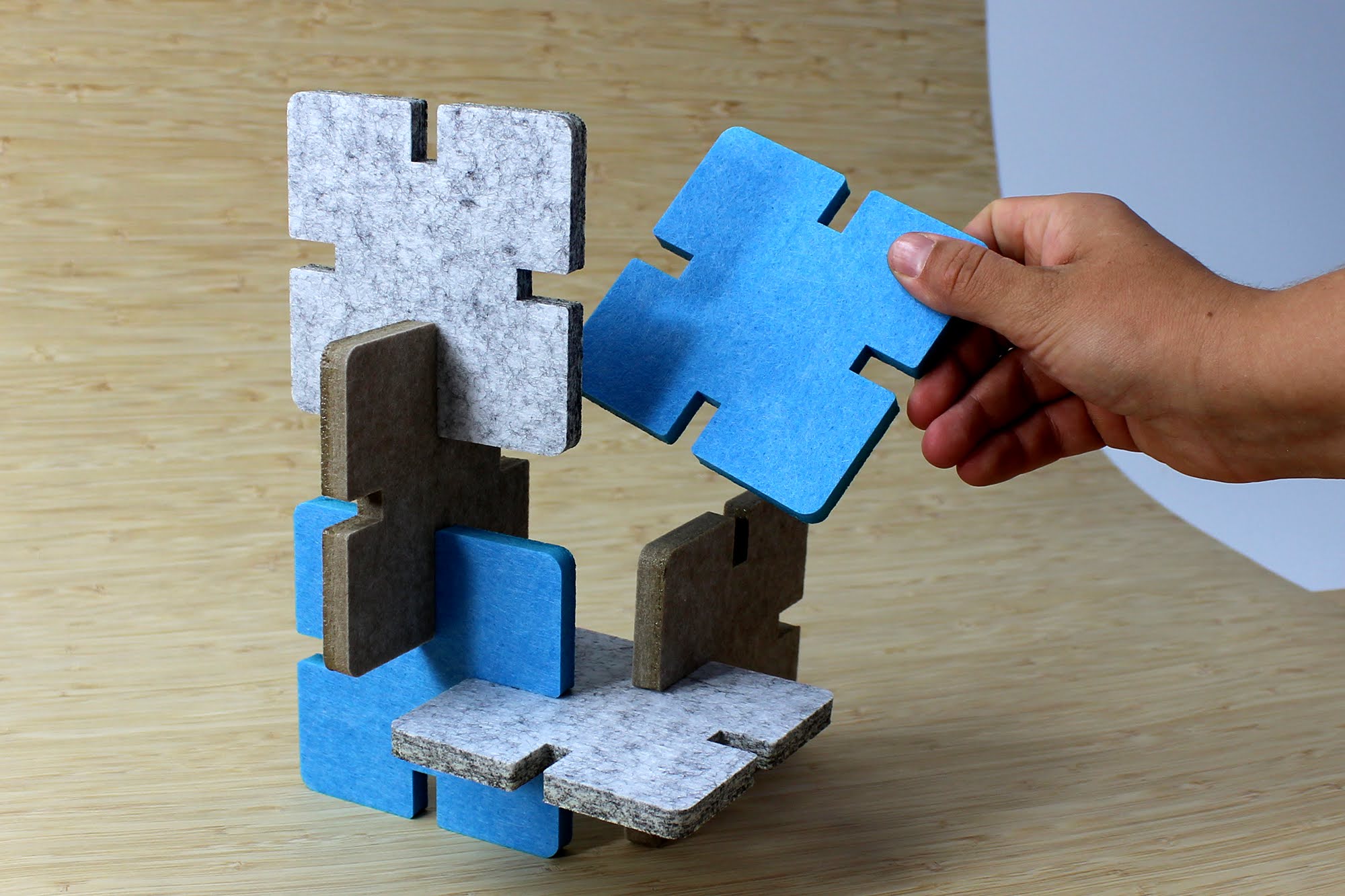
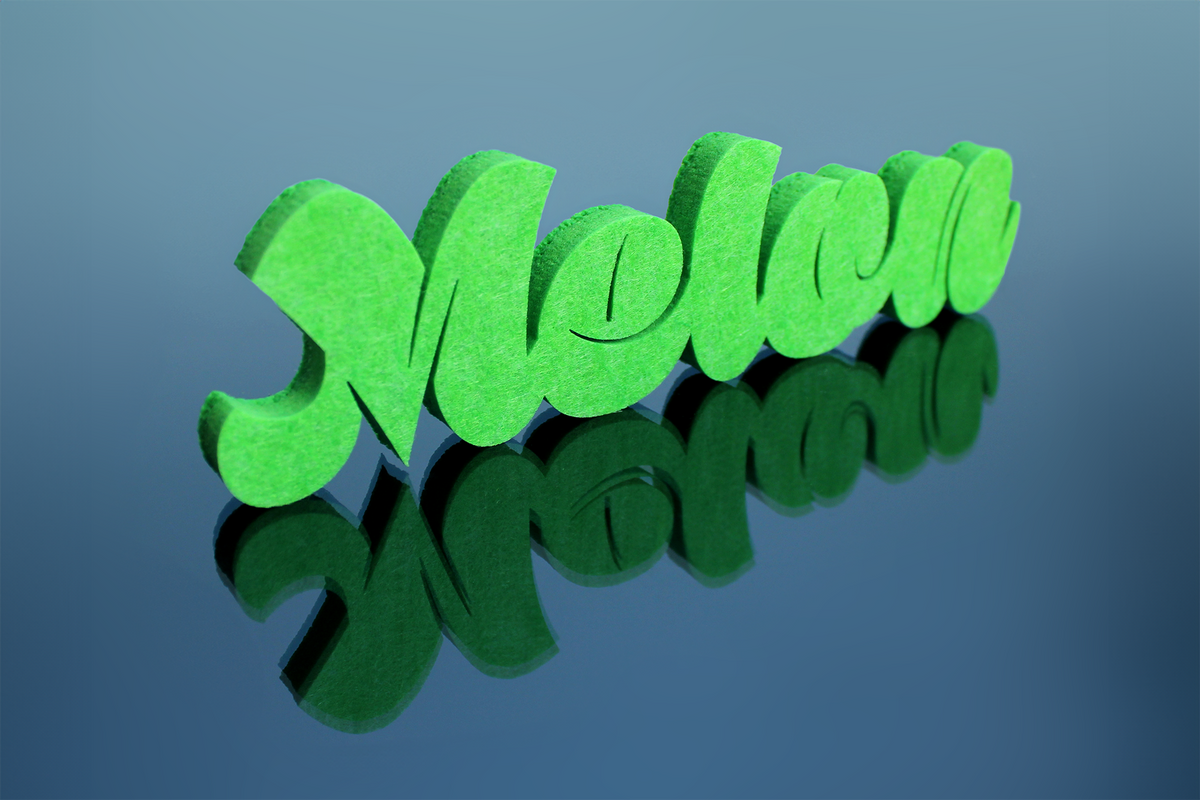
For example, you can create PET felt acoustic panels in the shape of your logo. You can also create wall coverings or cut out freestanding objects.
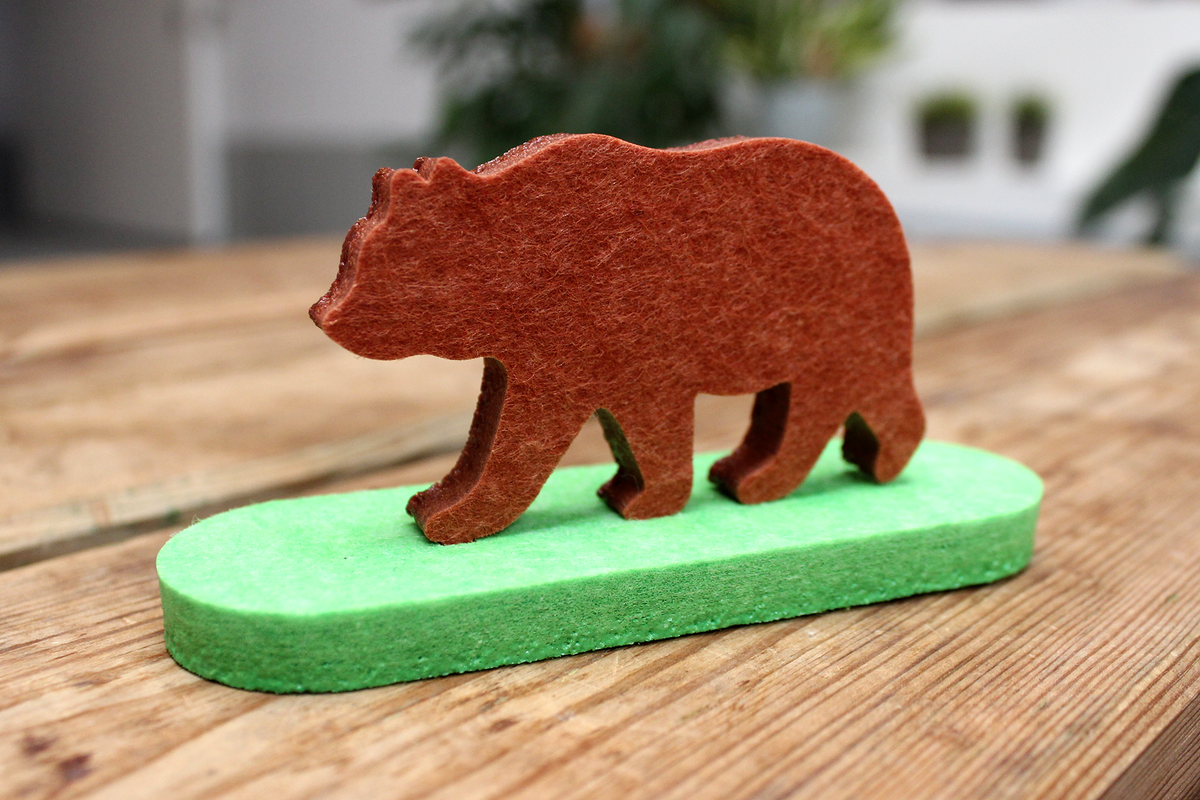
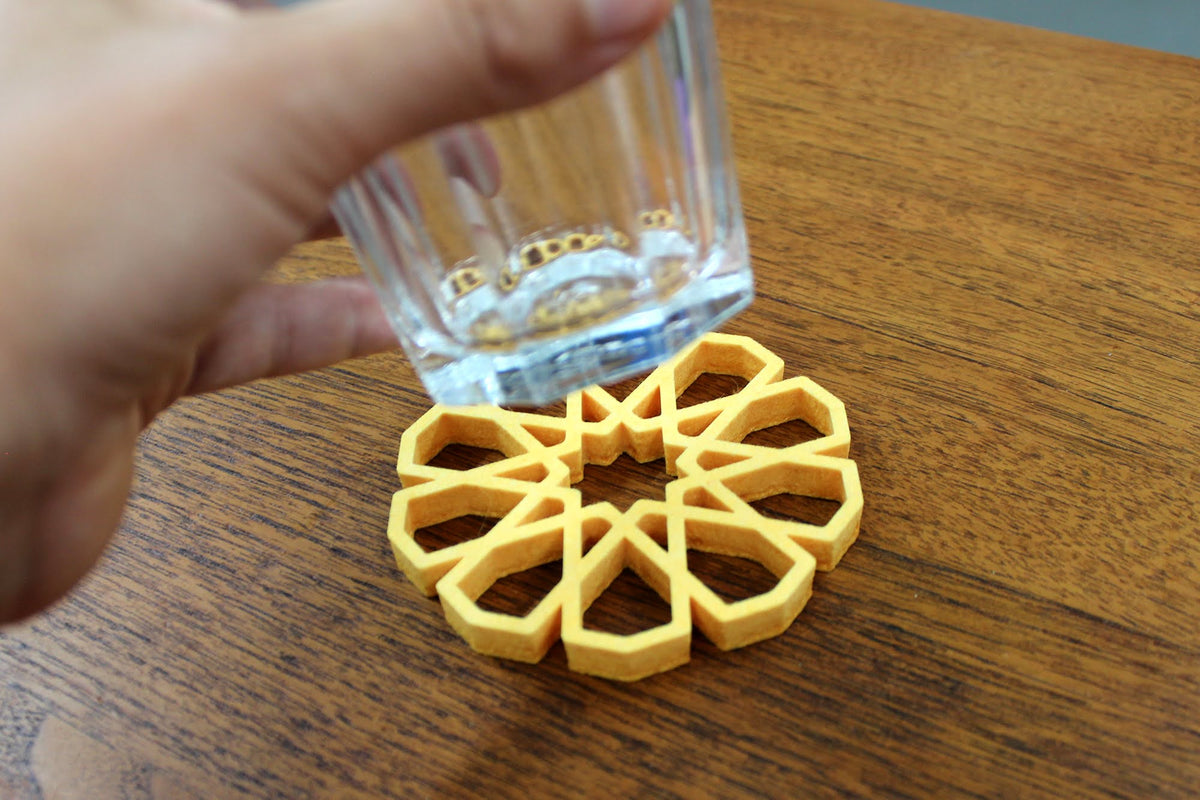
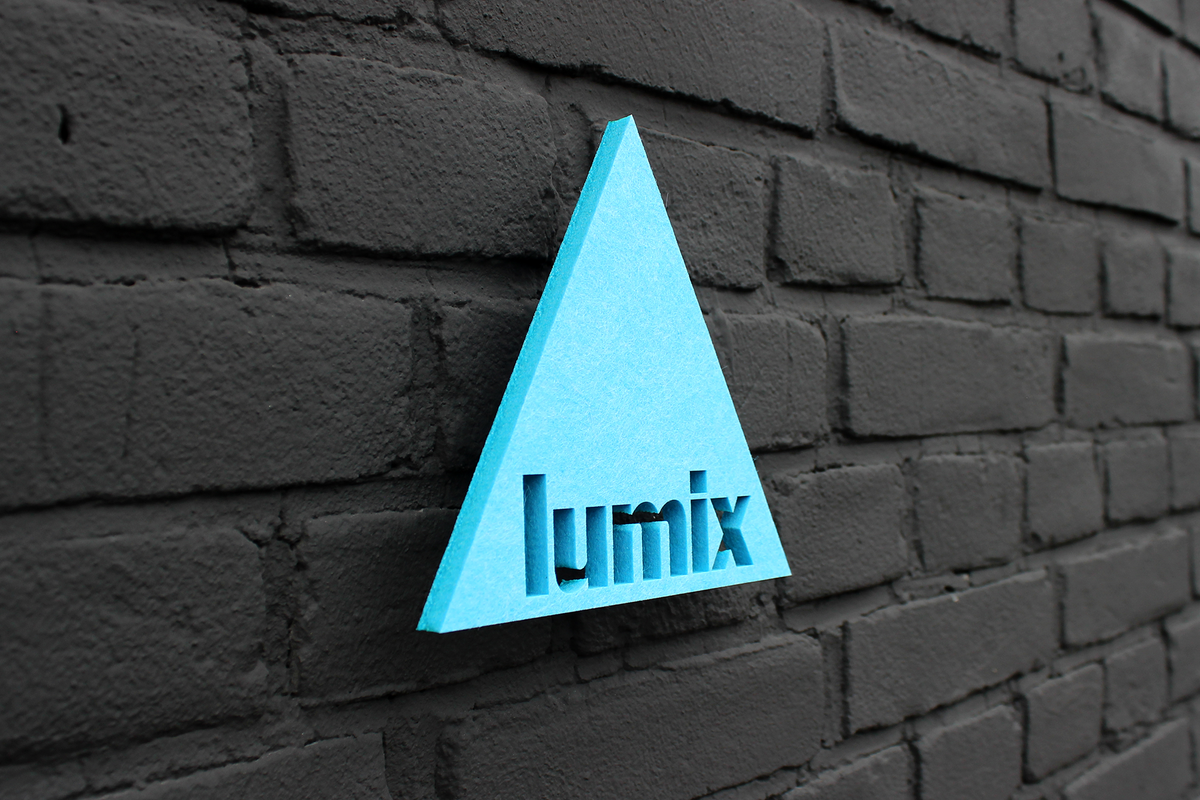
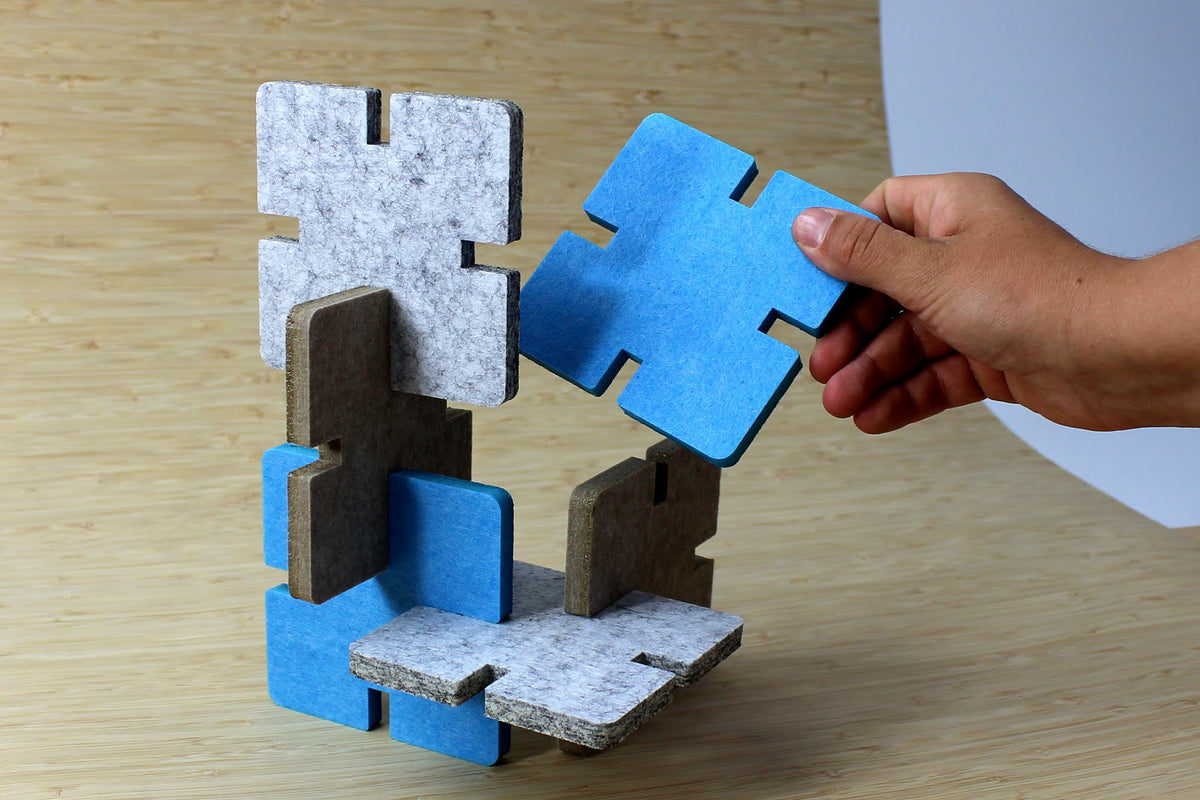
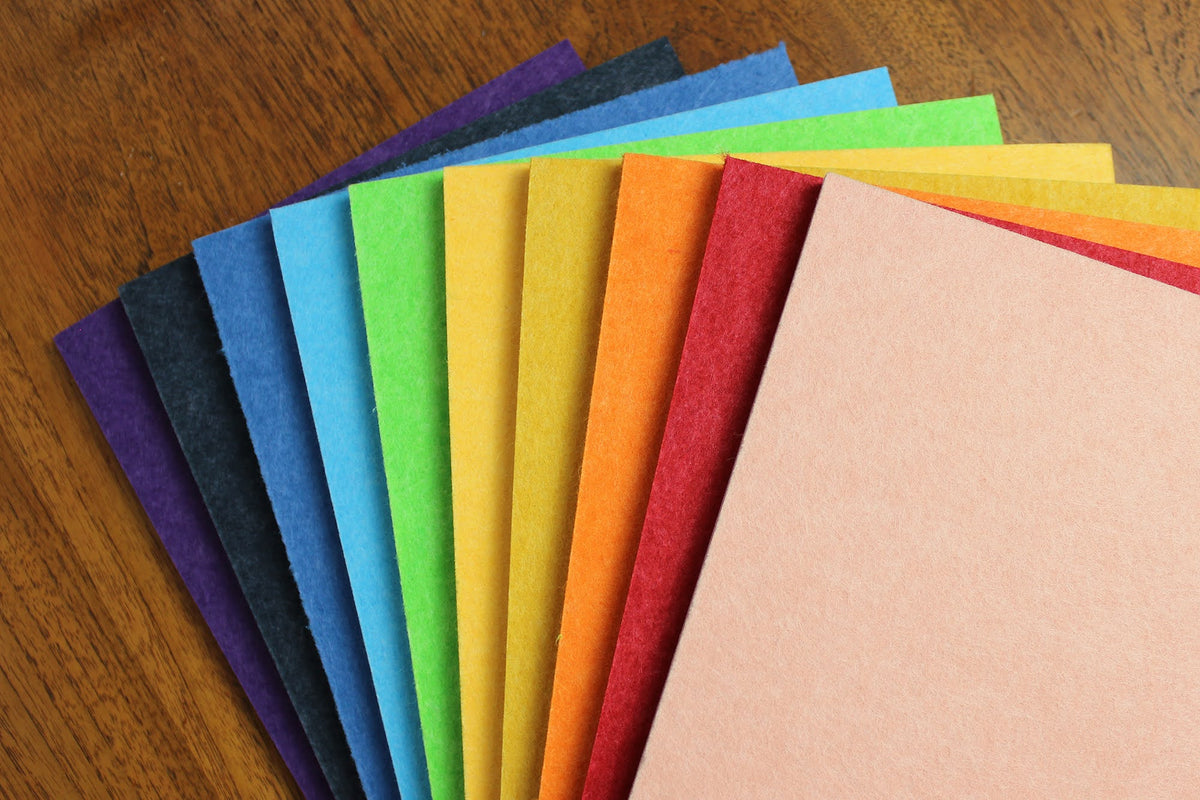
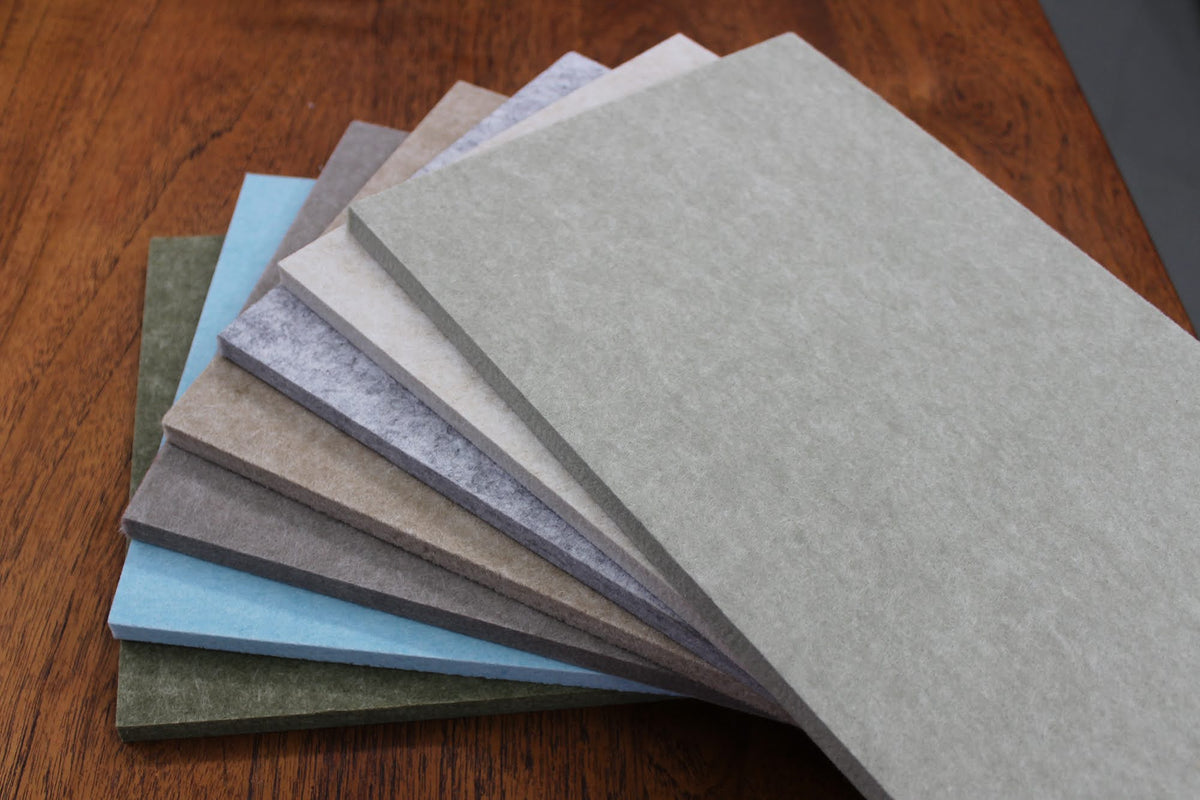
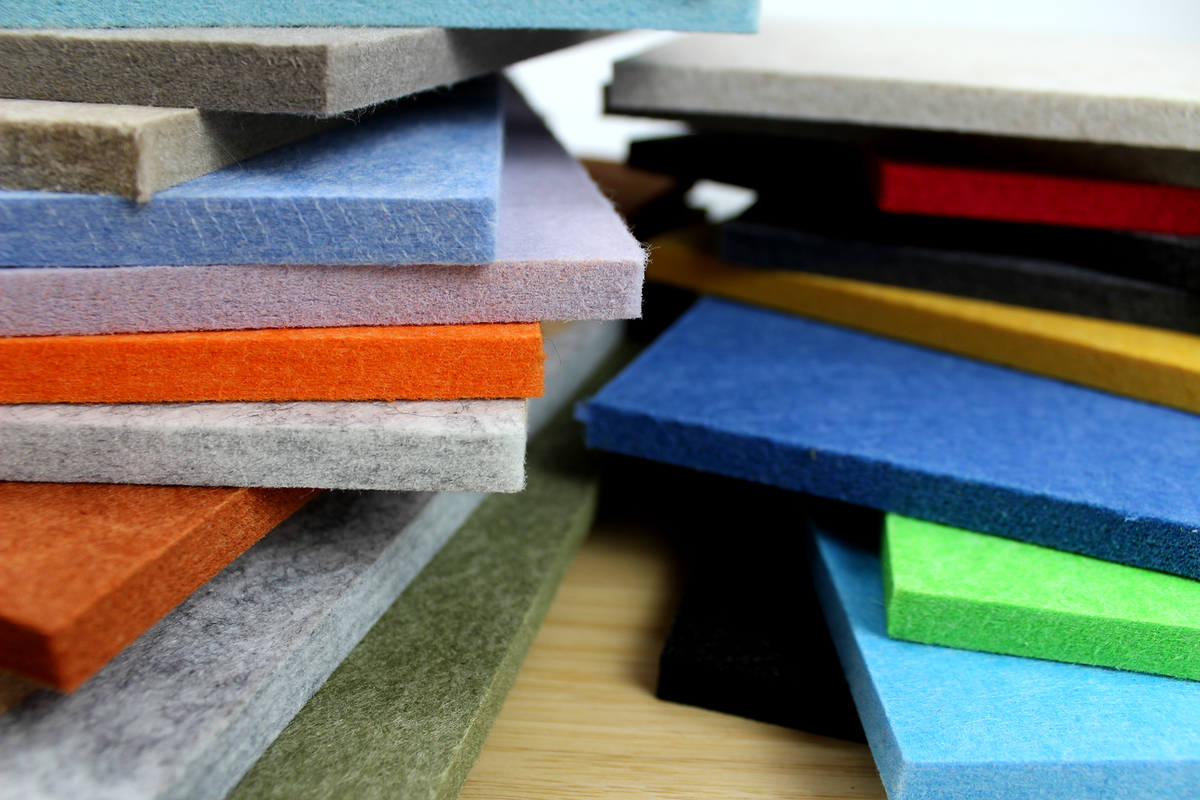
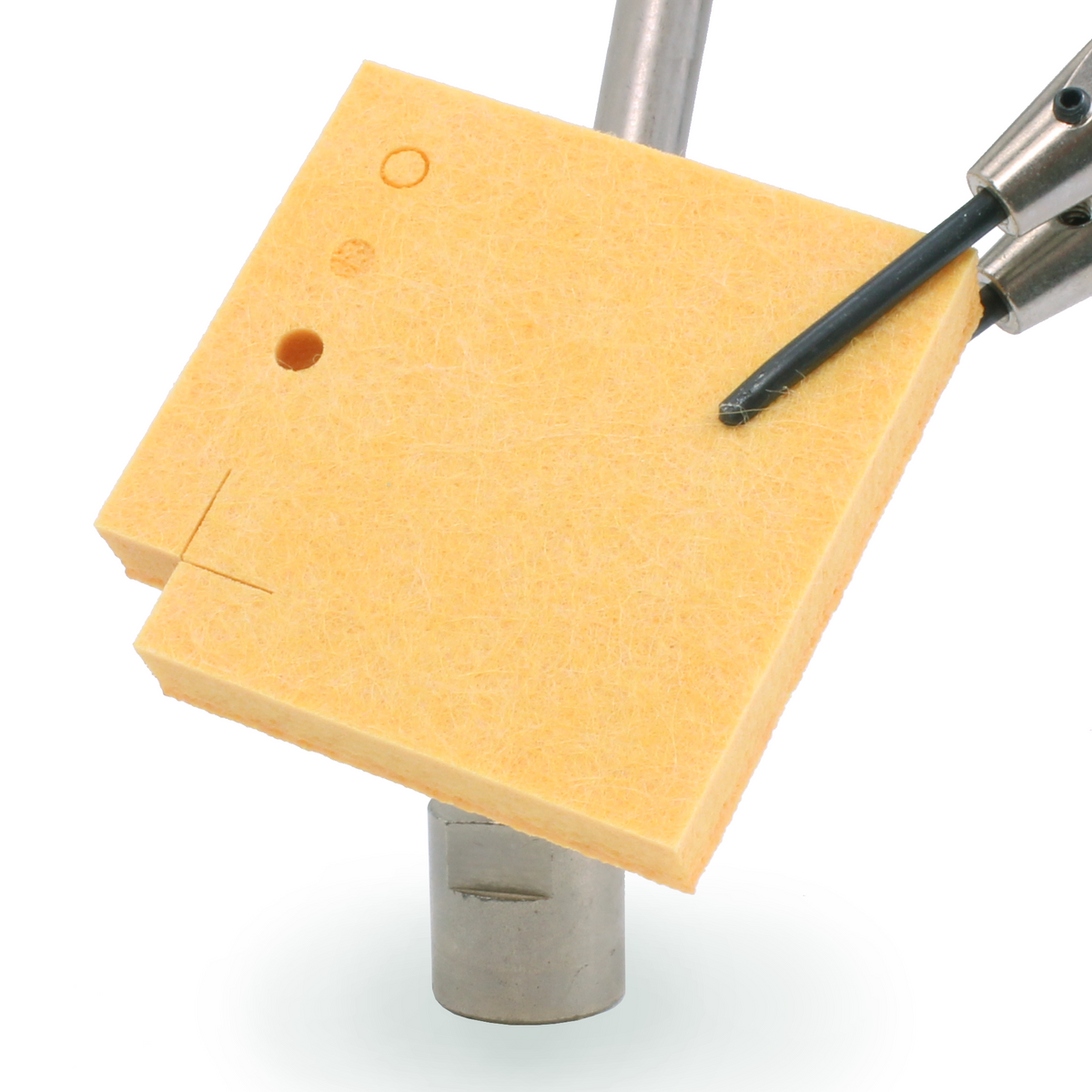
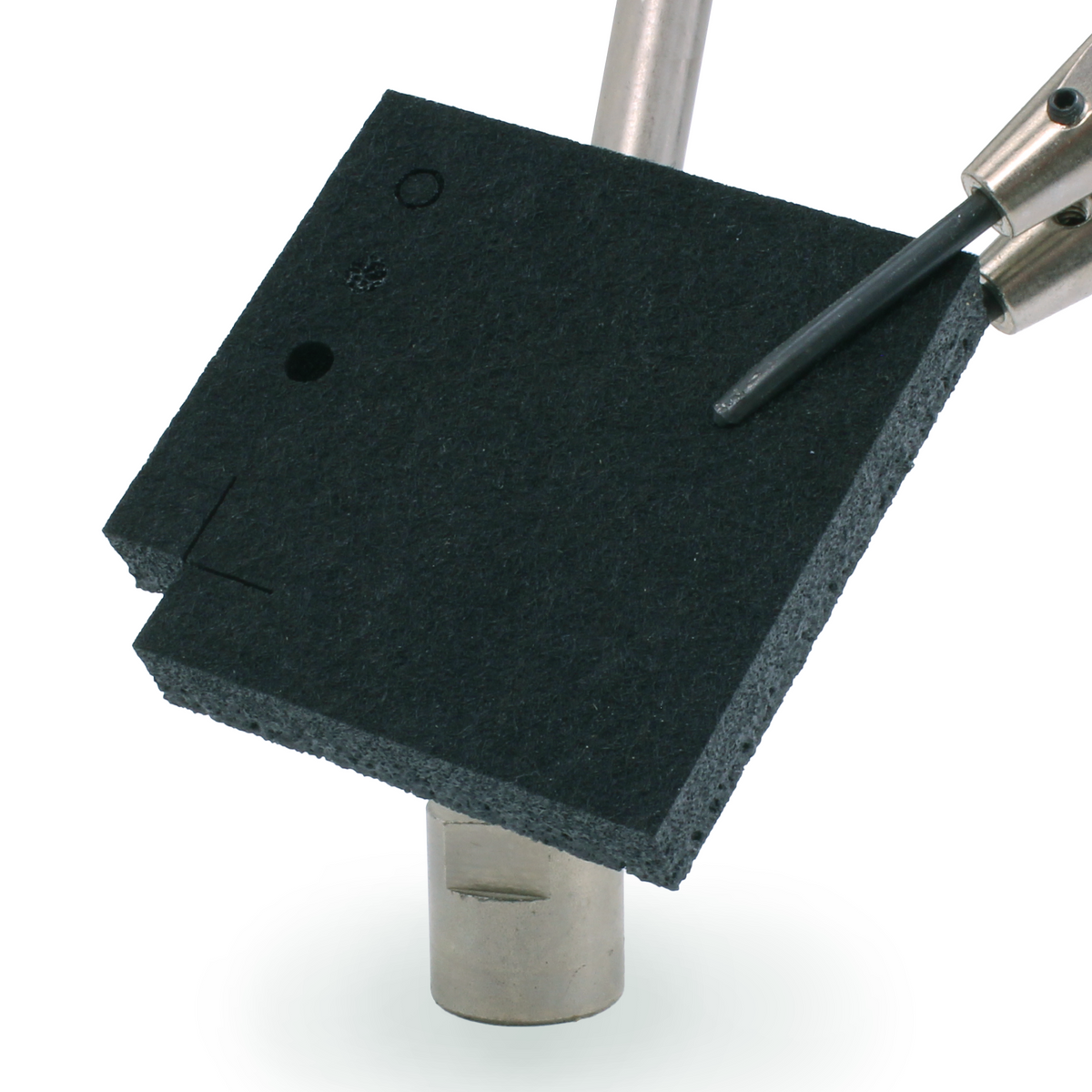
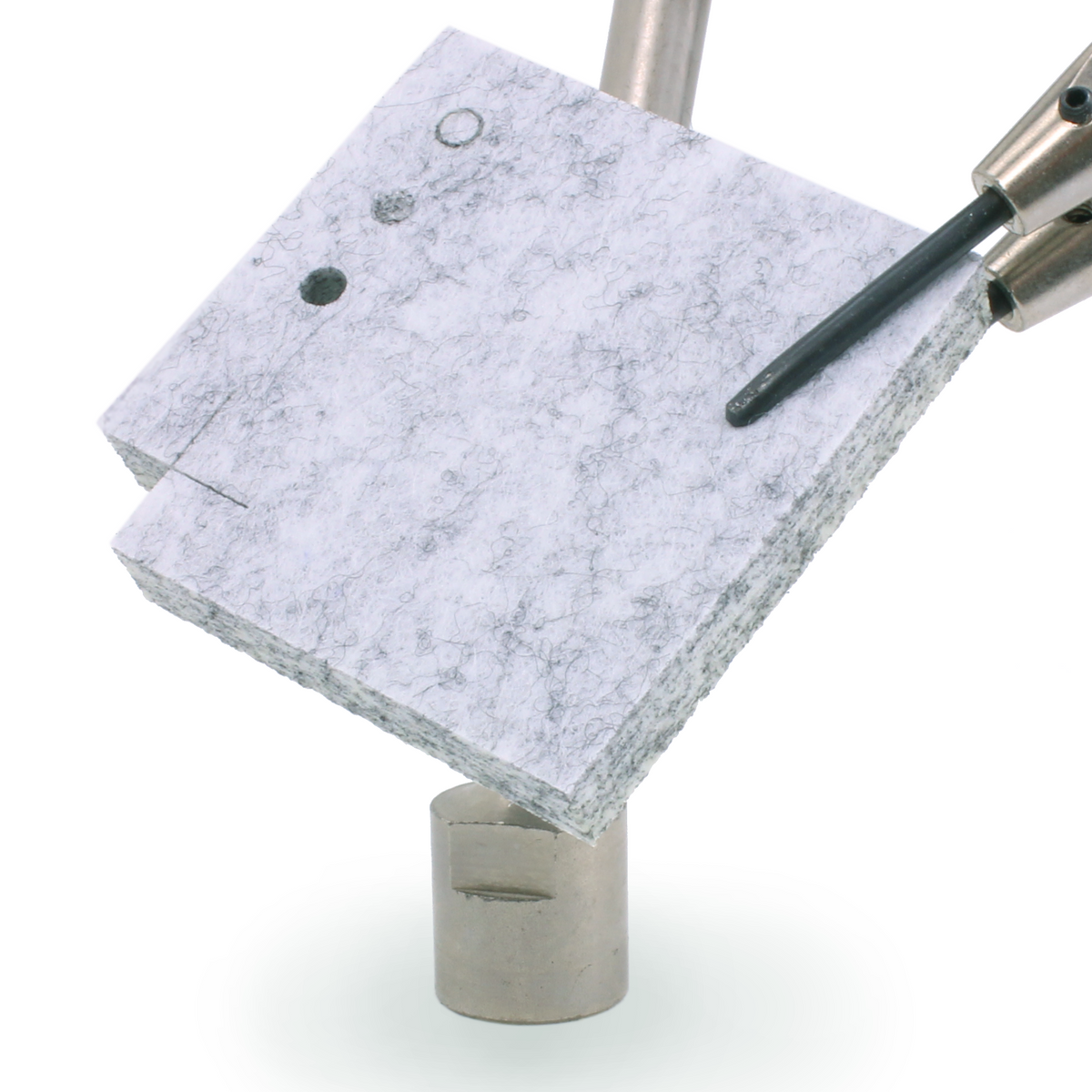
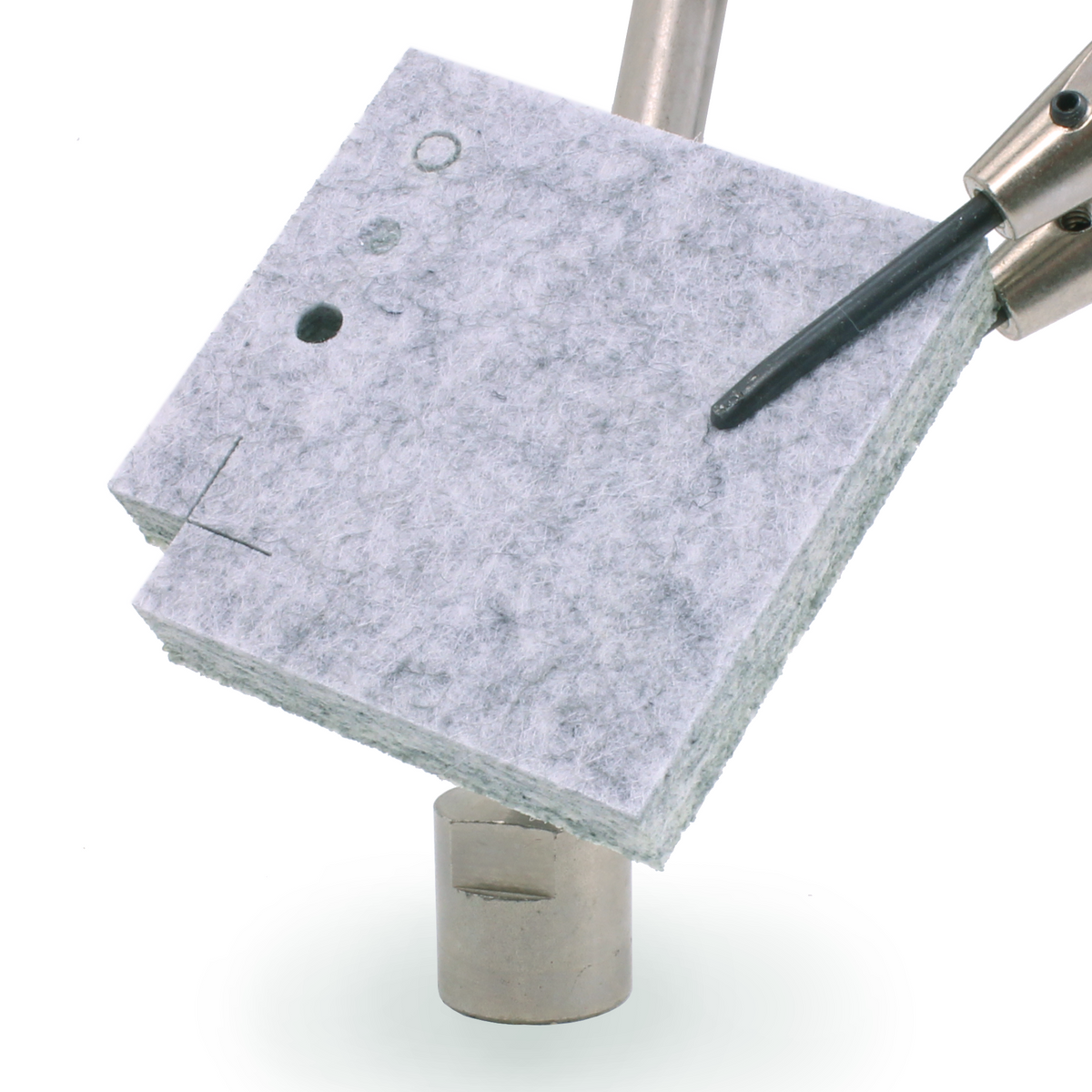
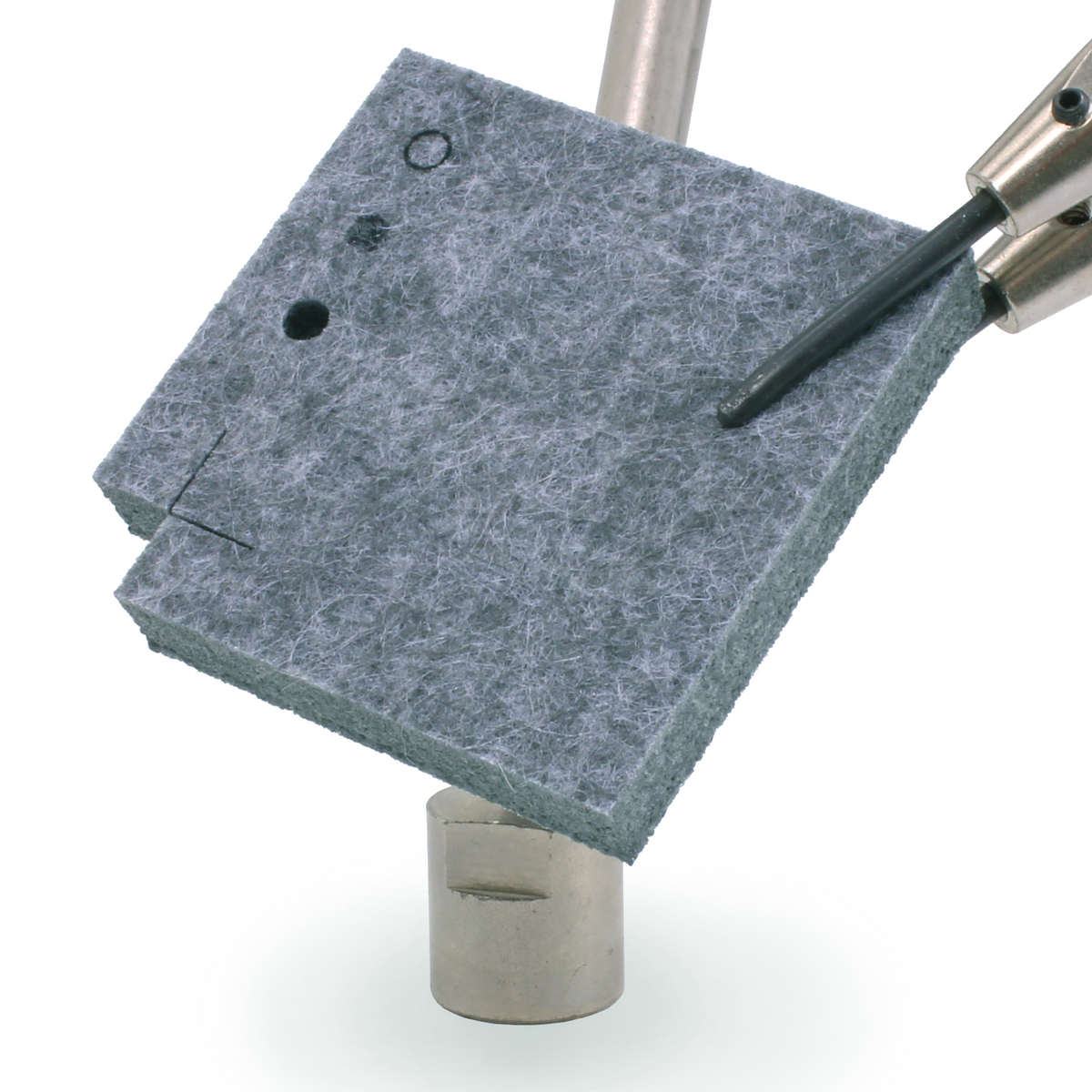
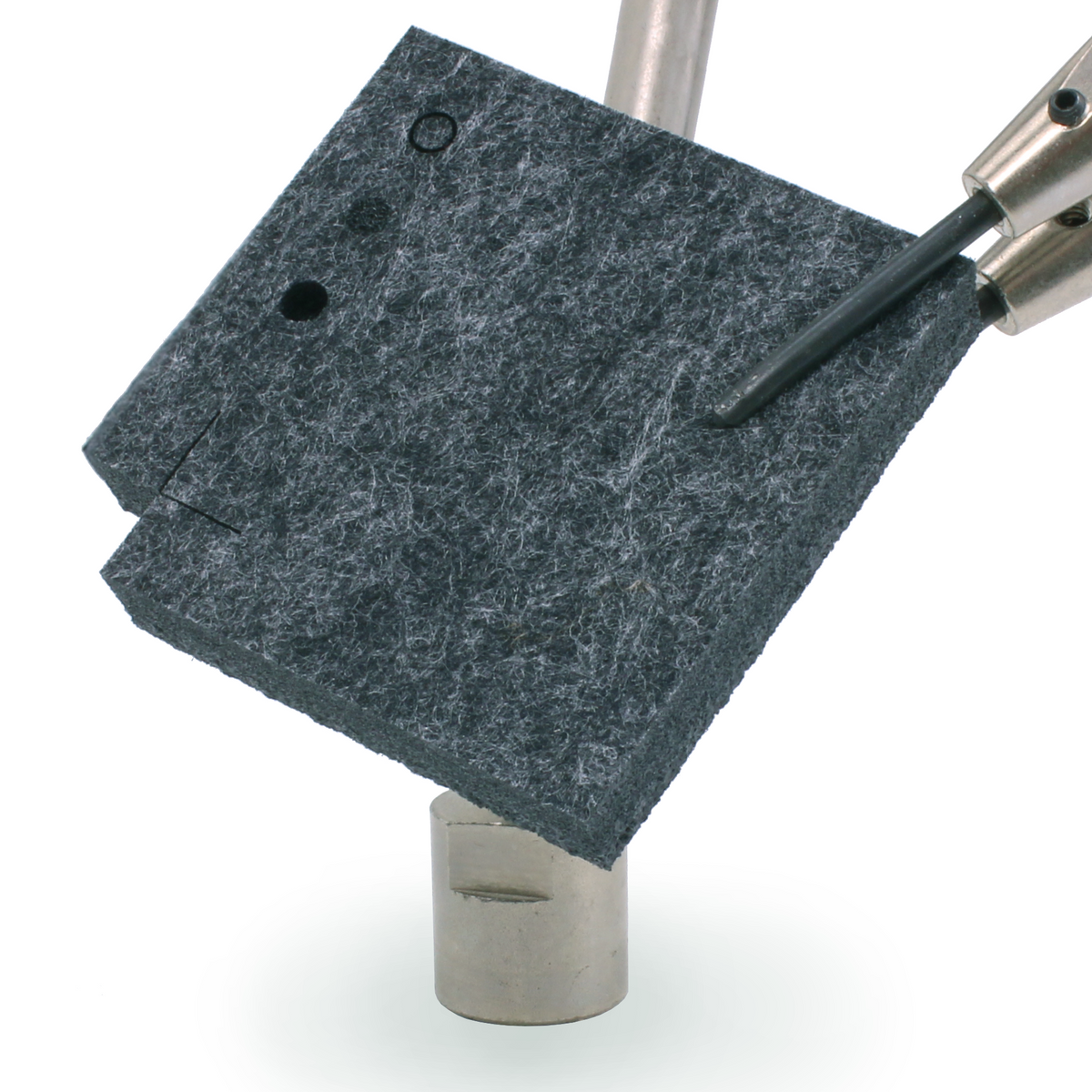
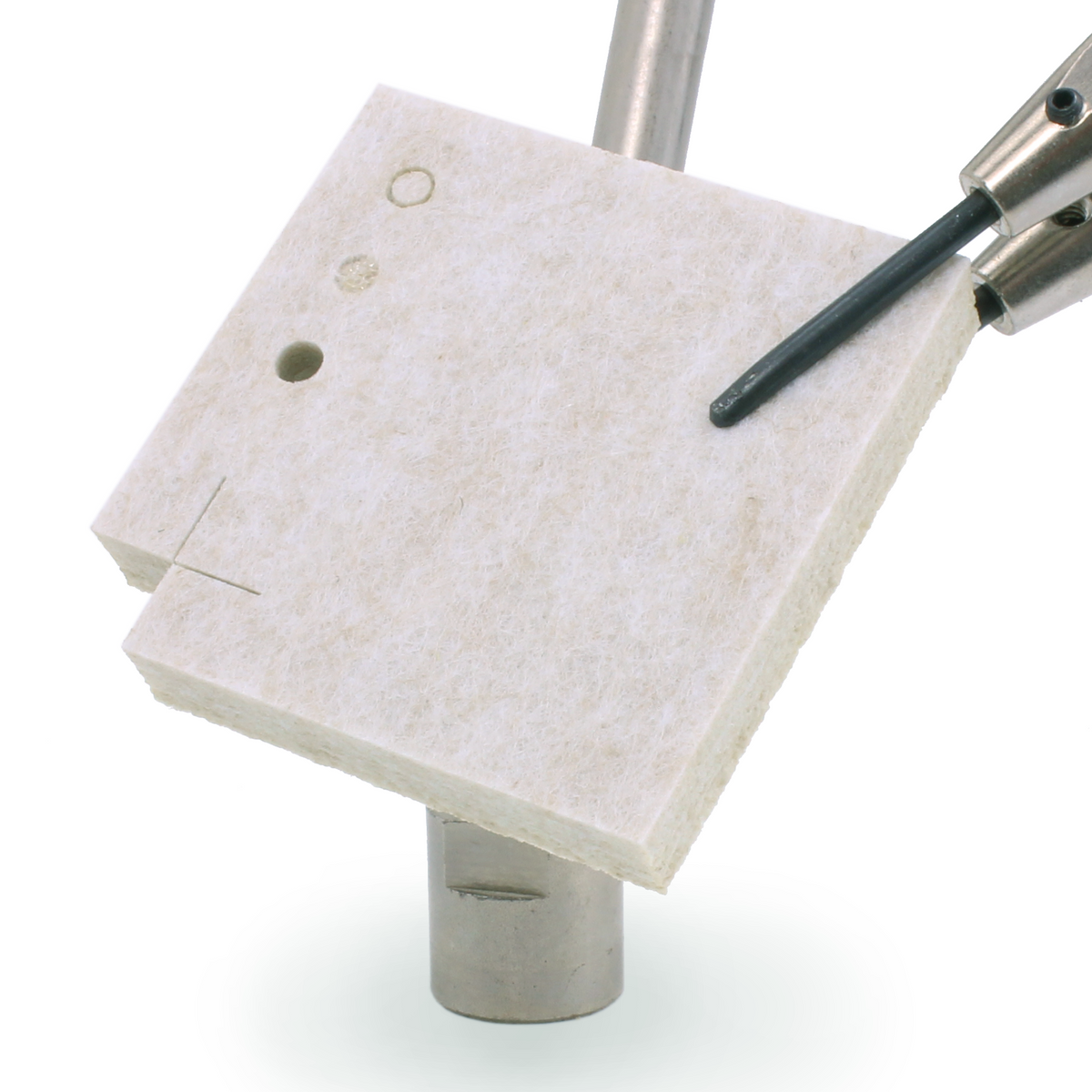
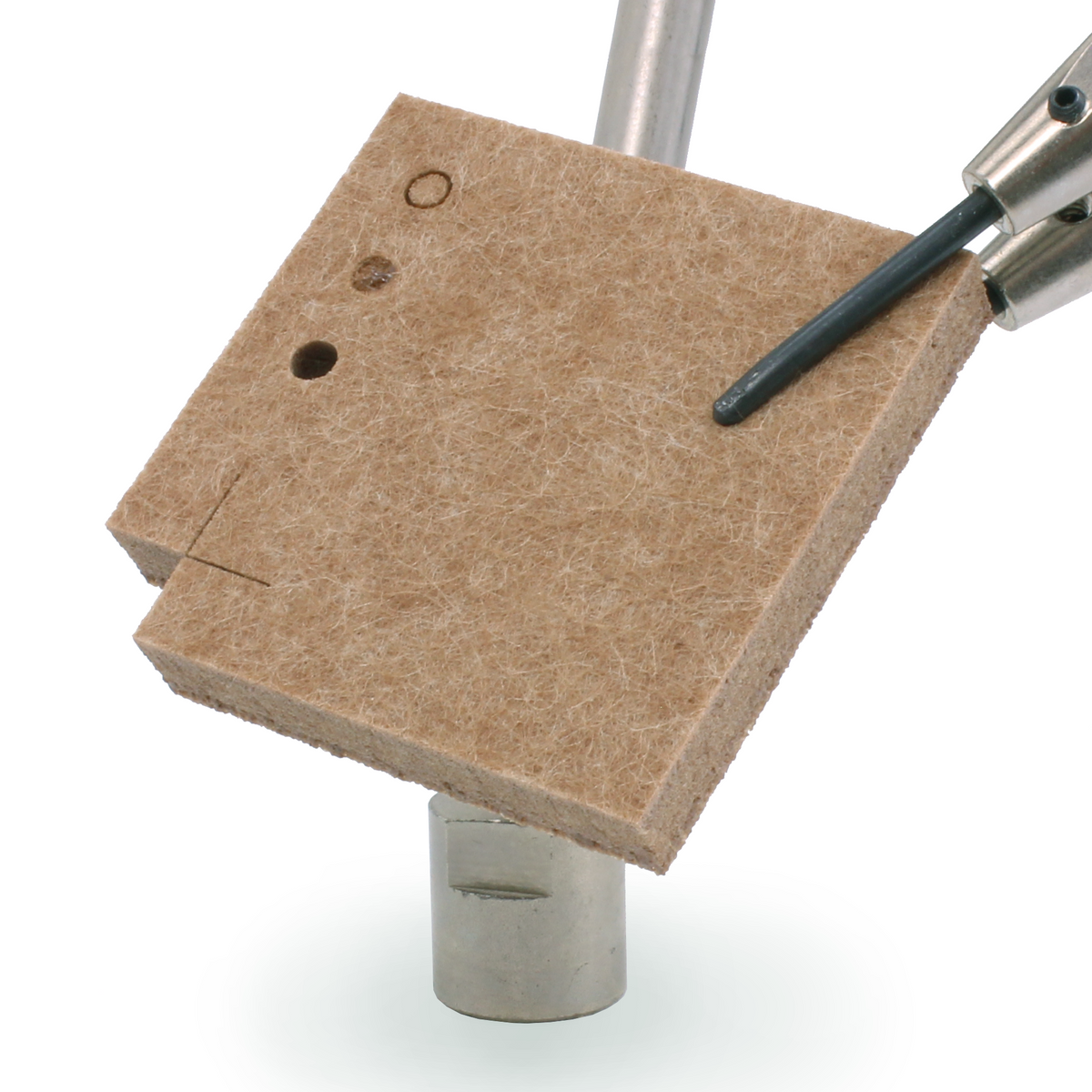
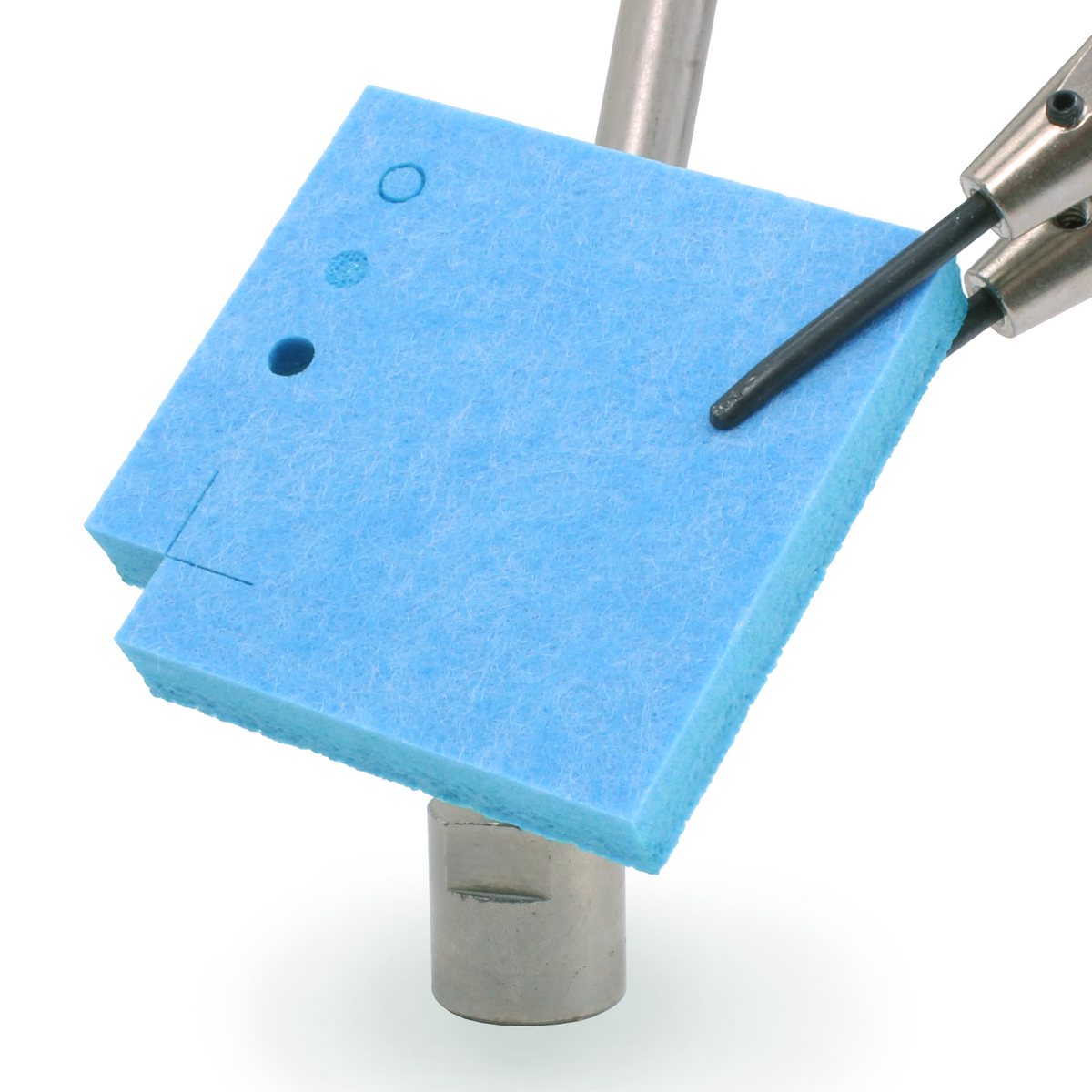
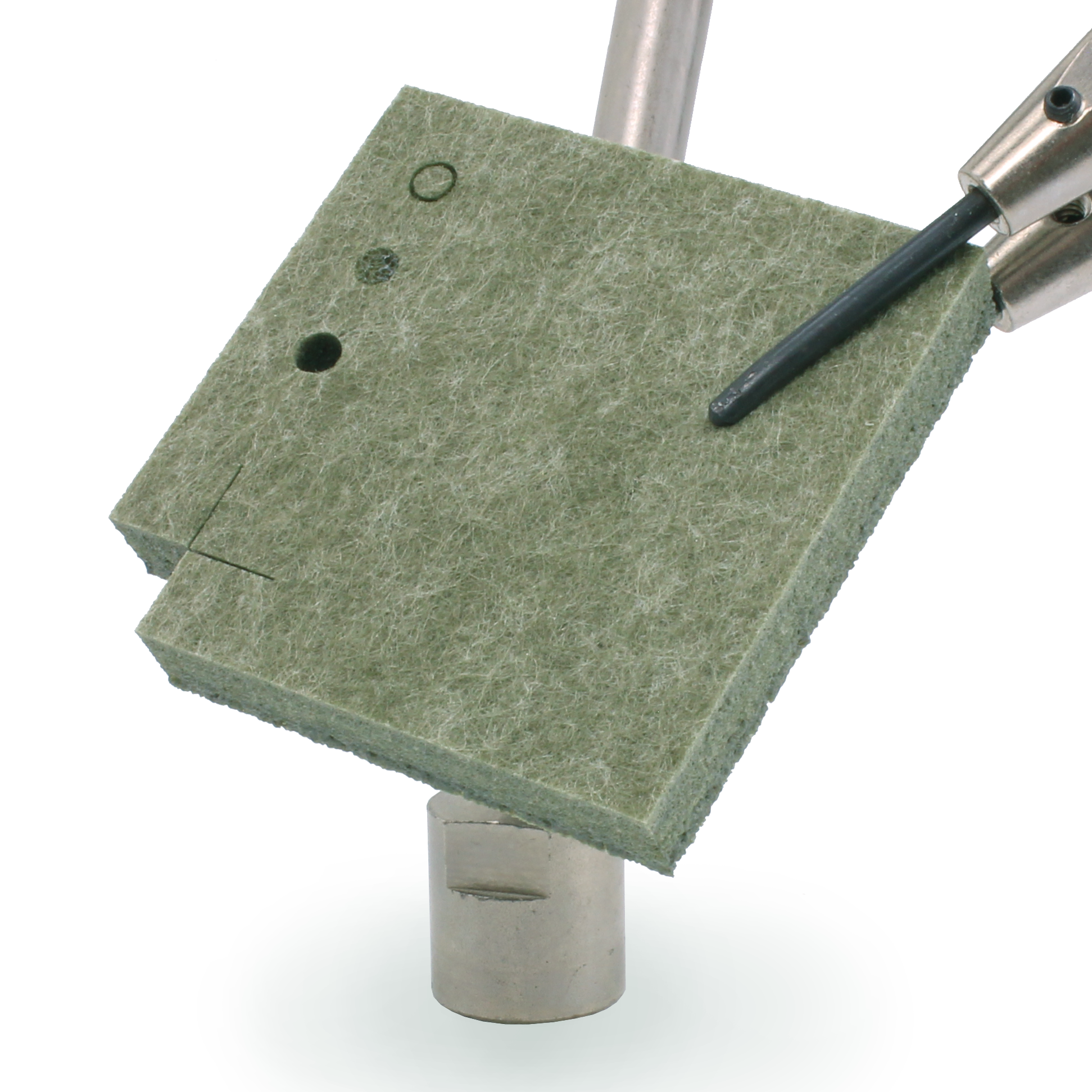
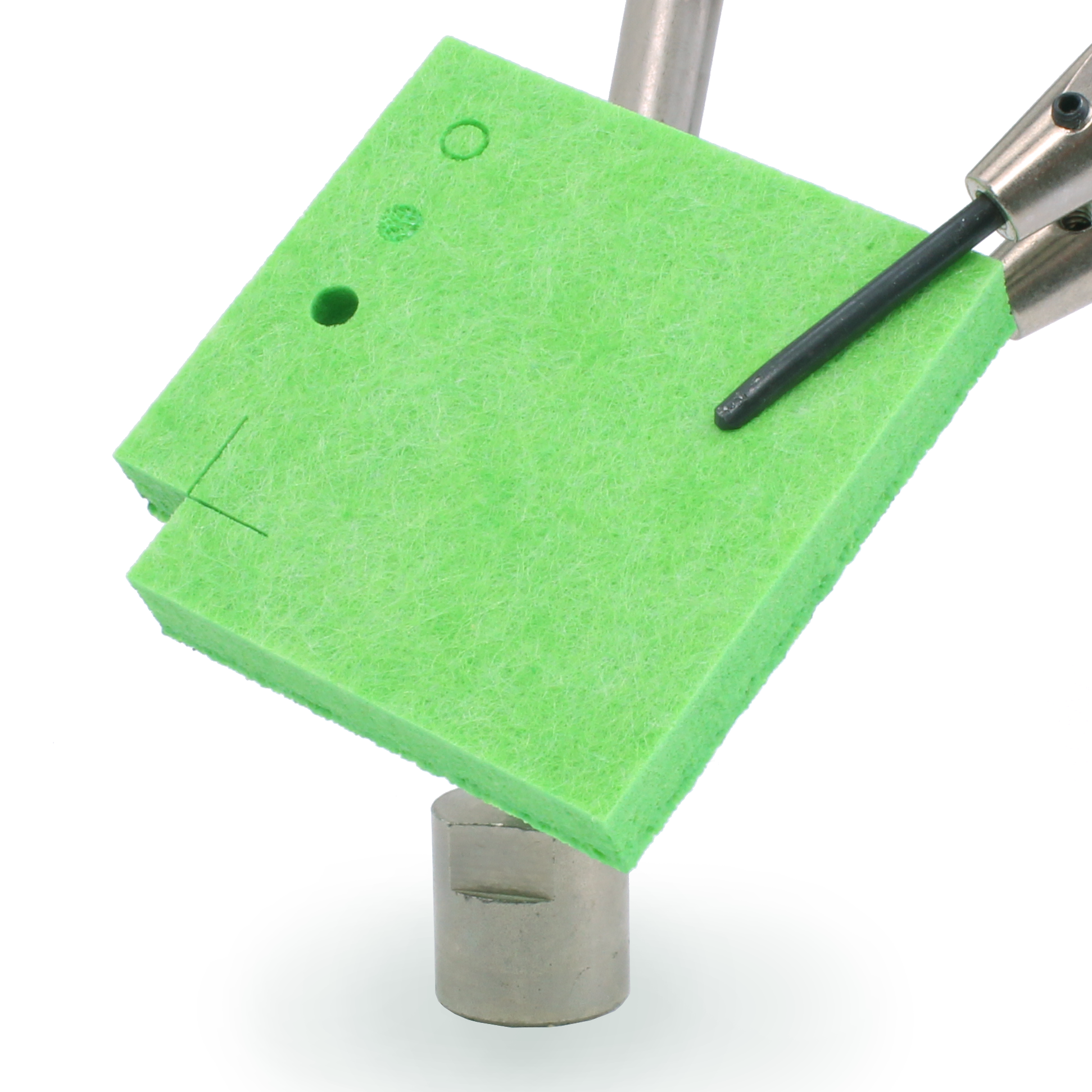
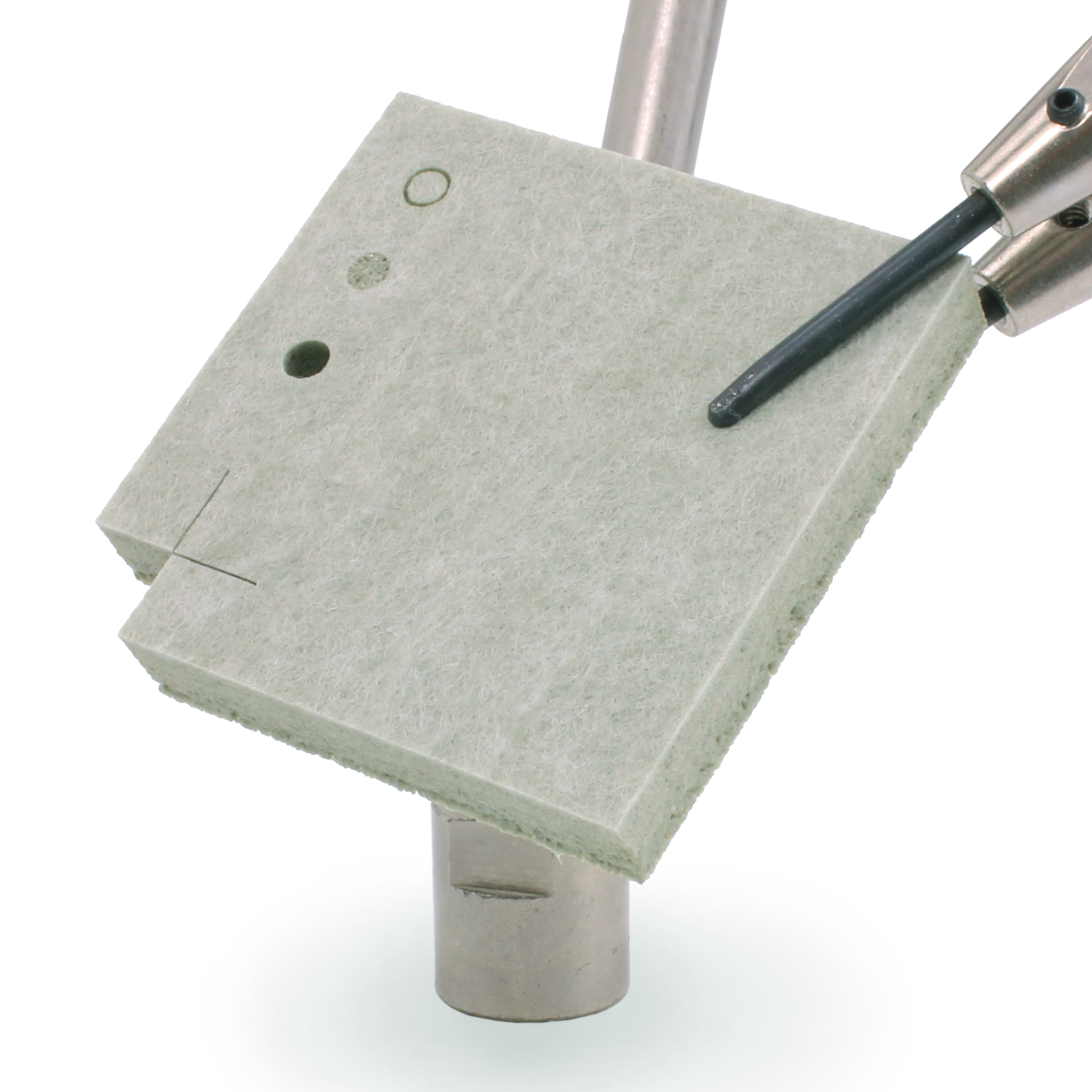
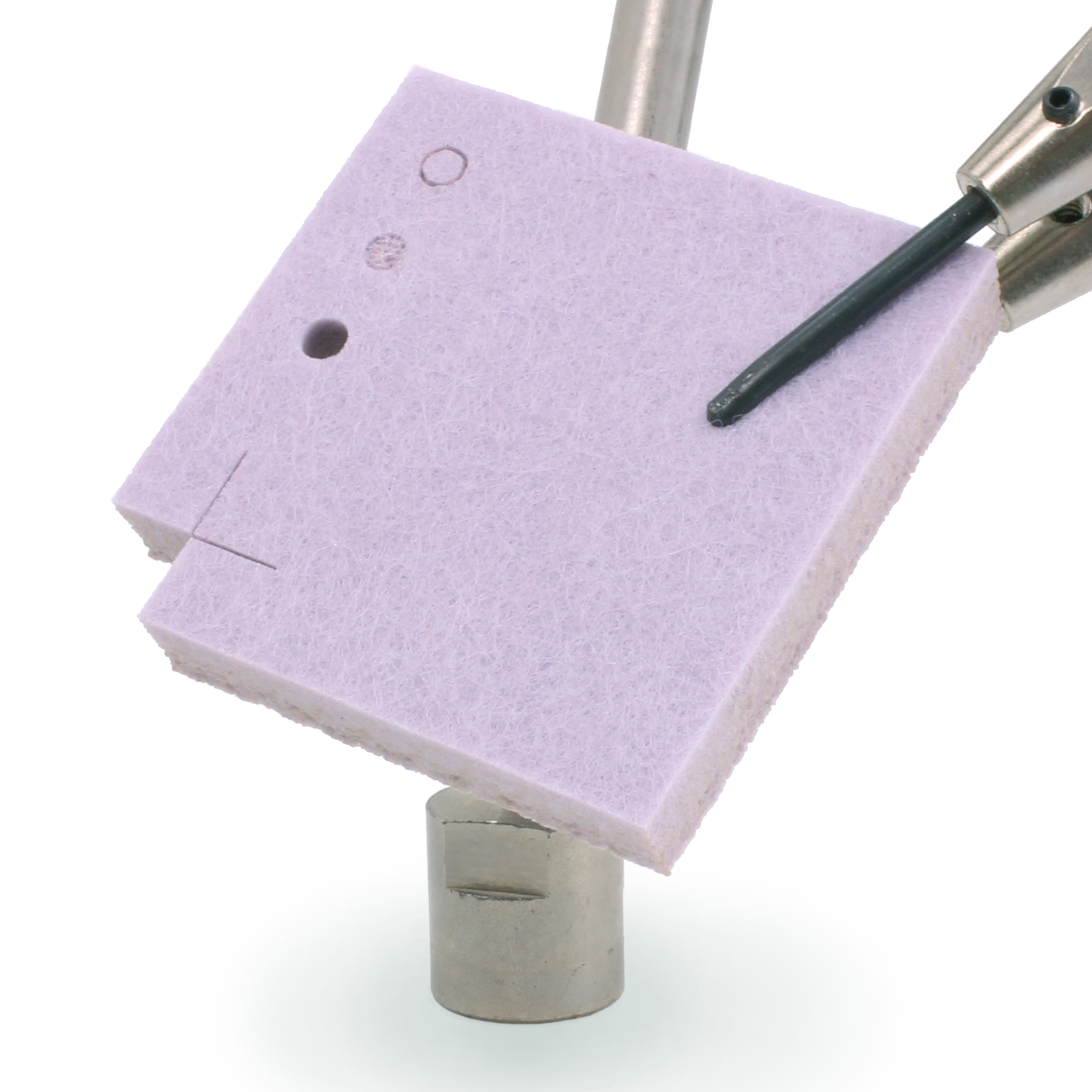
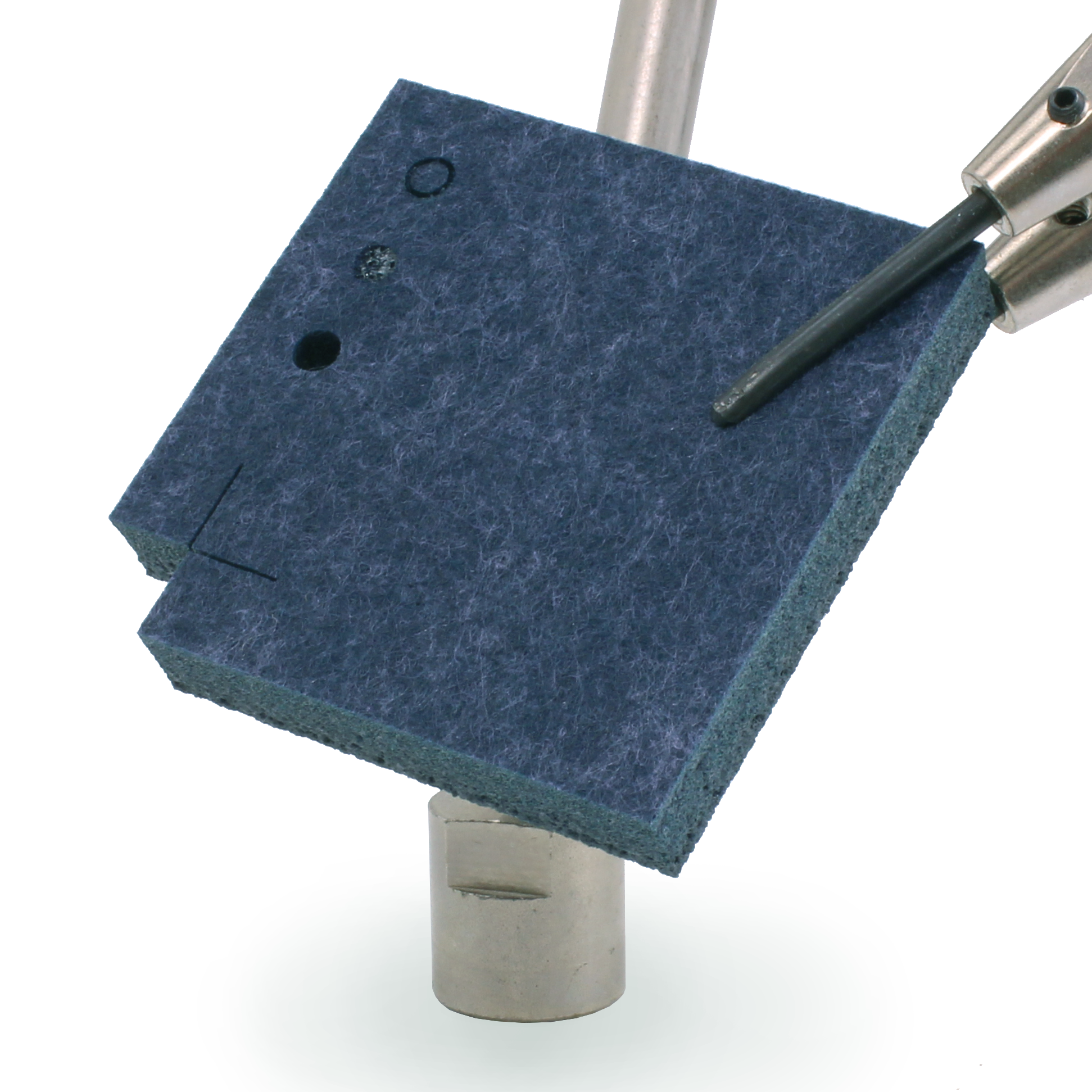
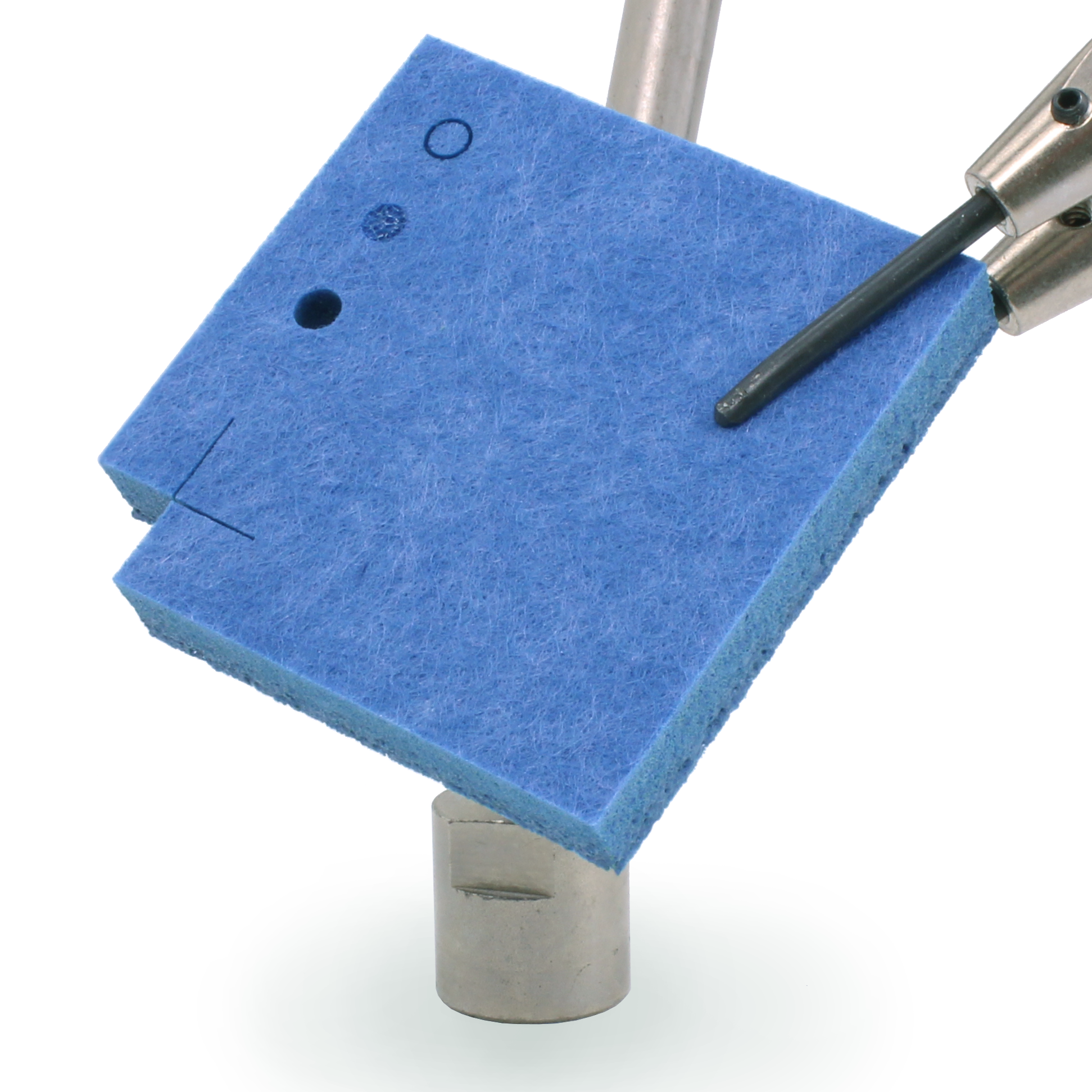
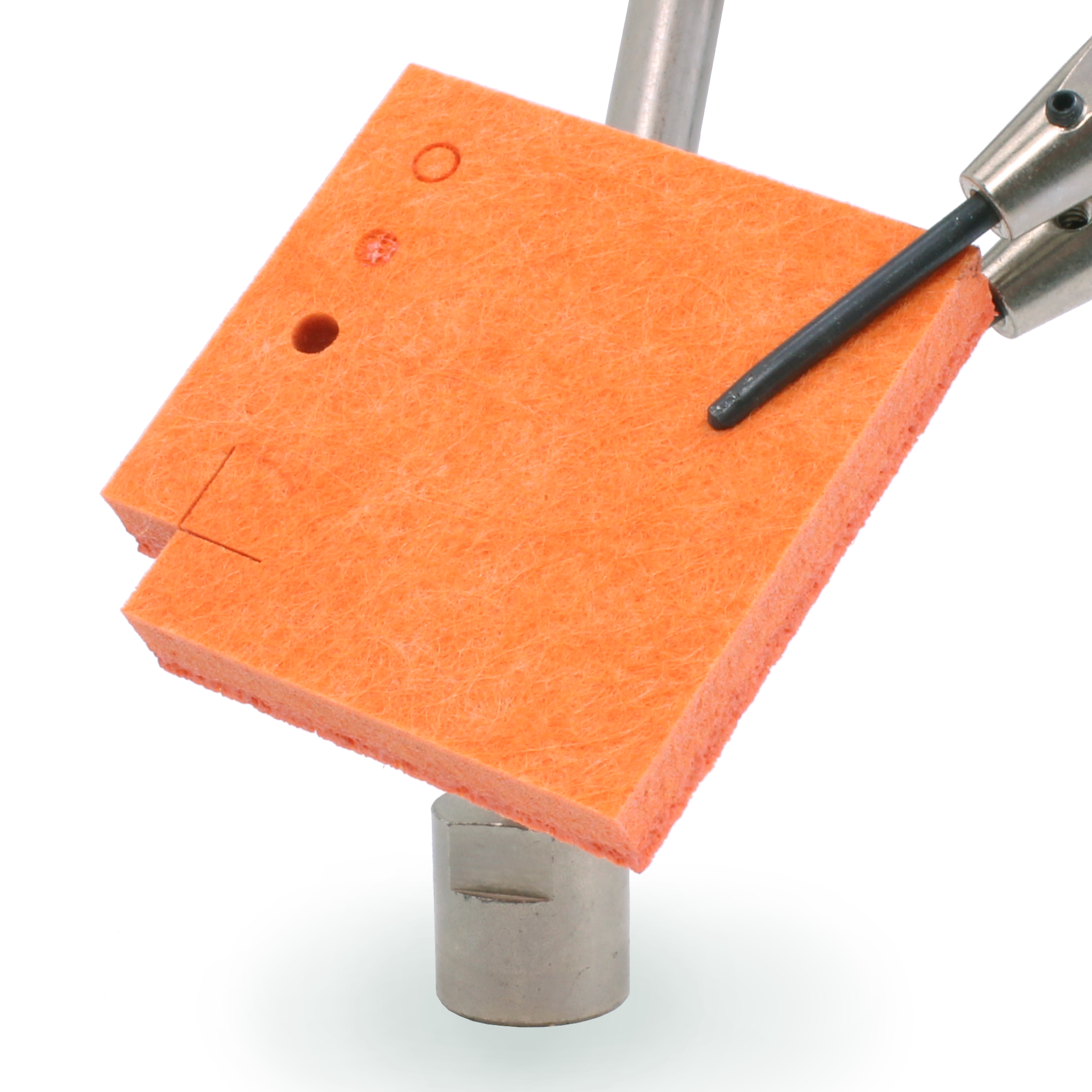
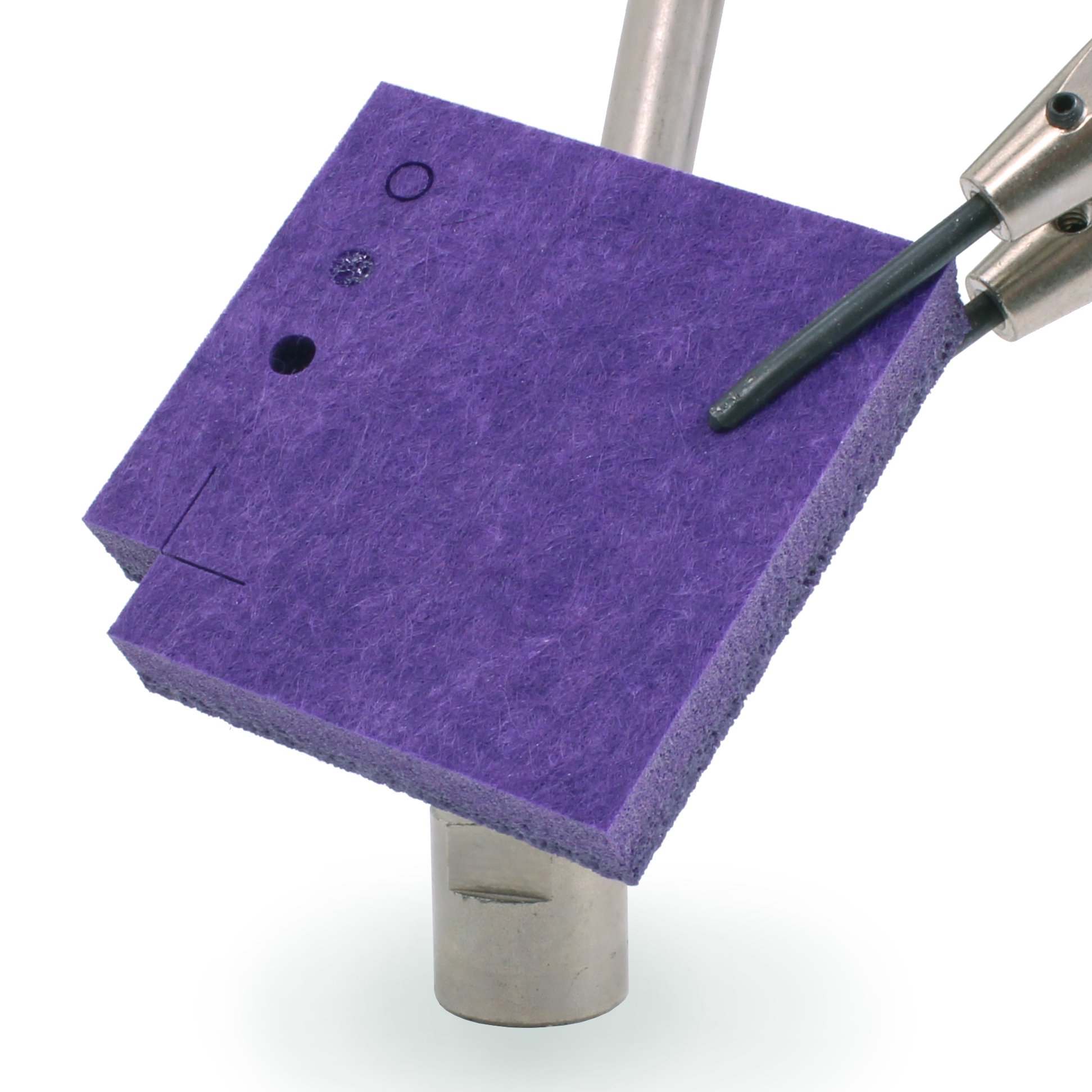
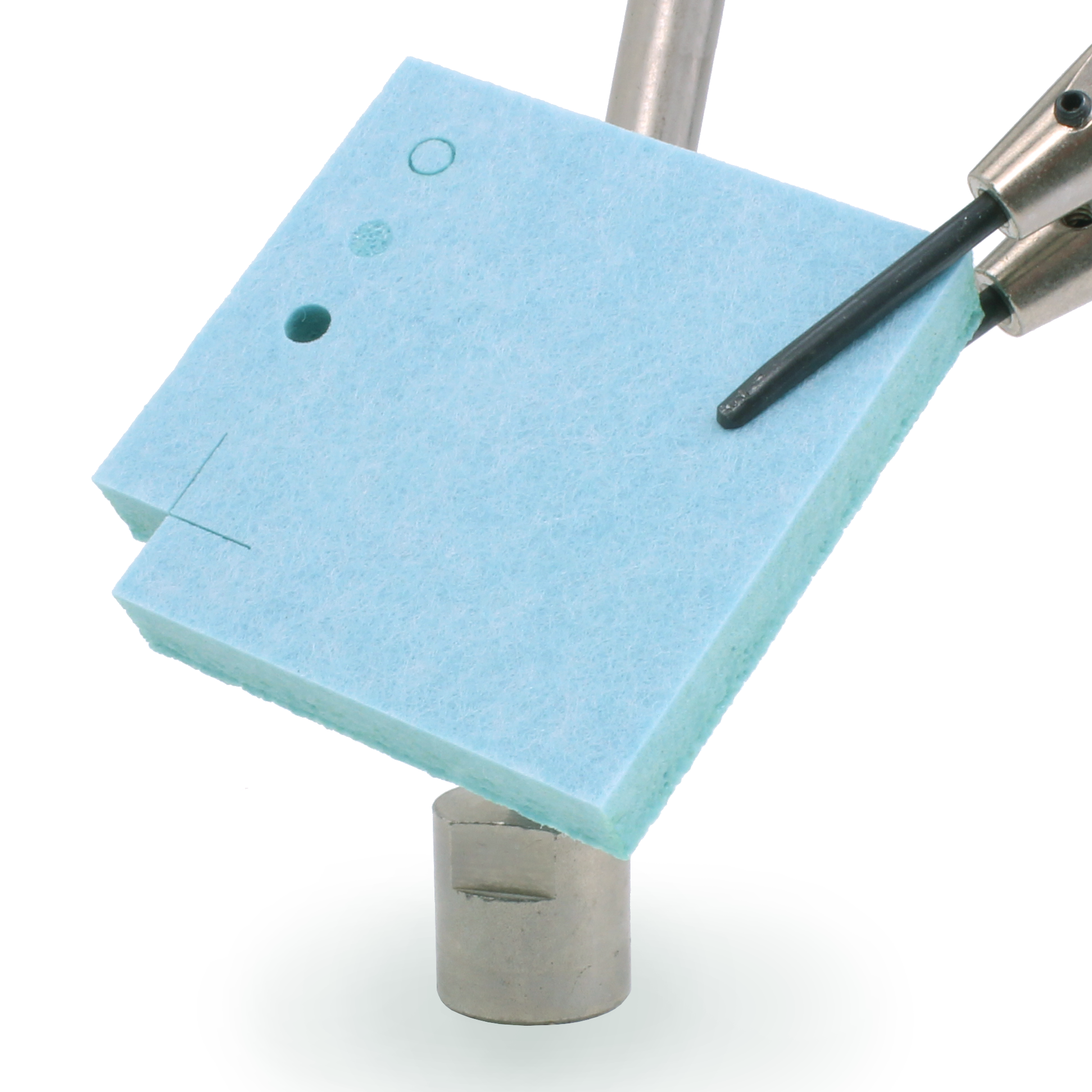
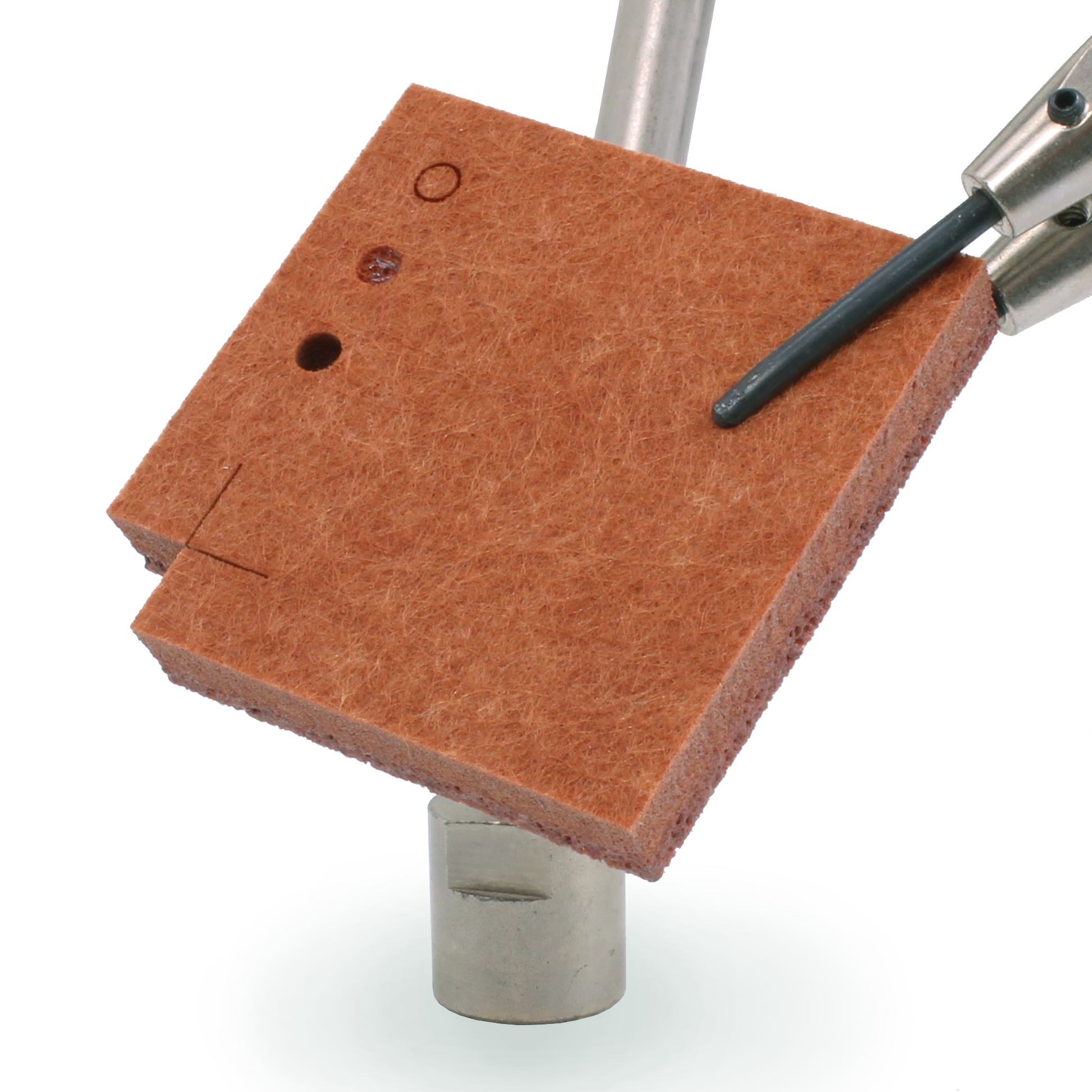
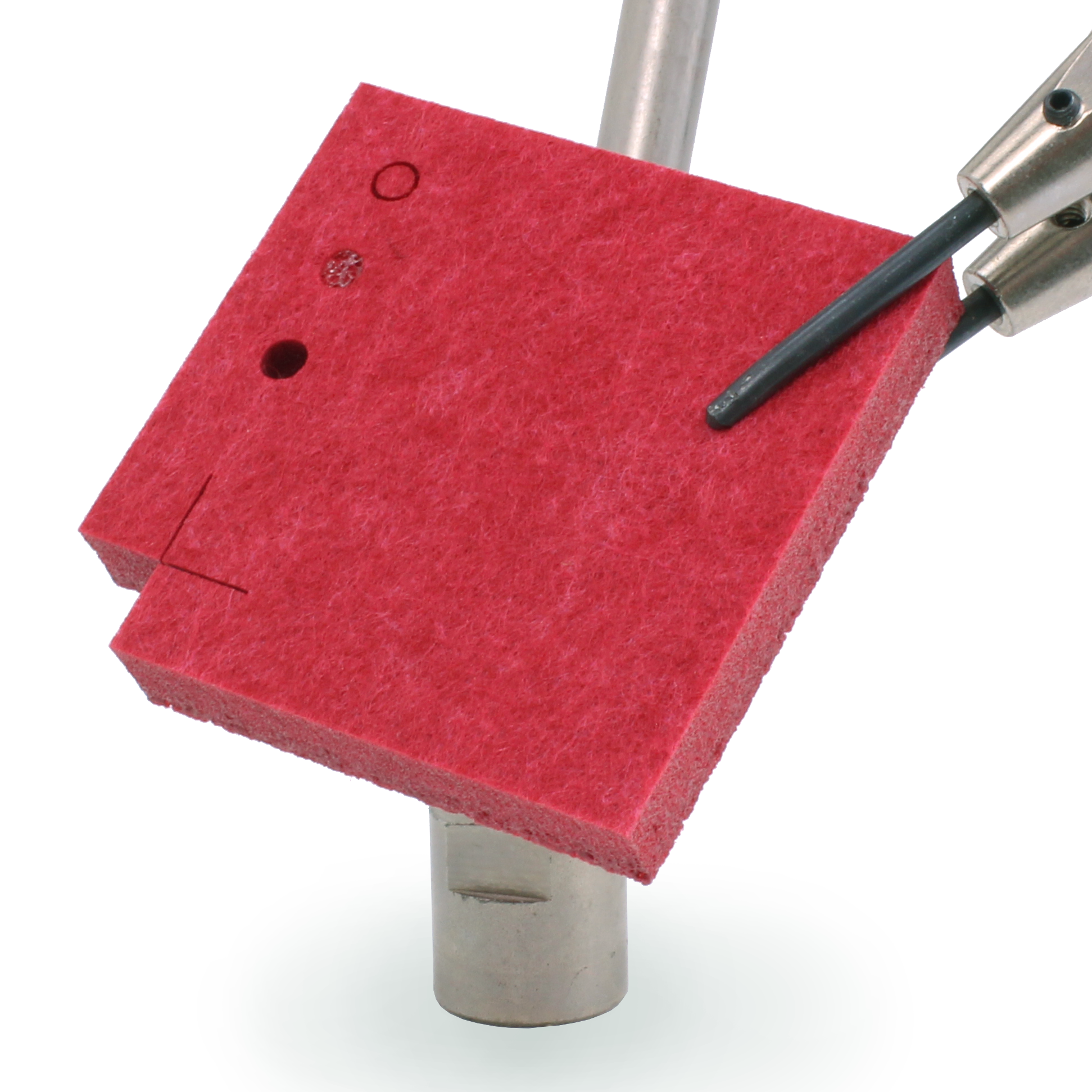
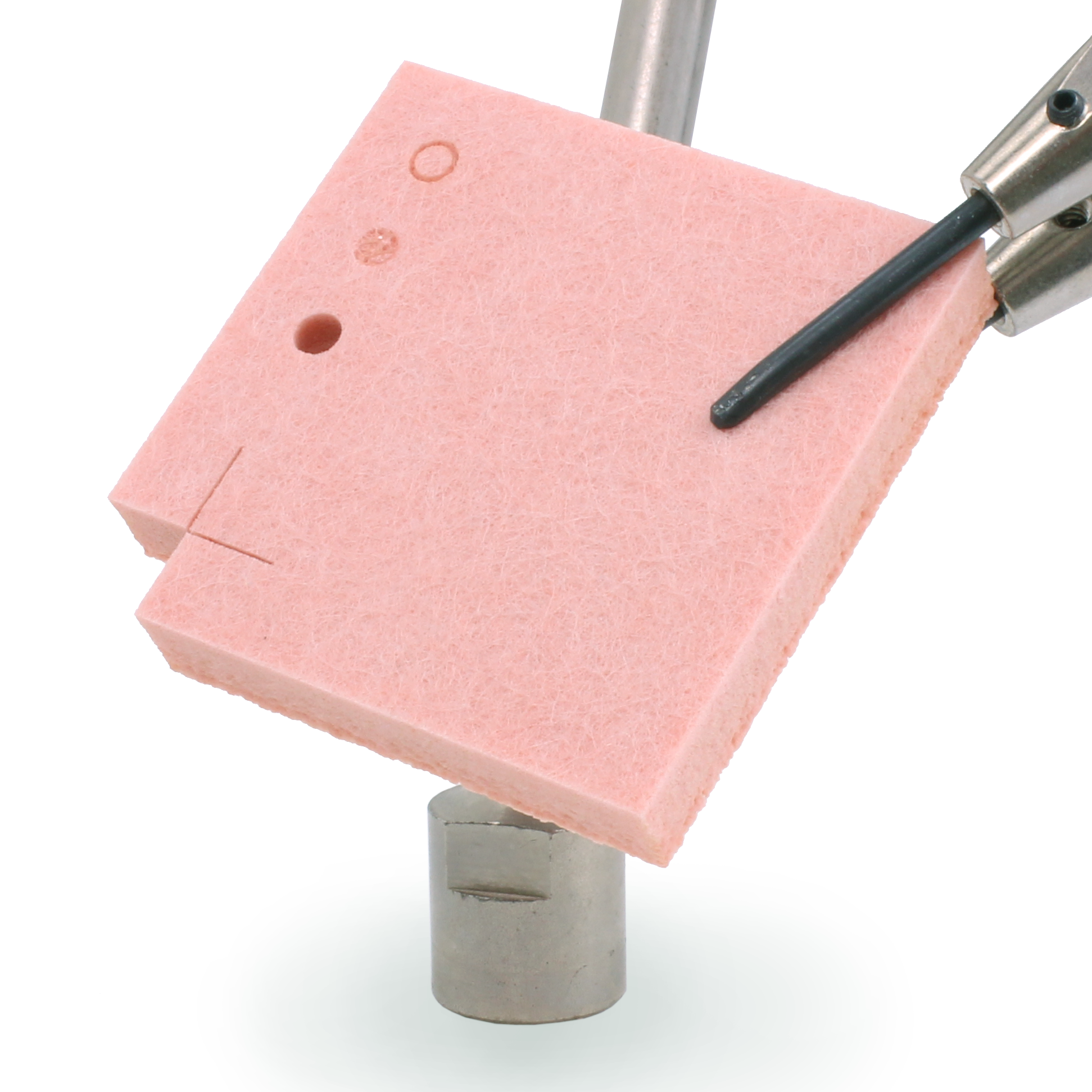
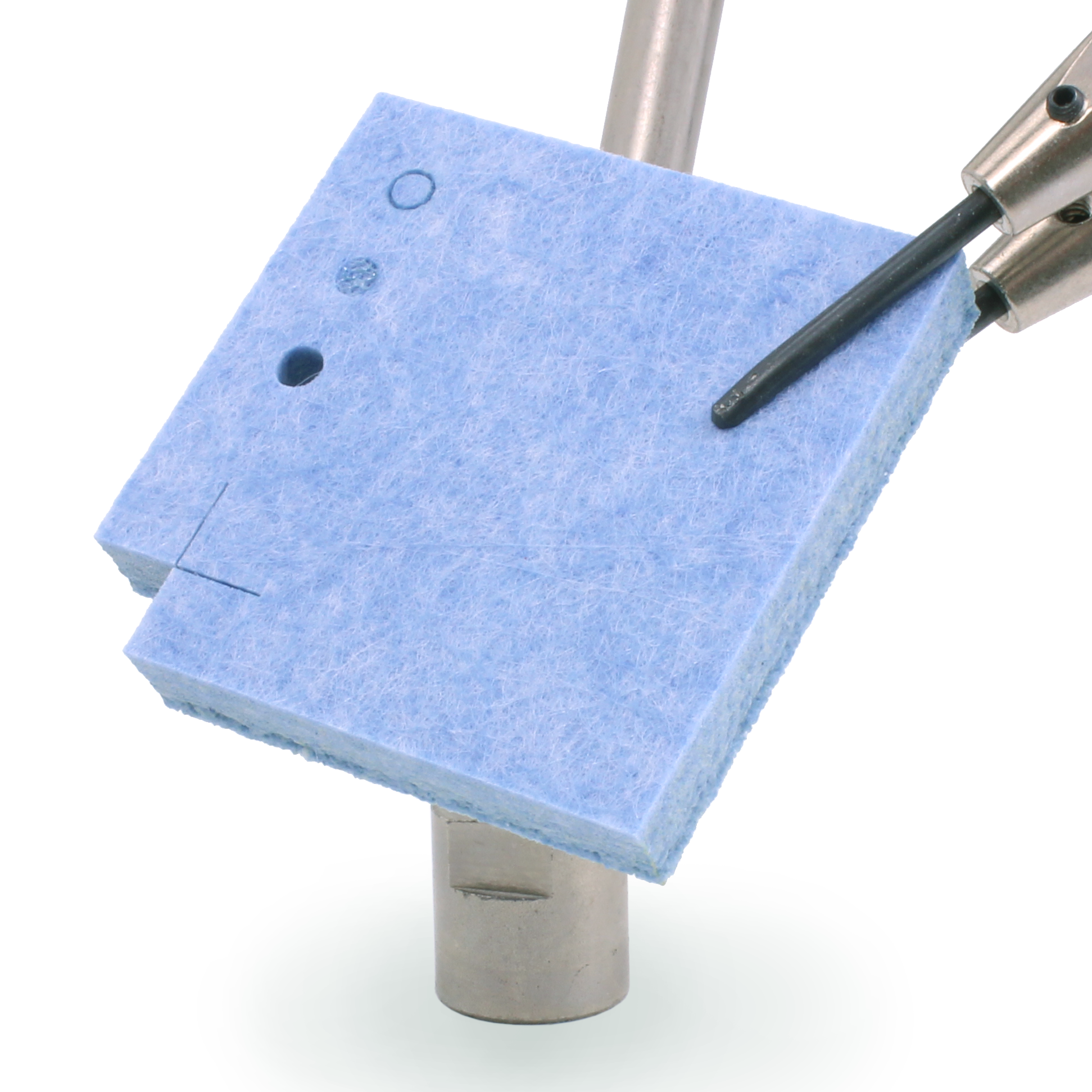
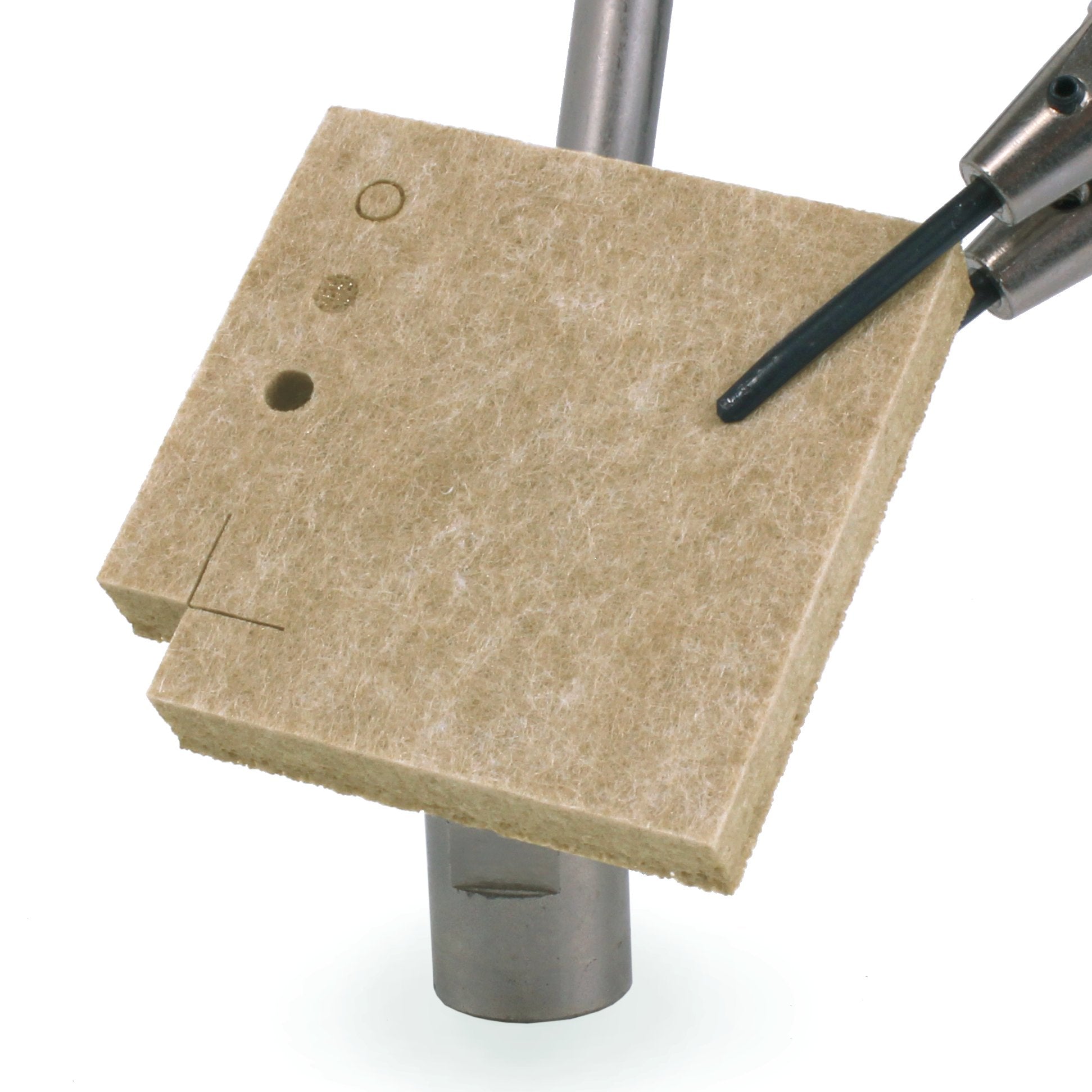
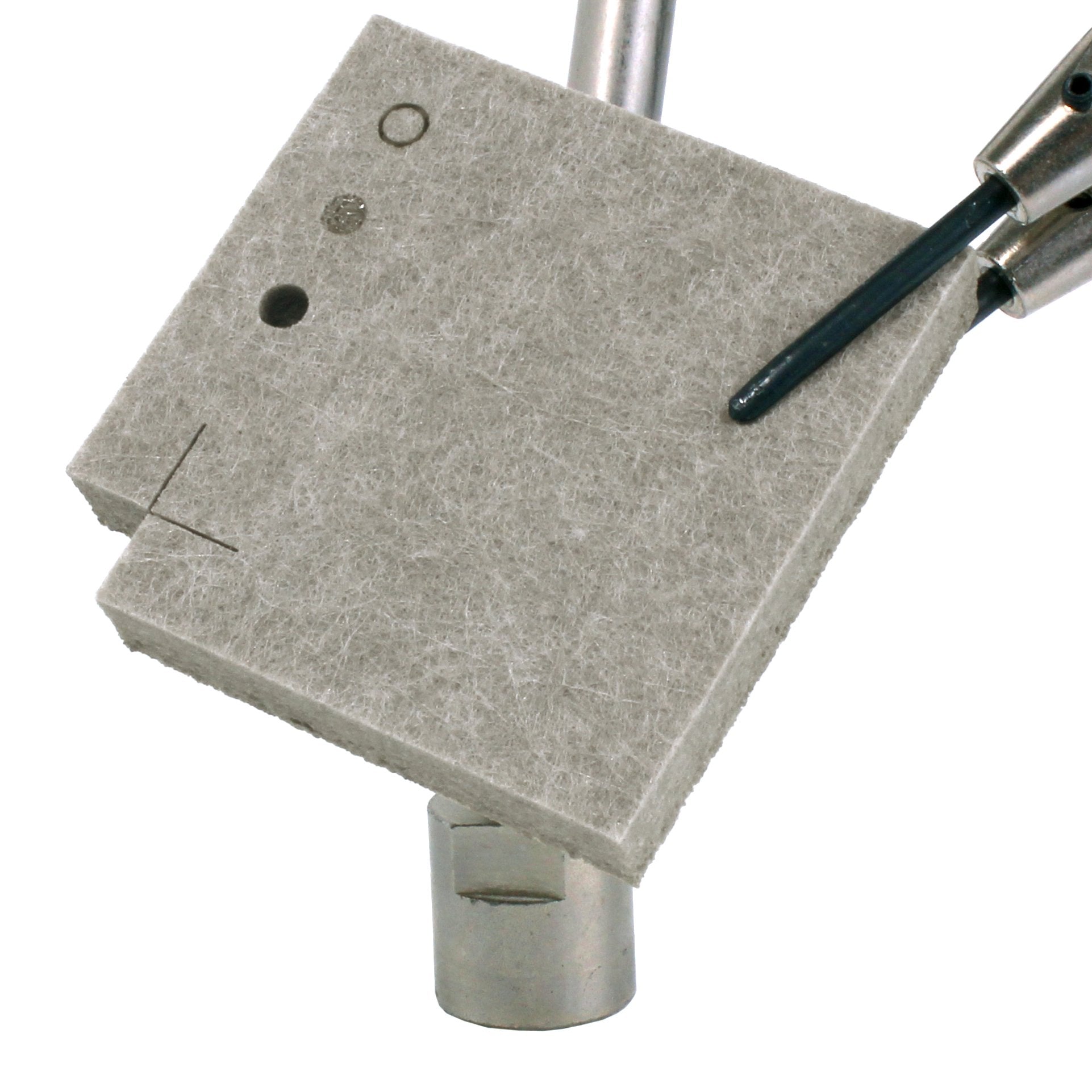
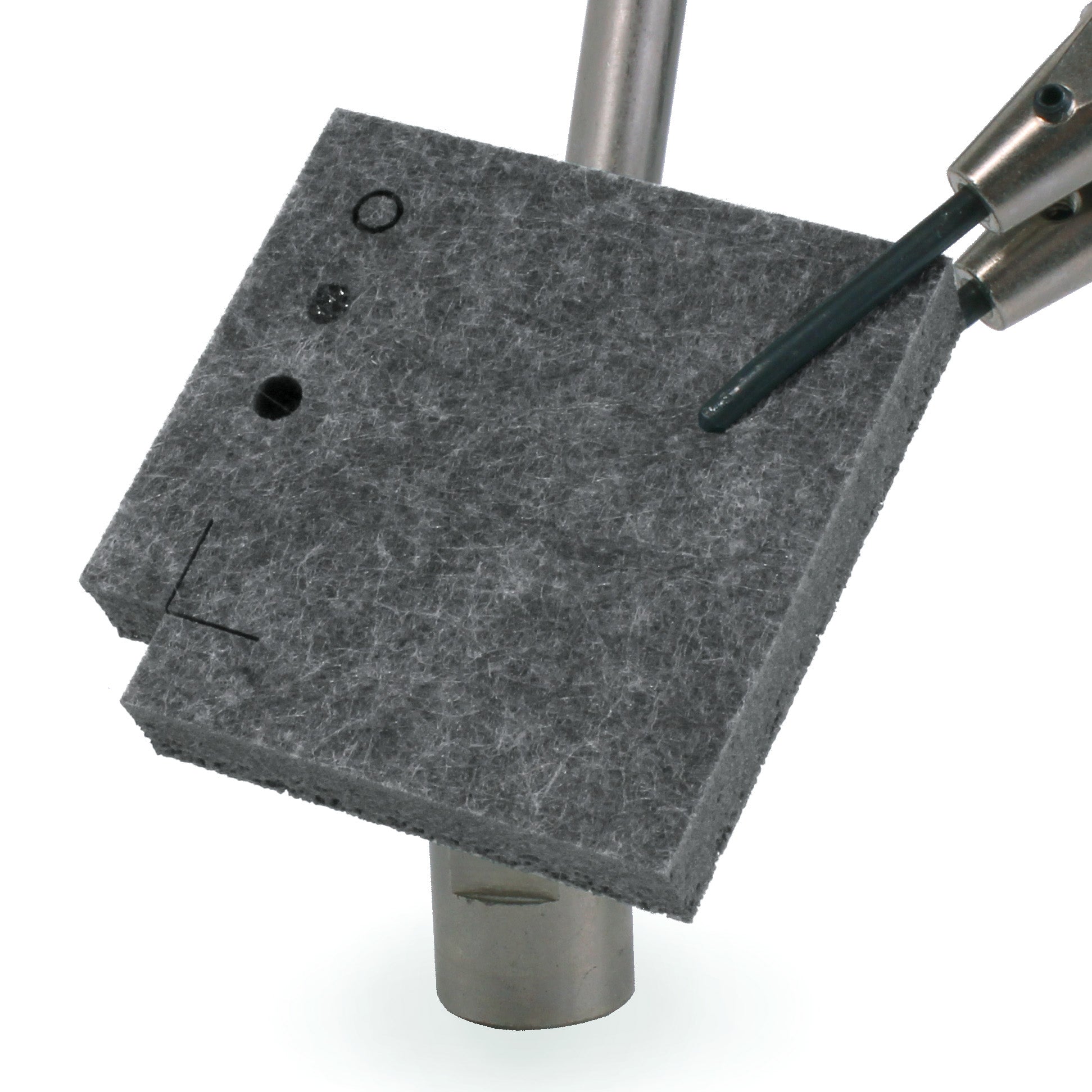
Strong and lightweight acoustic panels made from 70% recycled PET felt
Newly added and already one of our favourite materials. Designing with PET felt is a joy thanks to its vibrant colours that also combine beautifully. The material feels soft, but the sheets are also strong and lightweight. This allows you to easily create (3D) sculptures that simply slot together and are easy to hang.
What is PET Felt
This is an acoustic panel made of polyester fabric. It is made from 70% recycled PET, such as recycled PET bottles. In addition to laser cutting, you can also saw and cut it with a utility knife. This felt panel (also known as EASYfelt) can be easily glued with adhesive sealant, for example.
Laser Cutting Quality
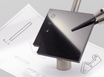
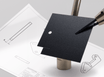
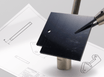
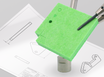
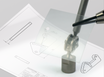
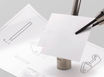
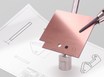
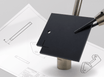
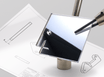
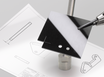
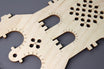
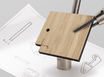
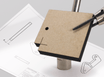
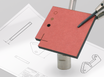
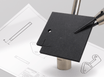
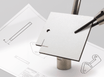
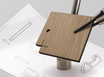
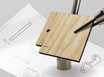
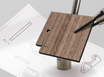
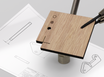
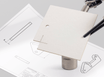
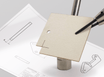
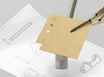
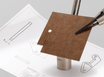
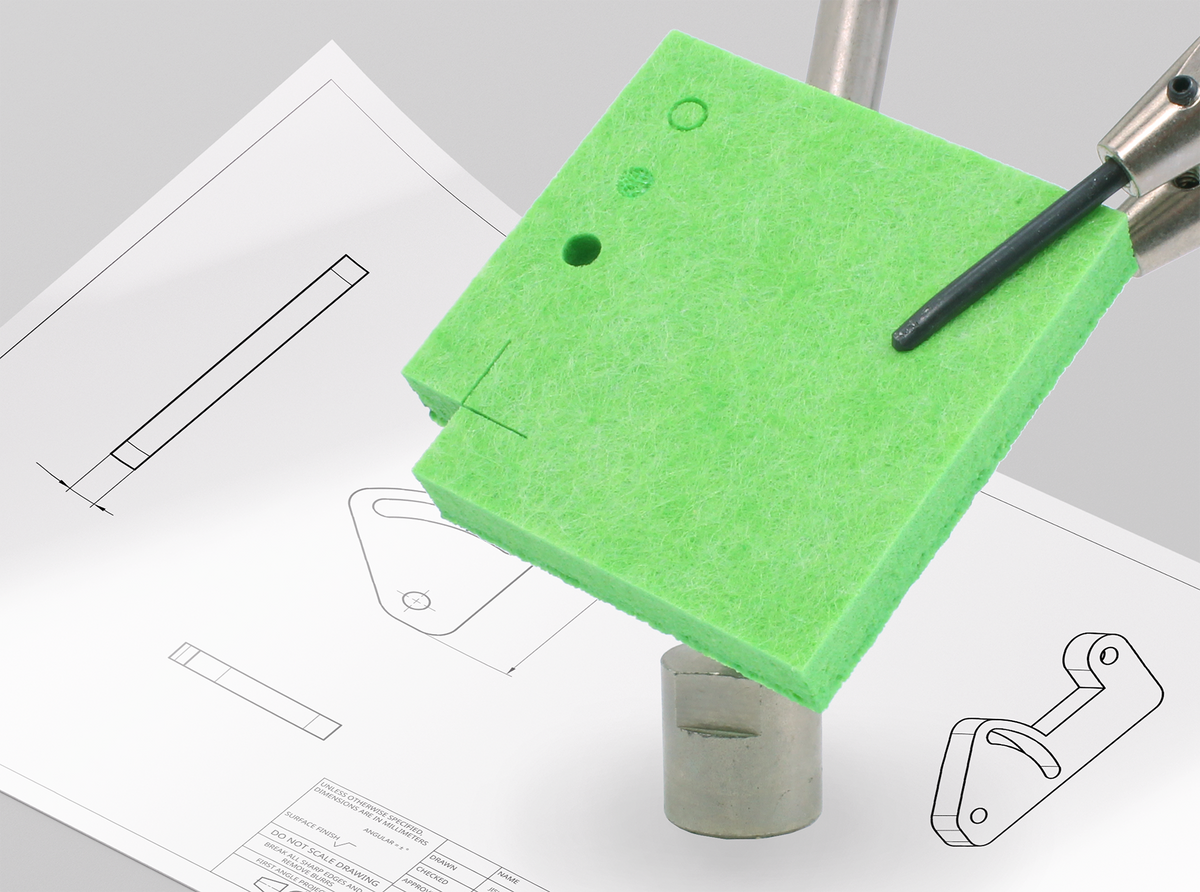
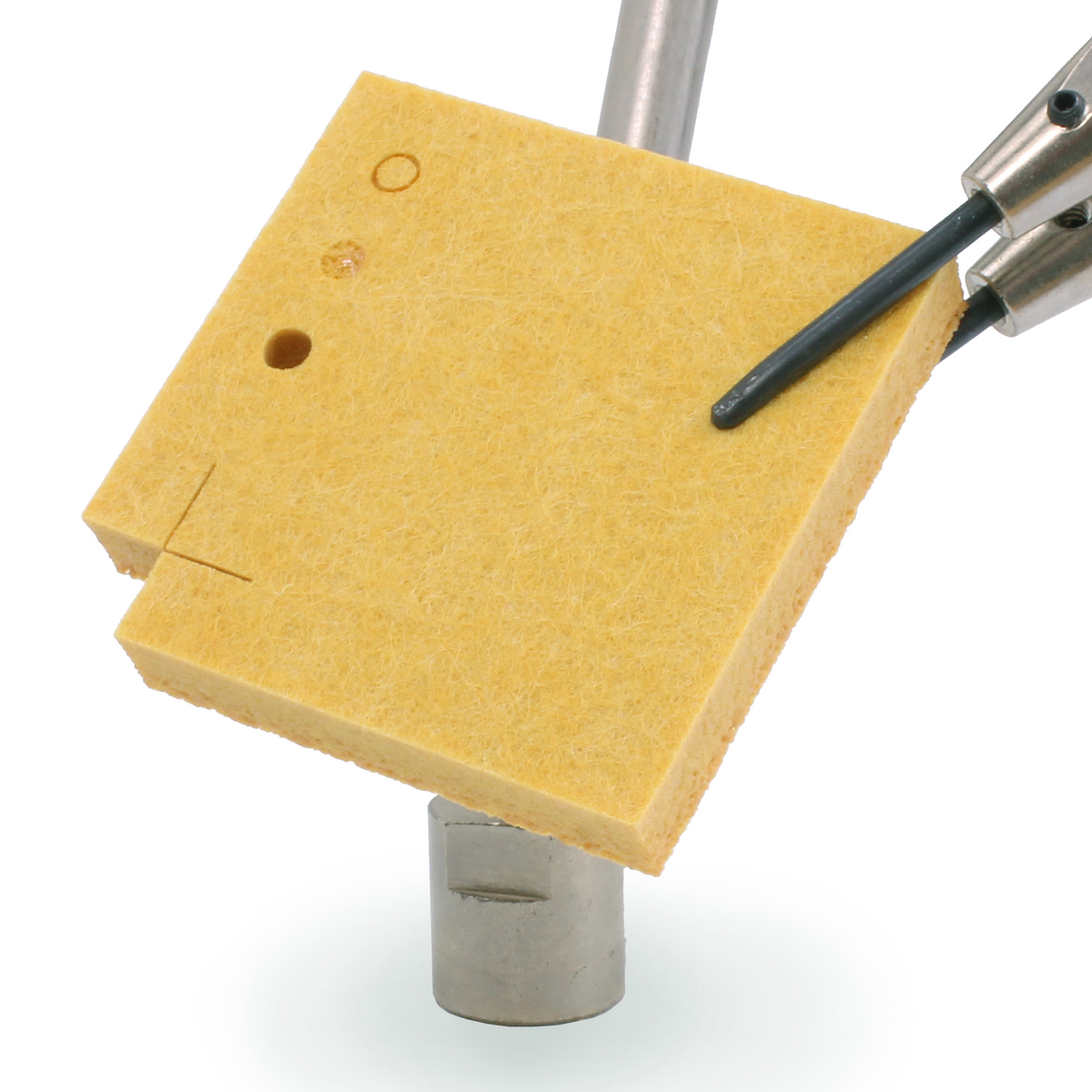
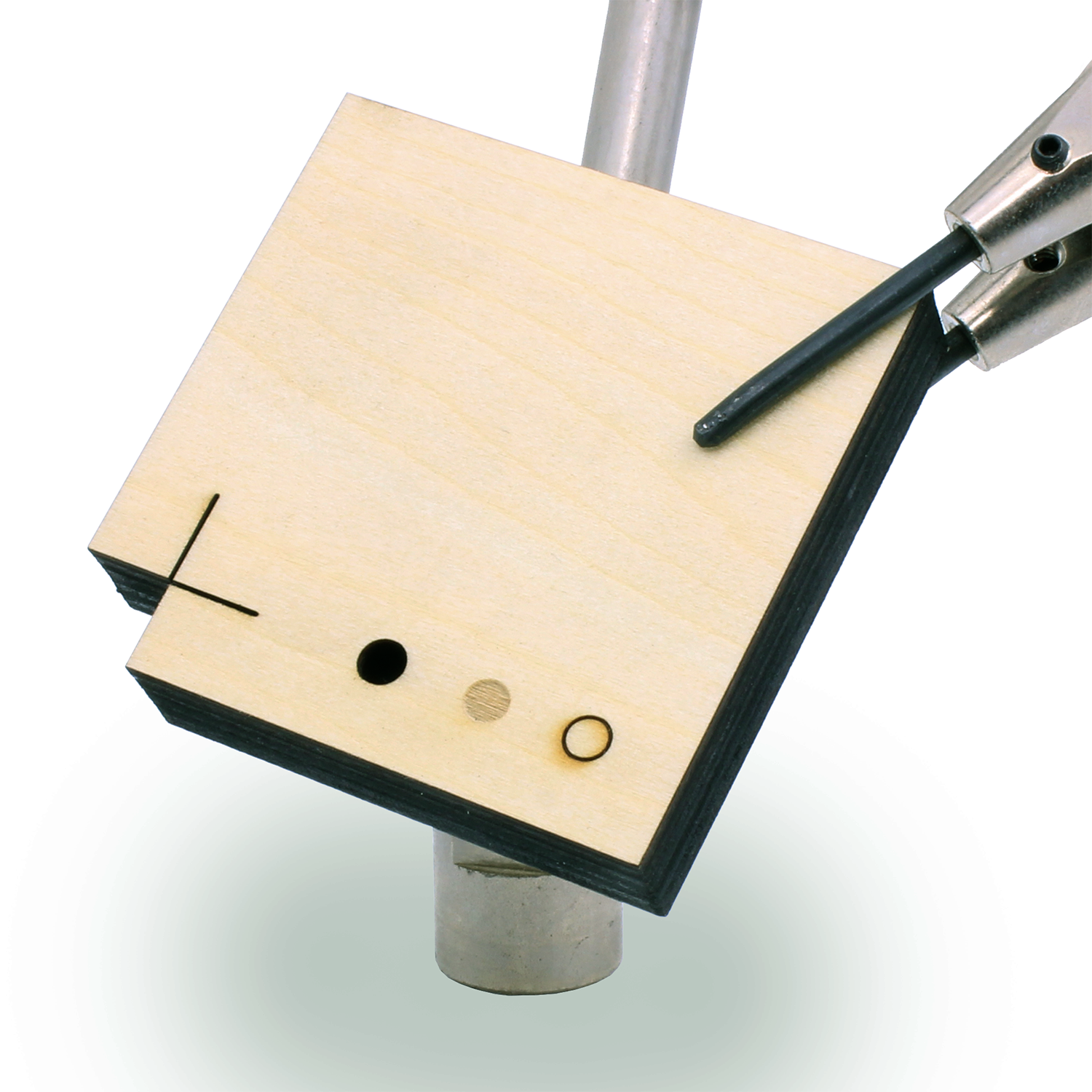
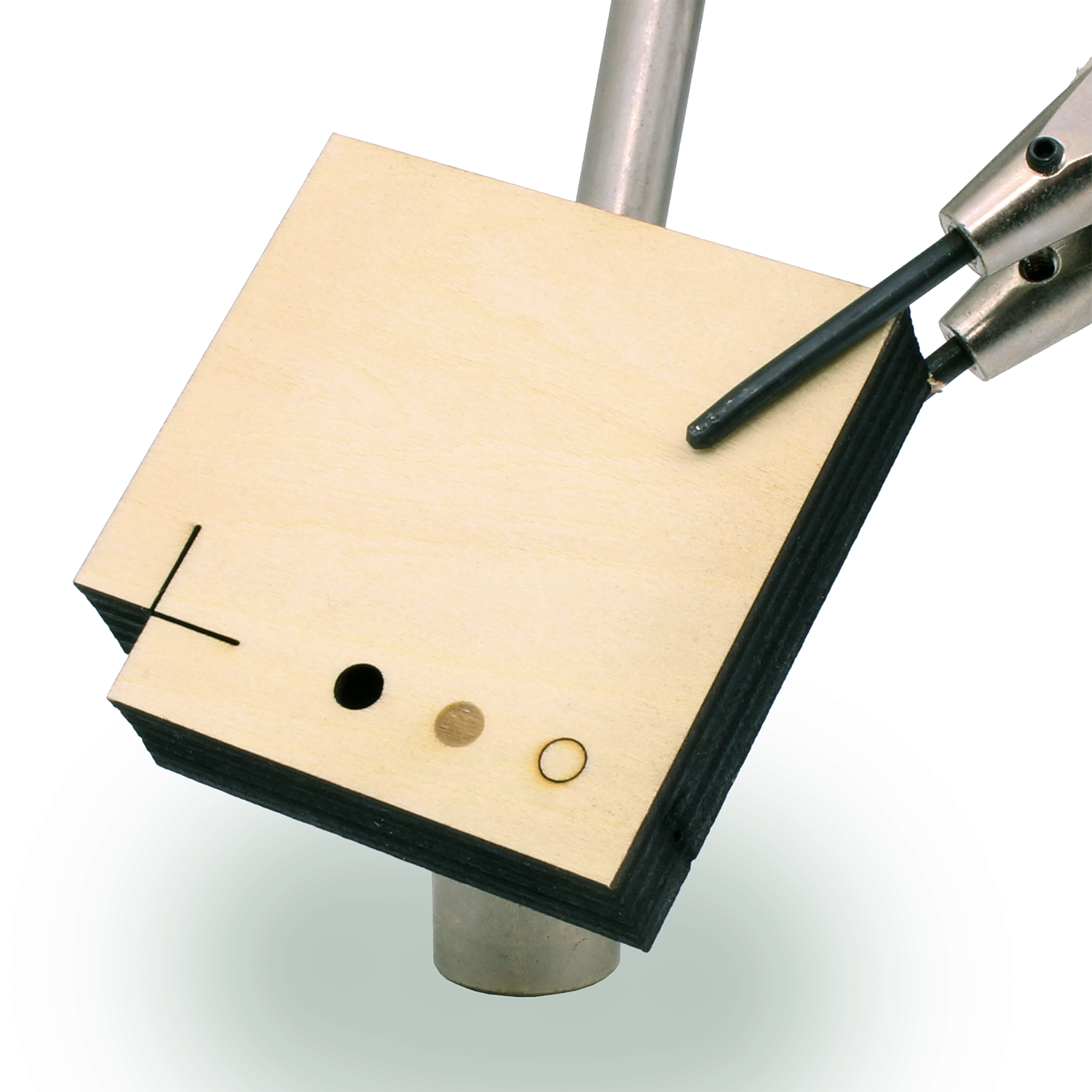
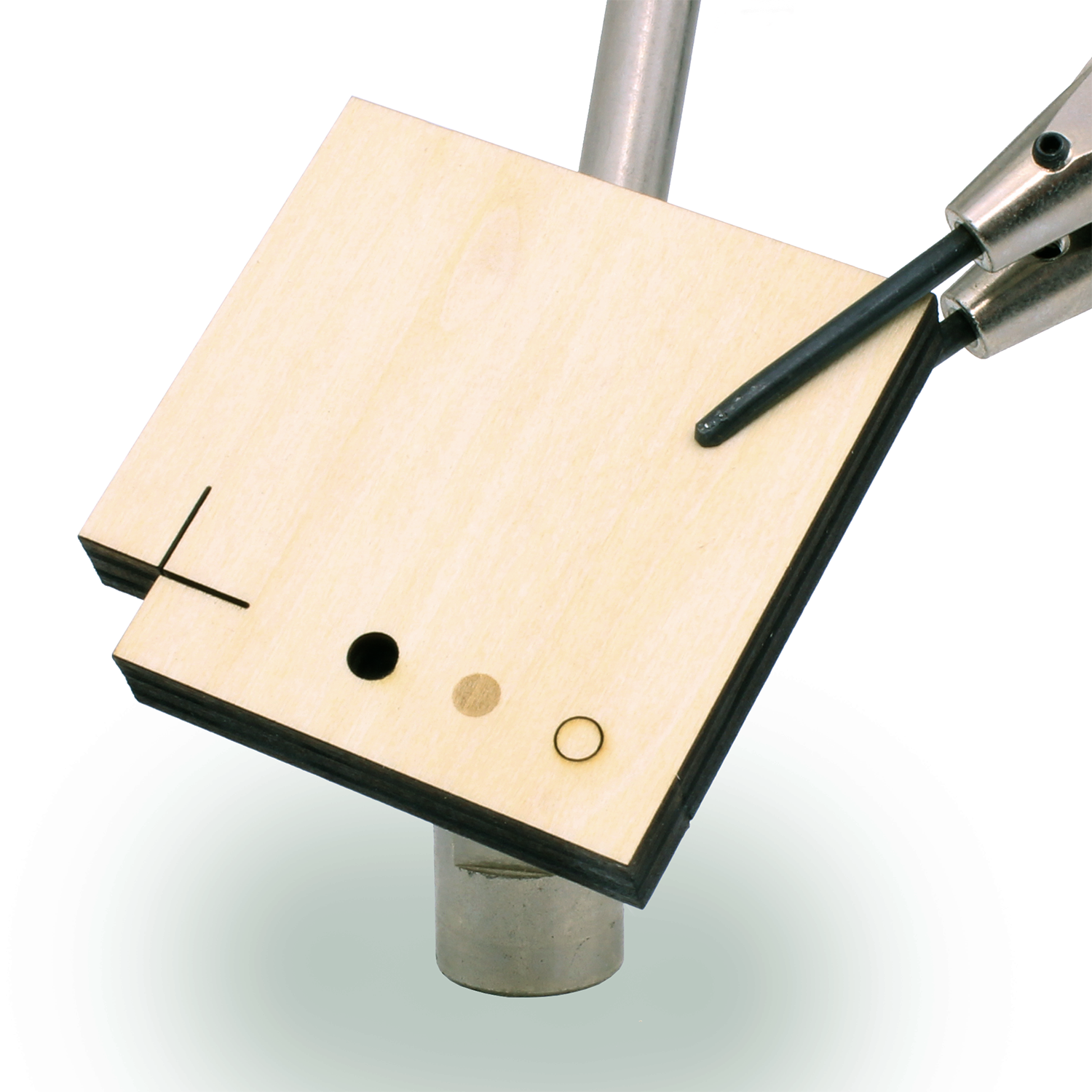
The laser cut is approximately 0.2mm wide, and you can create sharp internal corners. Please note: the laser cut has some ripples (see photos) and is a little hard. The laser cut has the same colour as the surface.
If you're creating connections such as mortise and tenon joints or slots that need to fit together, make them 8.2 mm wide. This will allow them to clamp together without glue. At 8.6 mm, the parts will still slide together with some play.
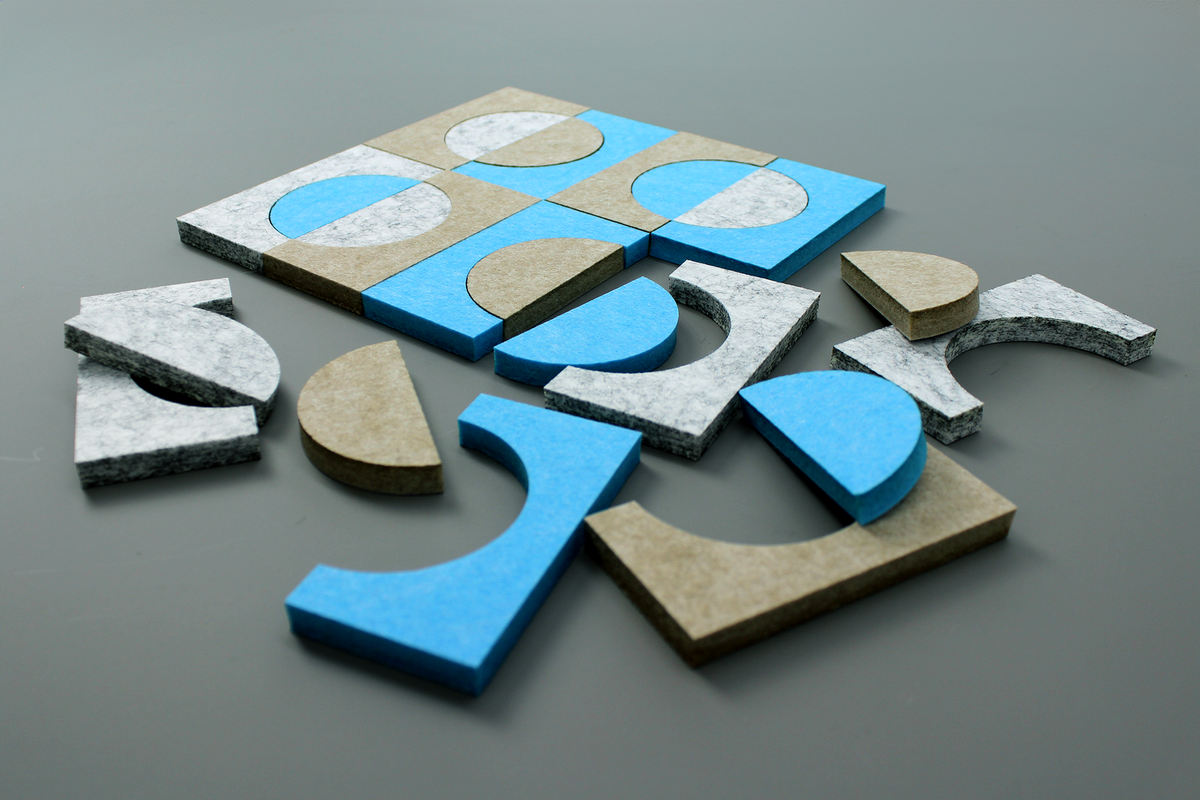
If you're creating inlaid images or text, give the internal shapes (letters) an outer offset of approx. 0.2mm and the external shapes (the recess where the letter will go) an inner offset of 0.2mm. This way, it will fit neatly and stay in place by itself.
2D Applications
This acoustic felt is suitable for absorbing sound, for example, in a busy office. And because you can have it cut to any desired contour, you can instantly create a logo, image, or text from it. Ideal for restaurants, classrooms, or simply for home. You can also use it as a coaster, play mat, and even as panels in a suspended ceiling. For example, create a hole pattern in these panels to further enhance their acoustic properties.
3D Applications
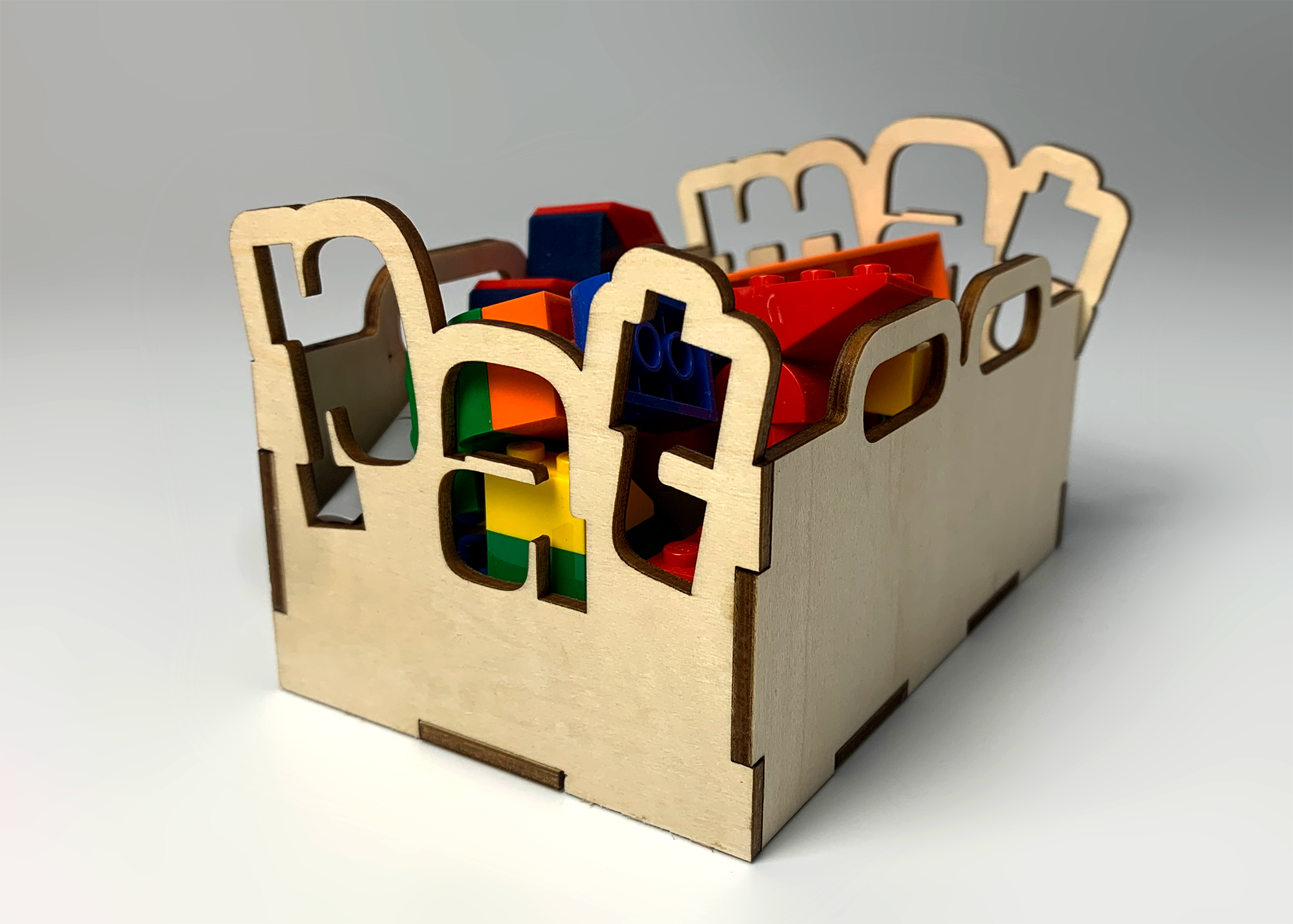
By using slots or mortise and tenon joints, you can easily connect pieces to create 3D objects. Of course, acoustic objects, but also office supplies like desk organisers and pen holders. And last but not least: lamps and light fixtures.
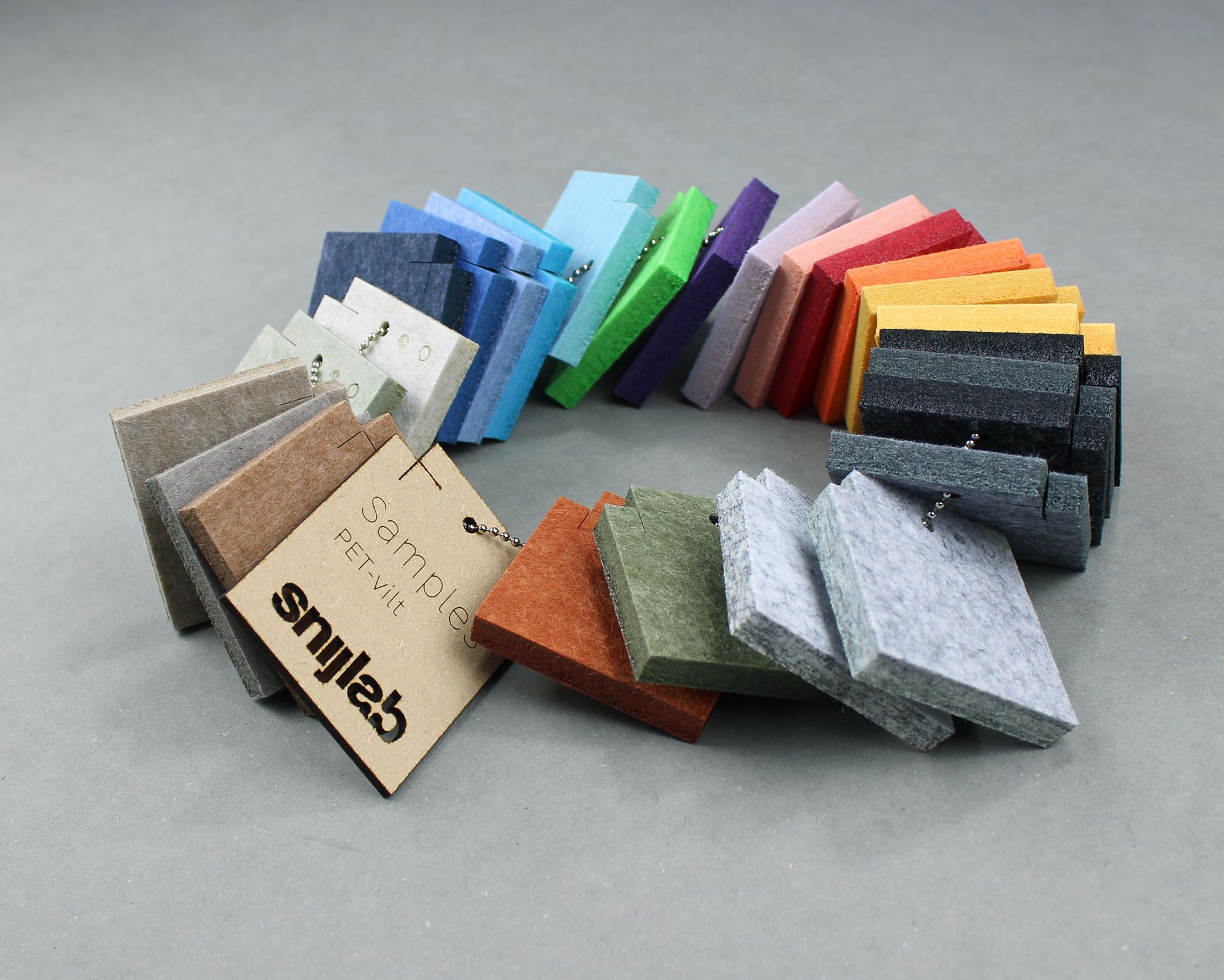
Want to compare PET felt colors? Order samples
Order a sample chain and compare all types of PET felt in your own hand. This way, you can make a well-informed decision about your design.
Samples provide a representative impression of the laser cutting quality Snijlab delivers.
To samplesAcoustic panel made of wood and foam
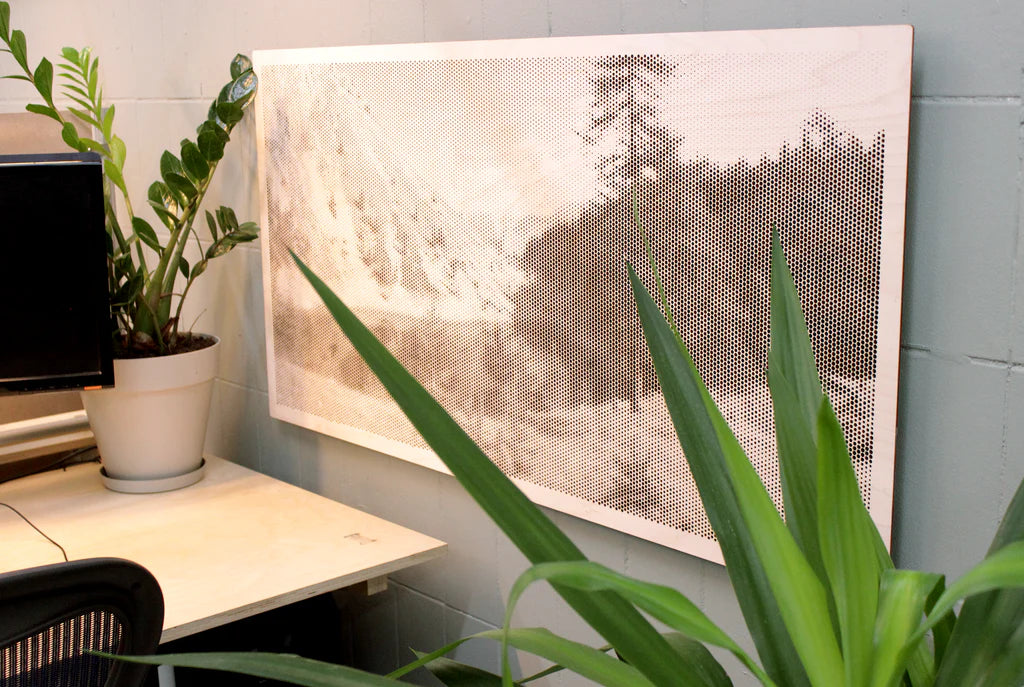
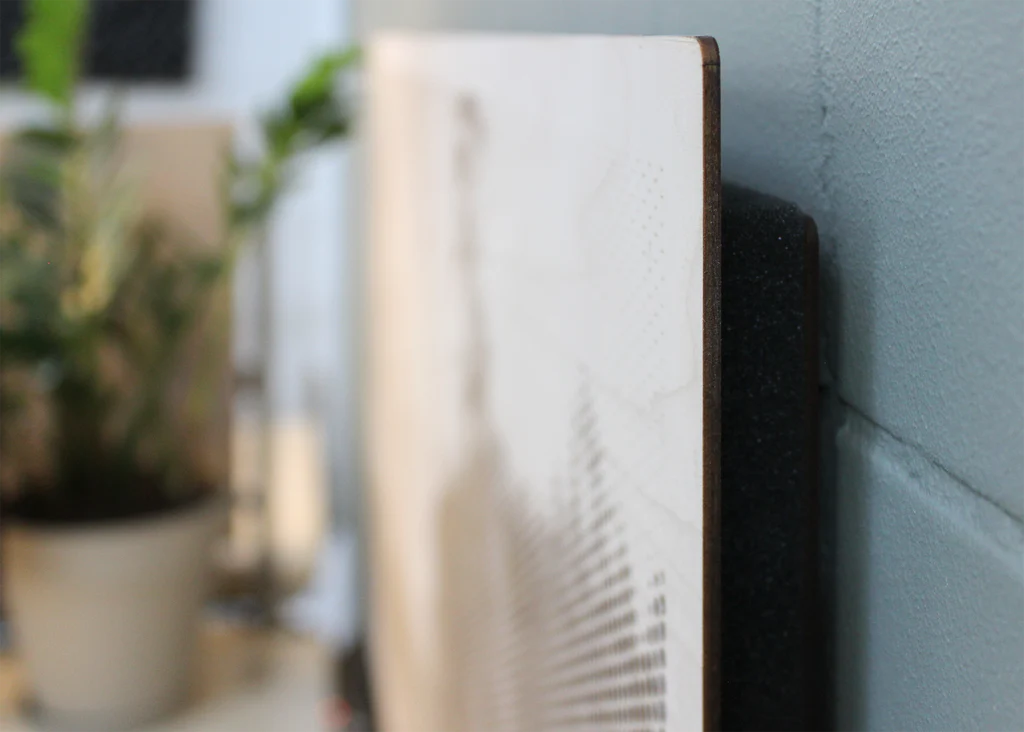
You can also create a stylish panel for better acoustics from wood and foam. For example, with a wooden front plate featuring a hole pattern, and a foam backing. This breaks and absorbs sound waves.
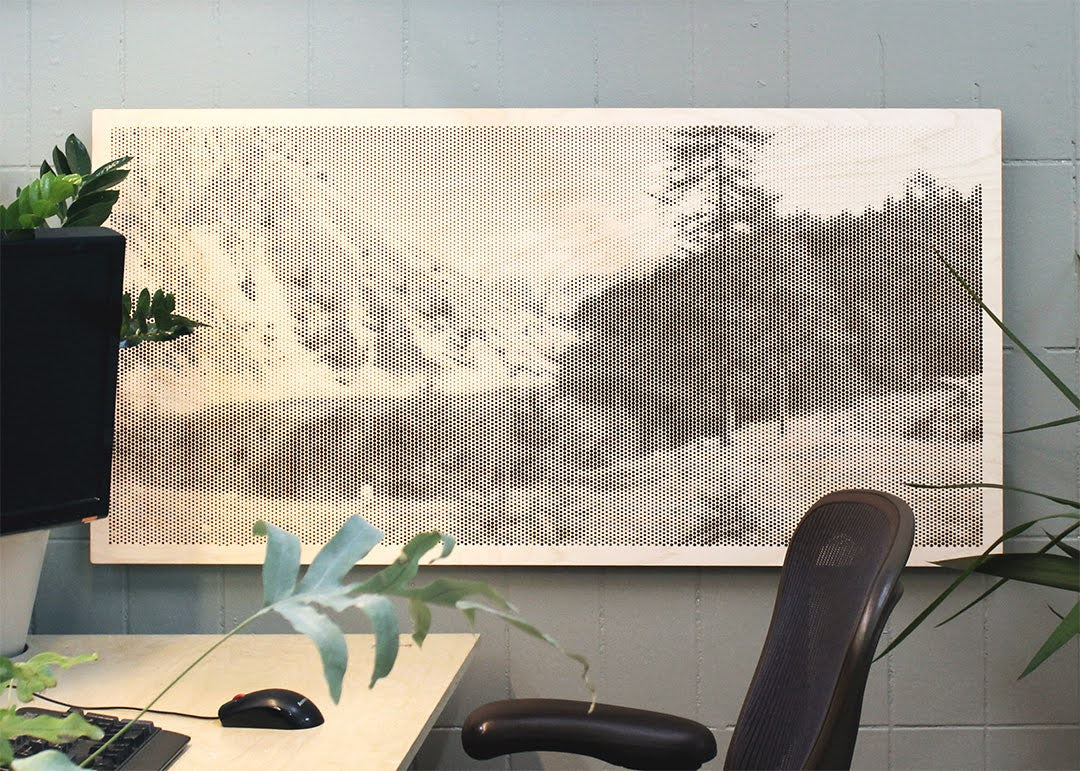
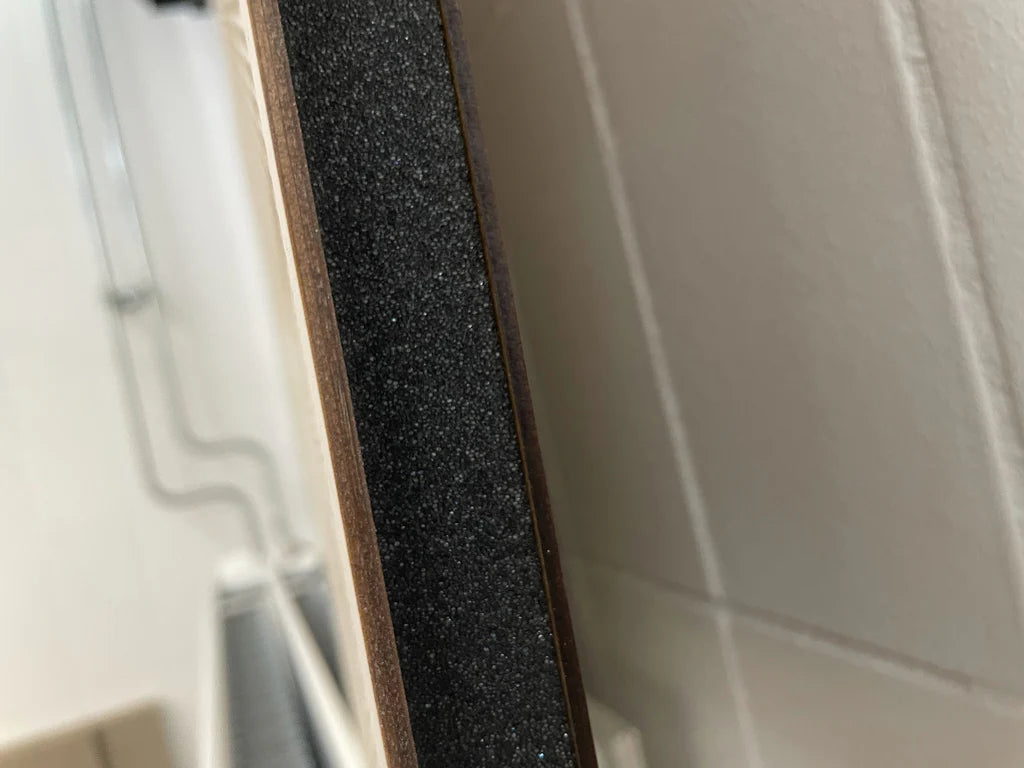
Below is an example of a photo converted into a halftone grid. This panel is laser cut from 3 mm Birch plywood with a 20 mm PE Hard foam layer behind it.
First choose a type of wood
To make an acoustic panel from wood and foam, first choose a type of wood. In your design, make sure to create enough interruptions in the surface.
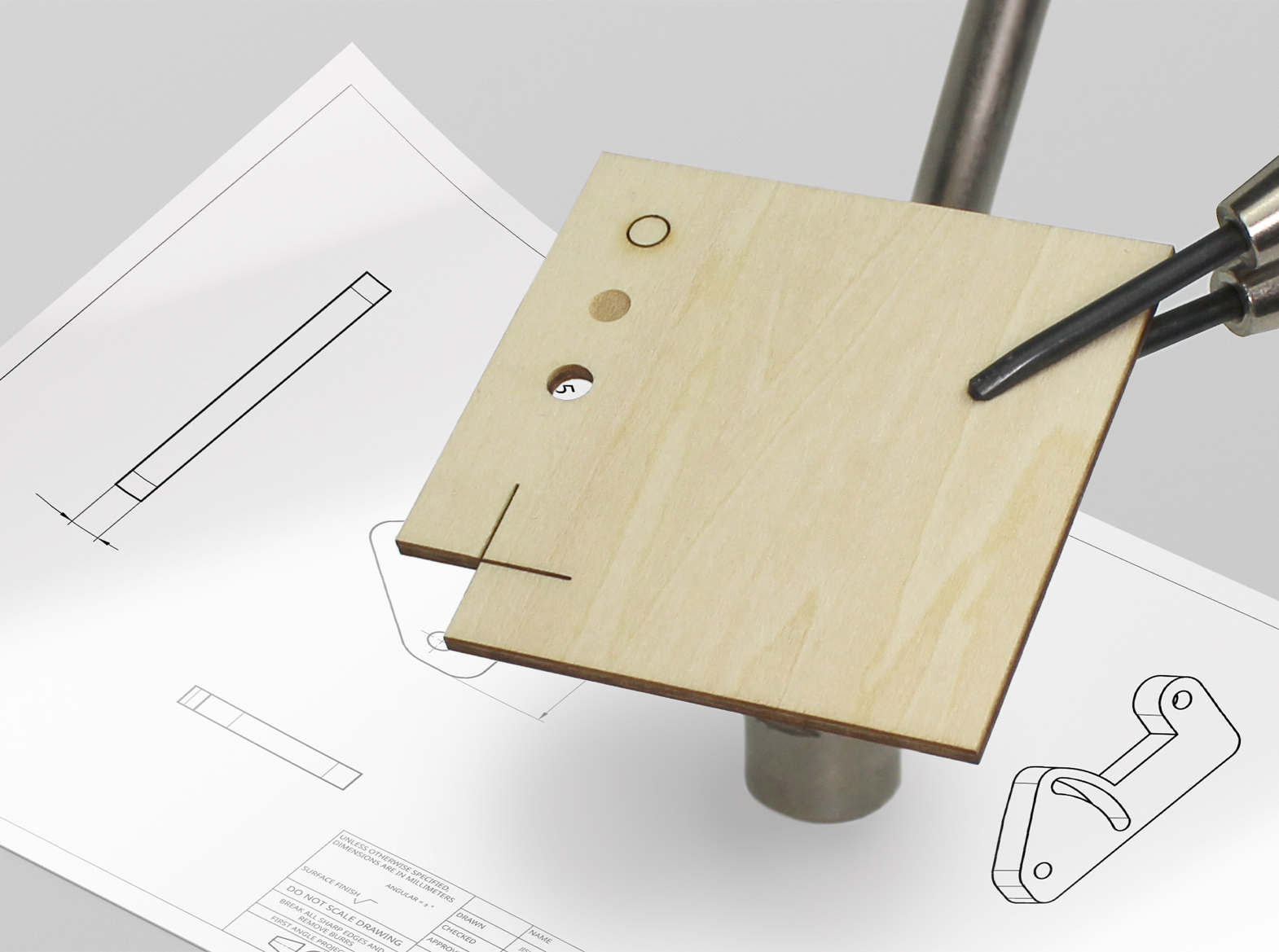
In principle, all wood types at Snijlab are suitable for this. We recommend starting by looking at the three wood types below. Birch plywood has a beautiful sheen and natural wood grain. Lime plywood is lightweight. And colored MDF is great for decorative applications where the beautiful colors are a plus.
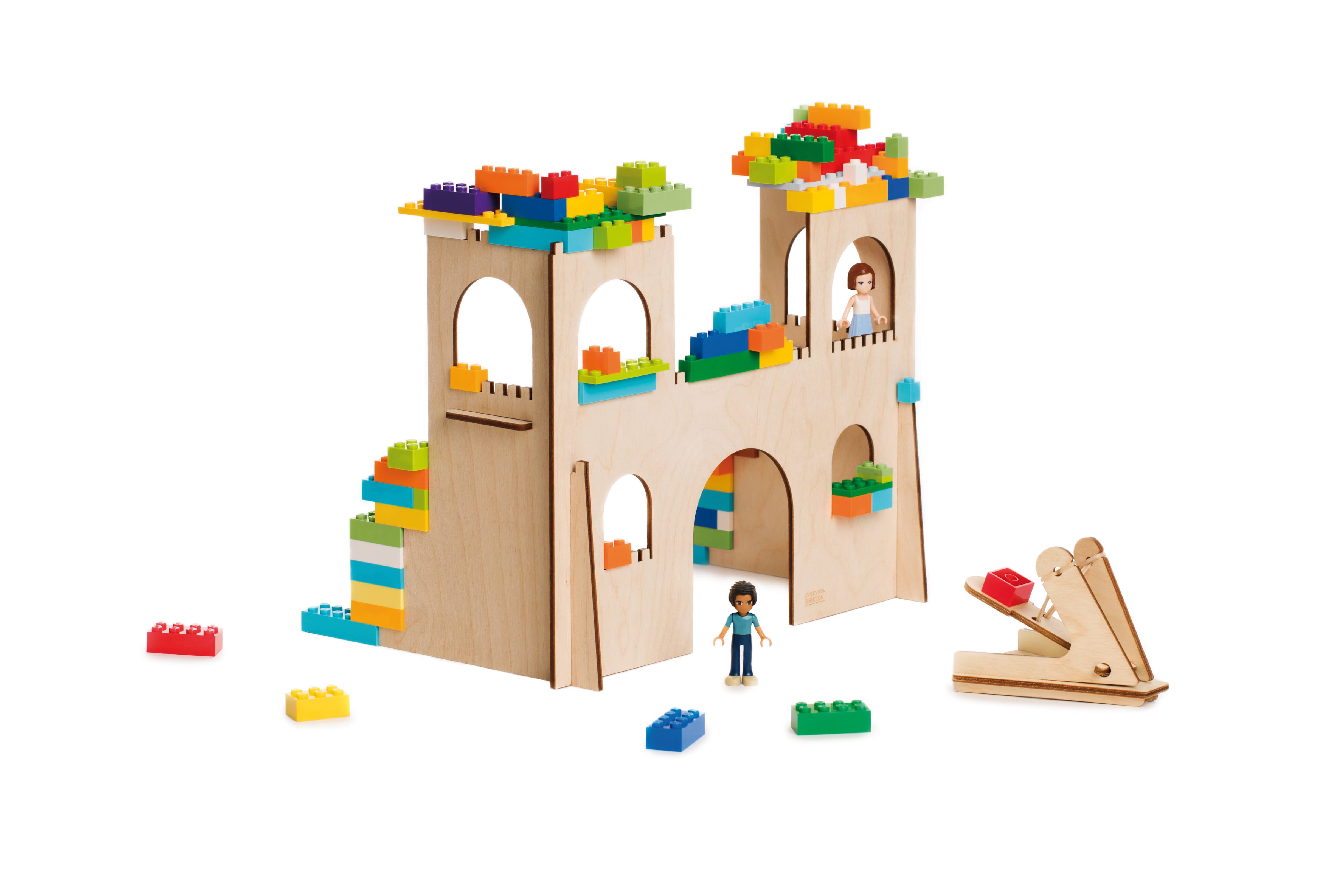

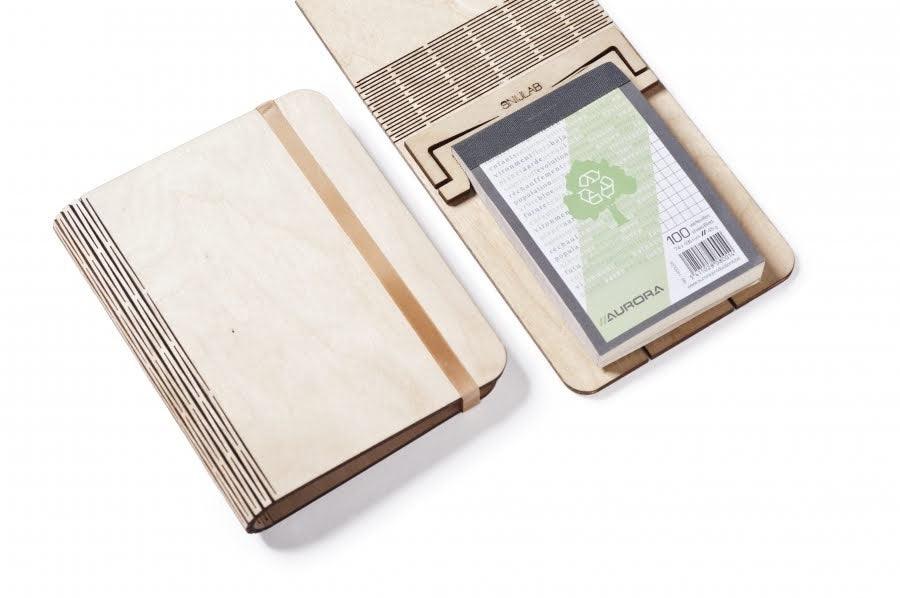

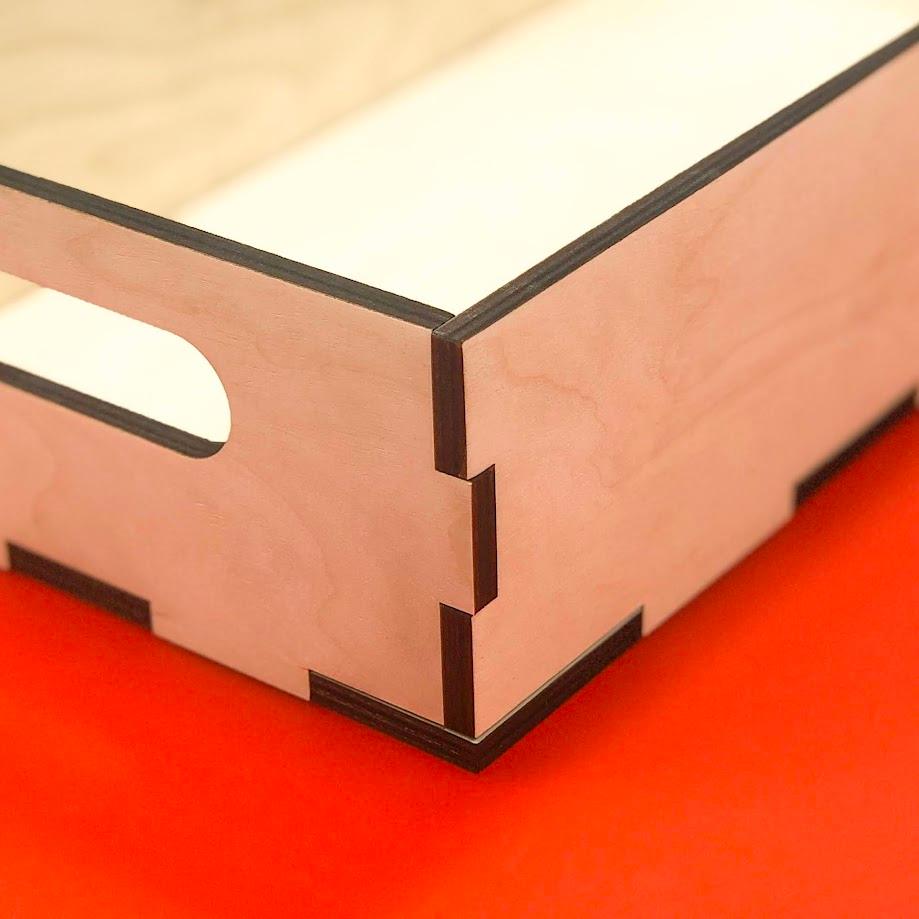


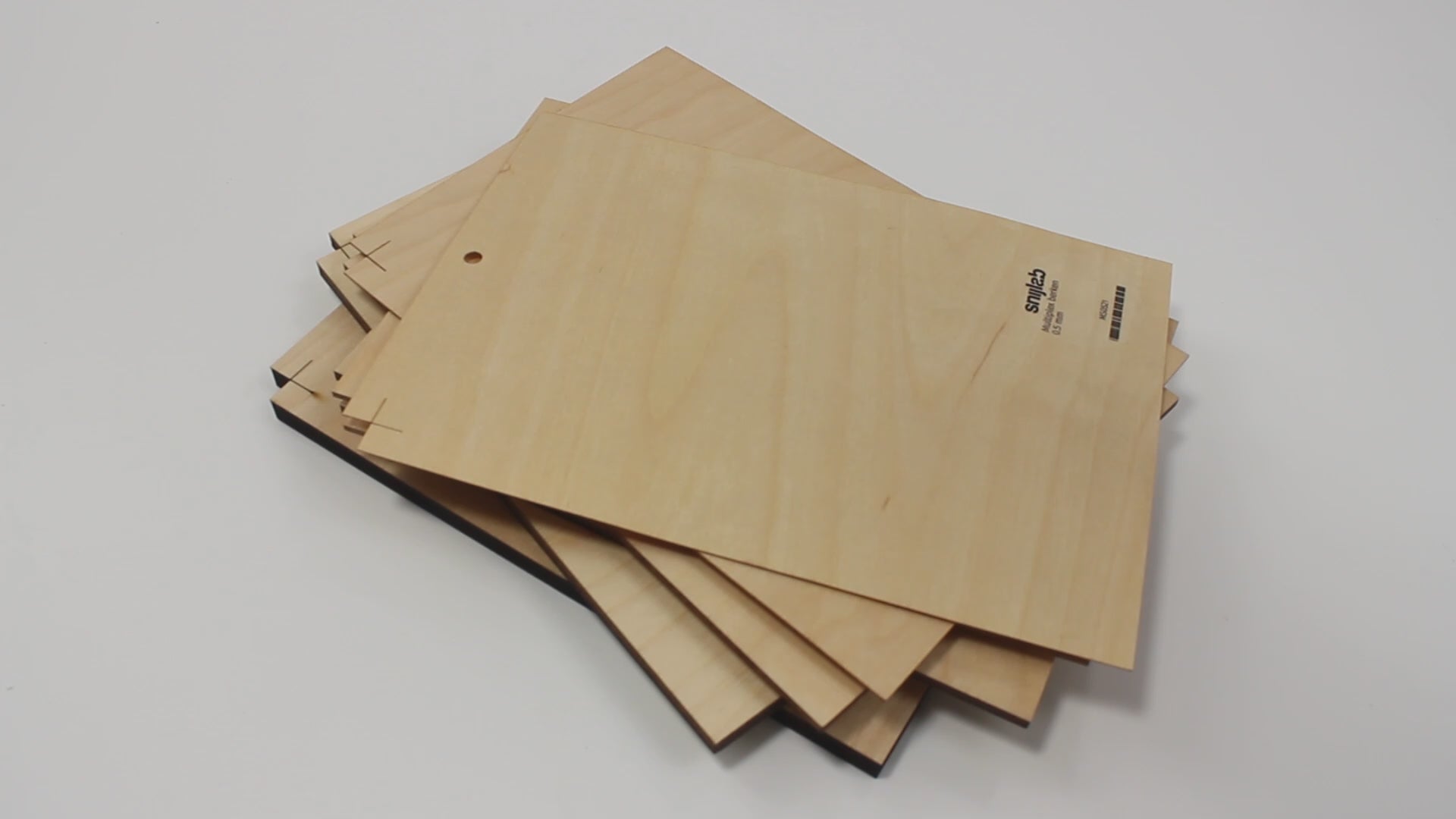

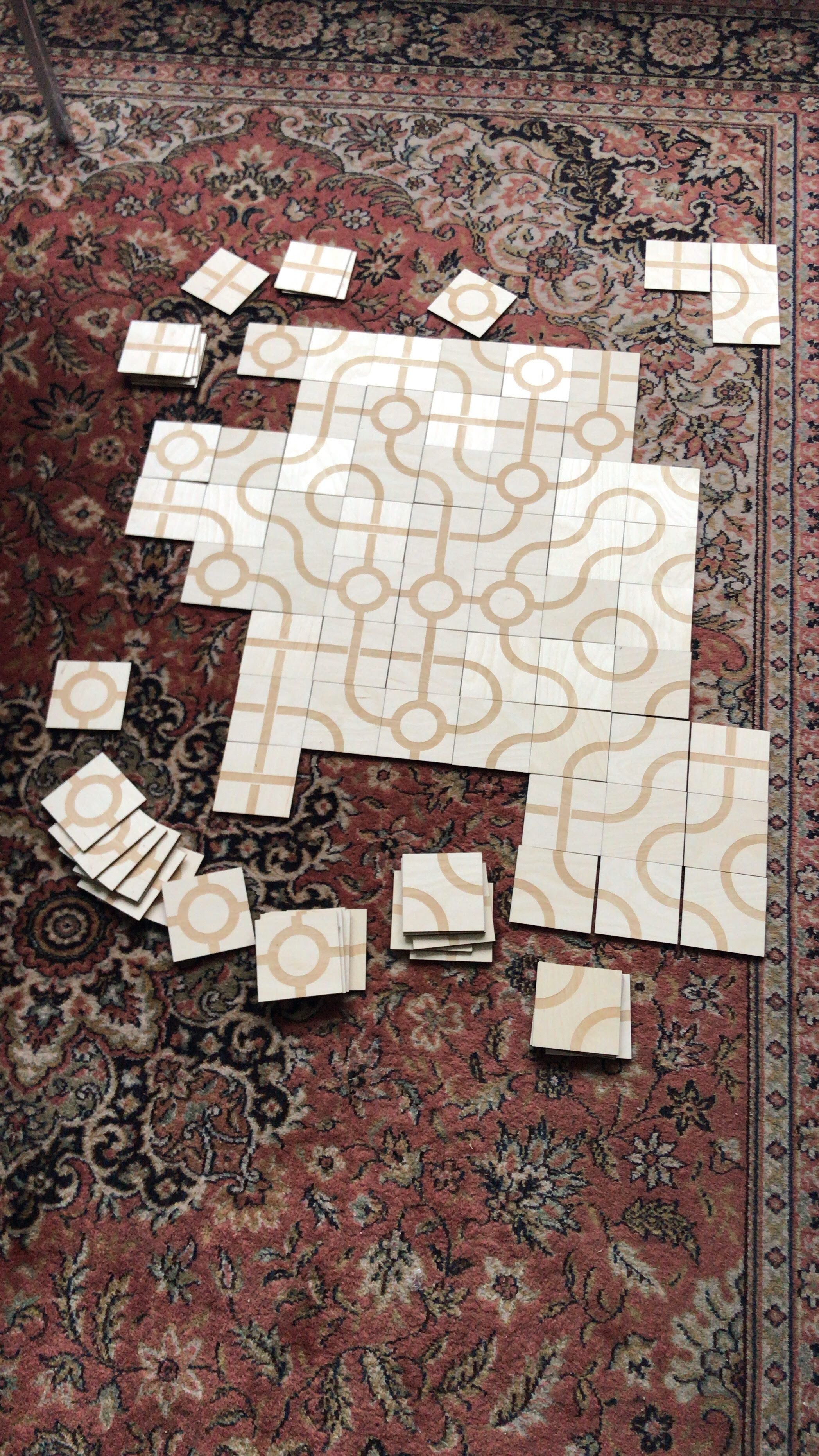
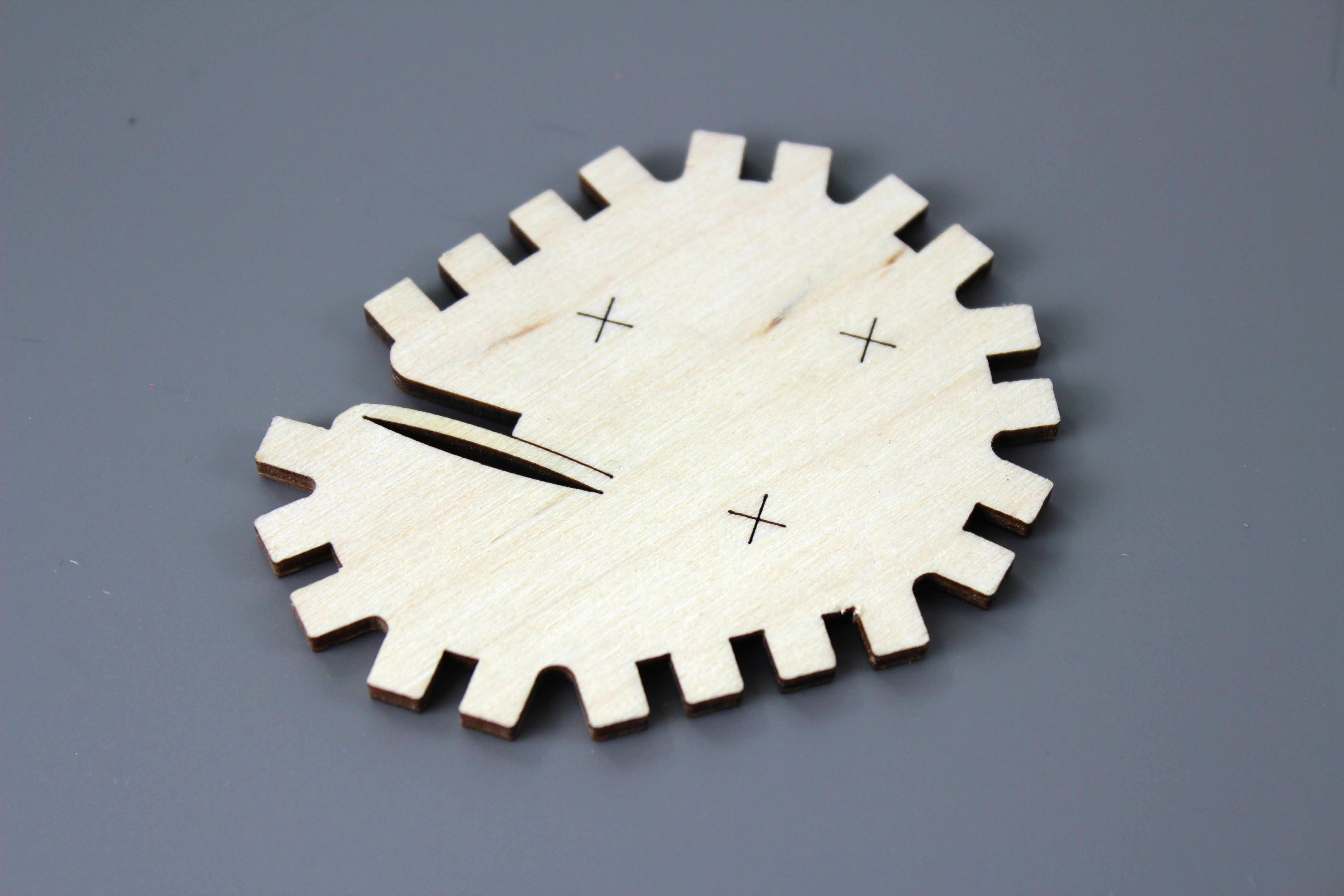
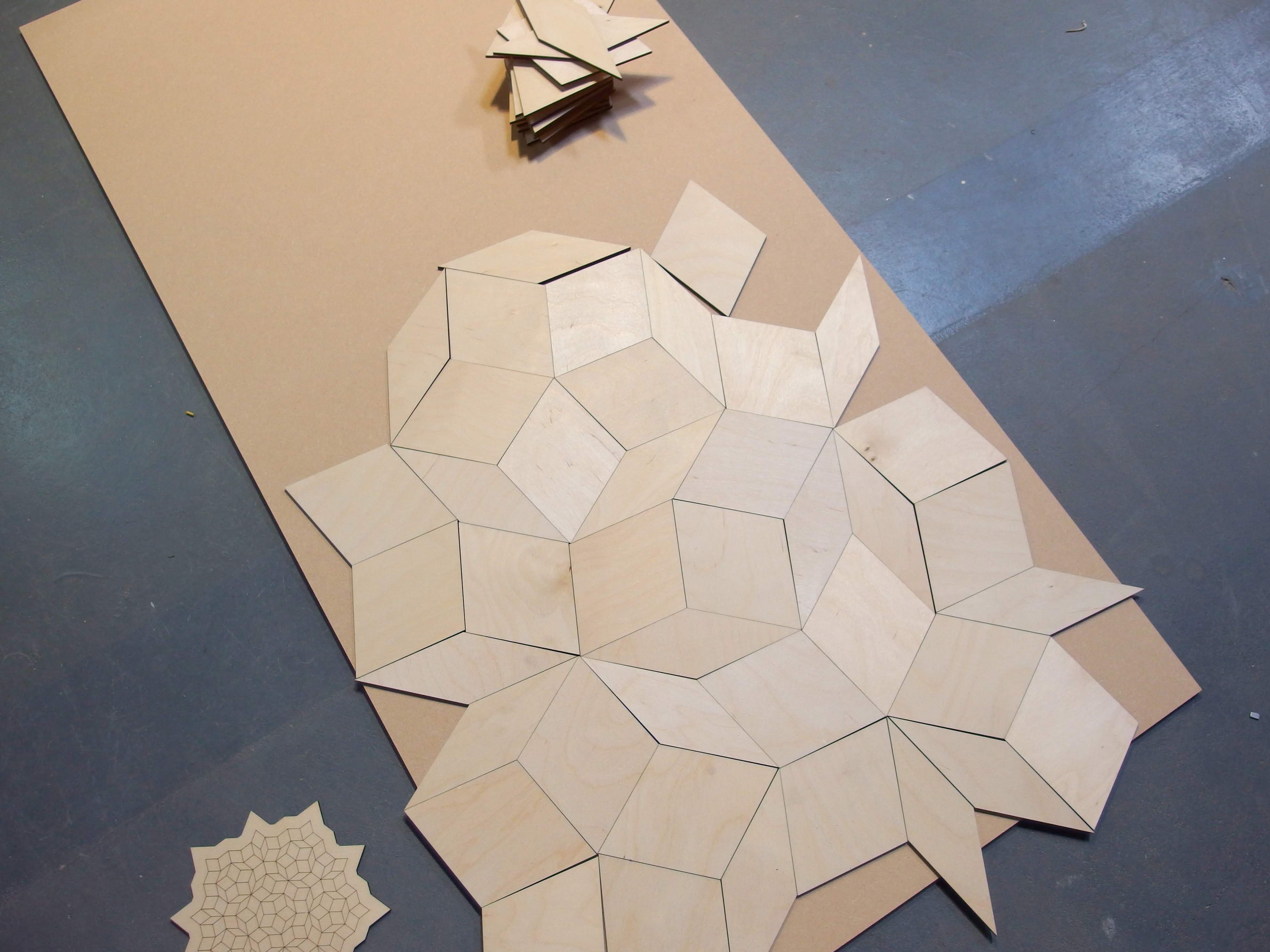
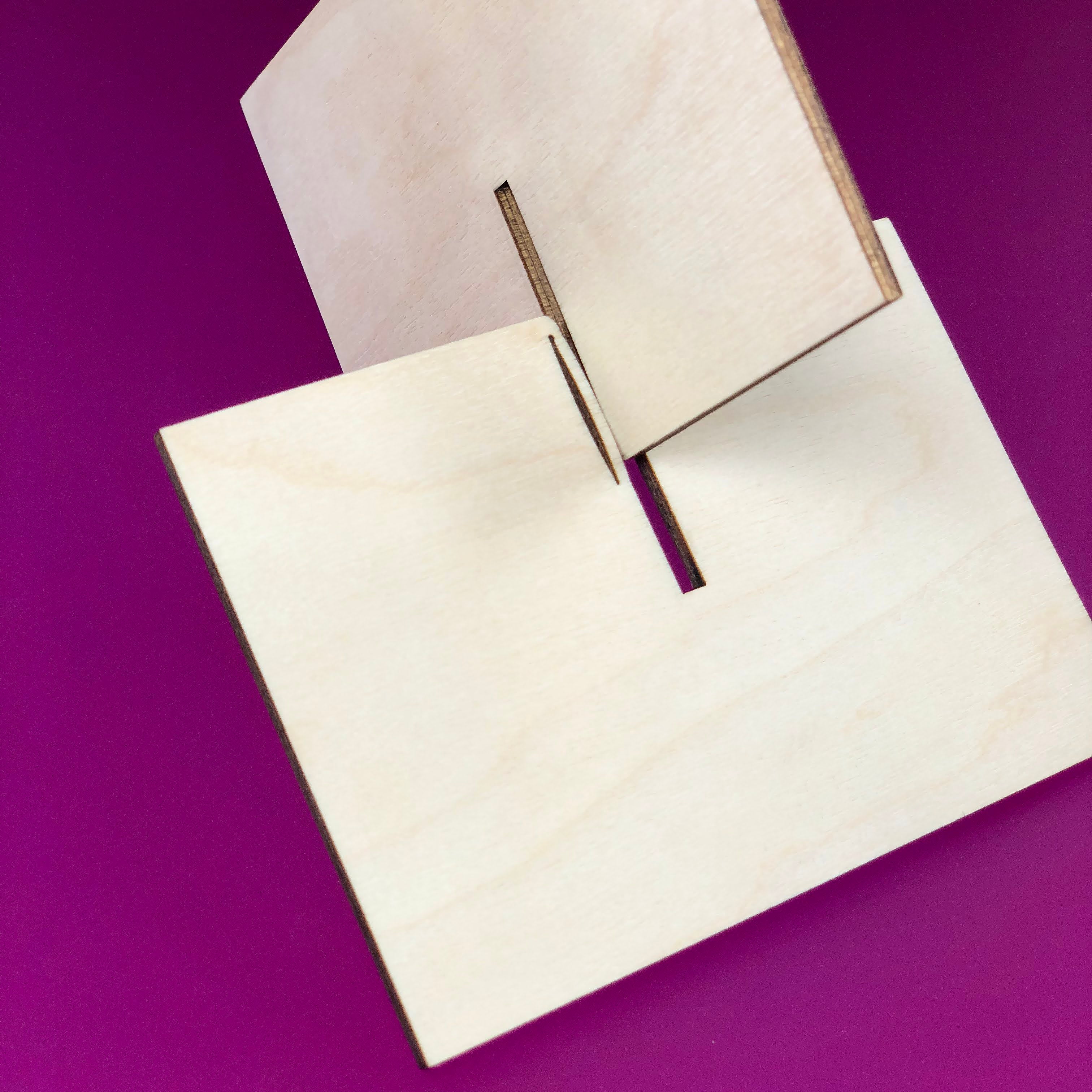
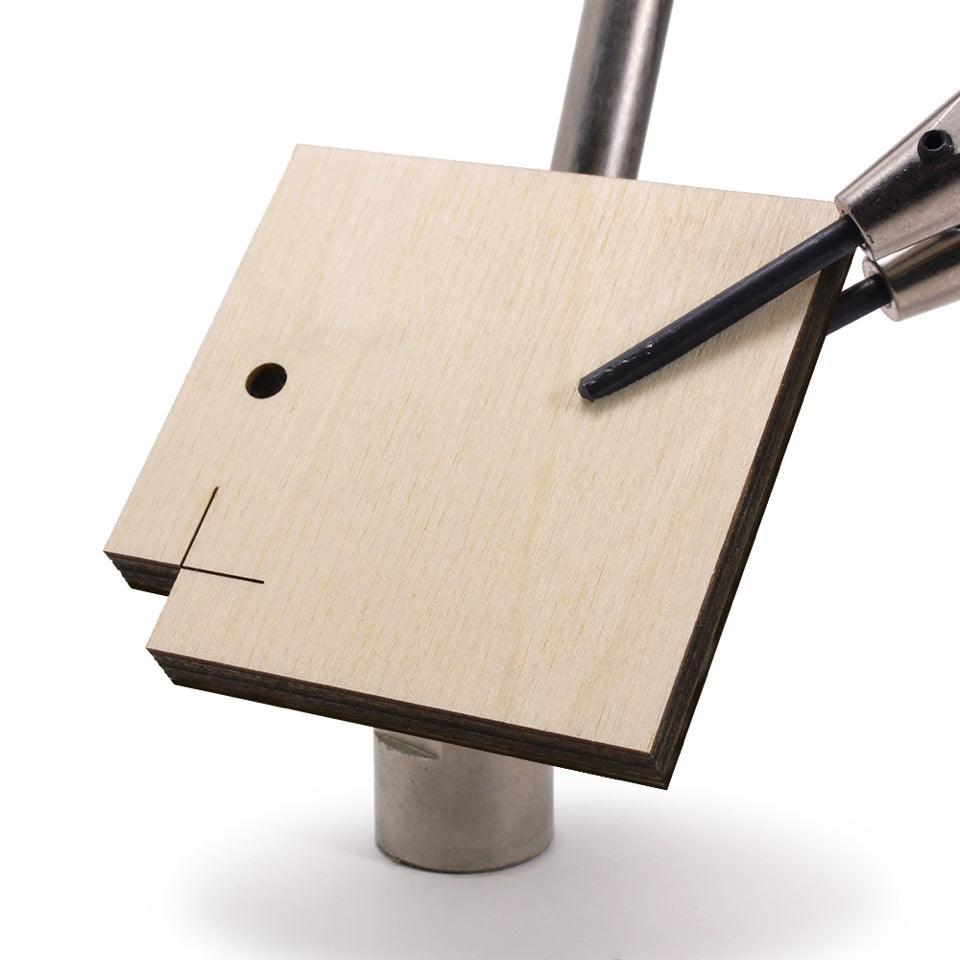
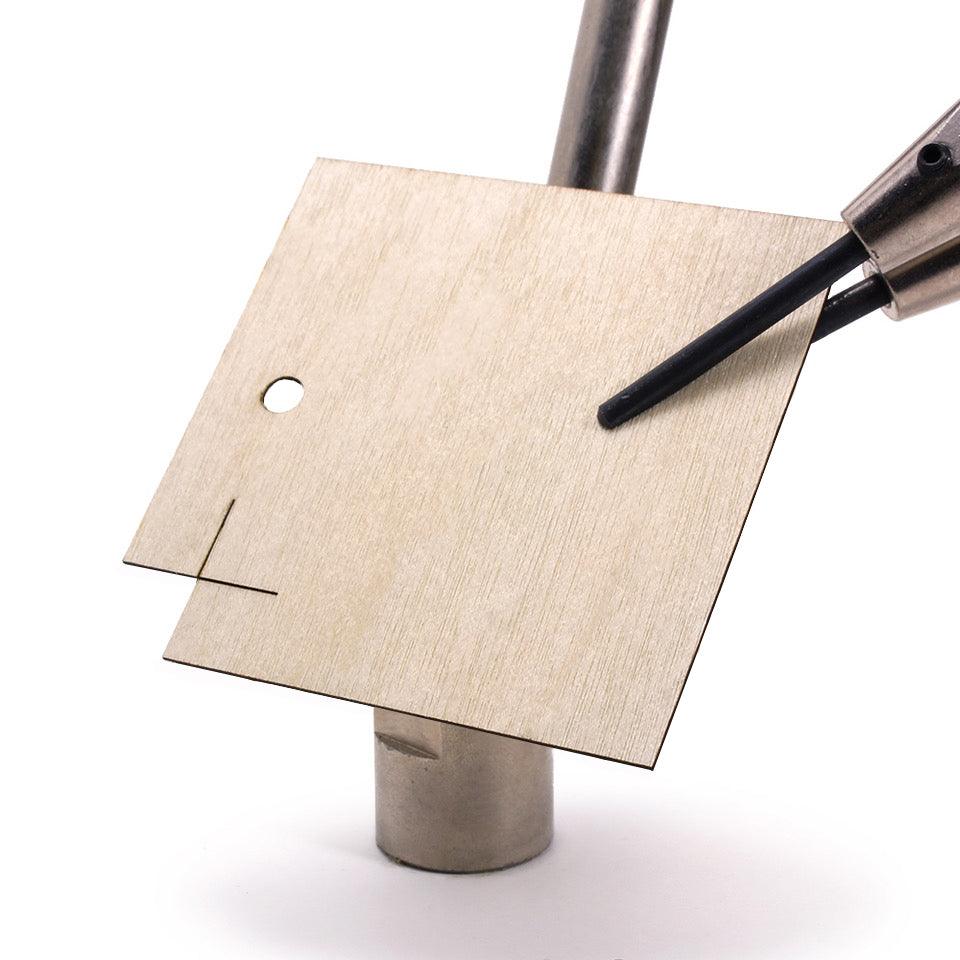
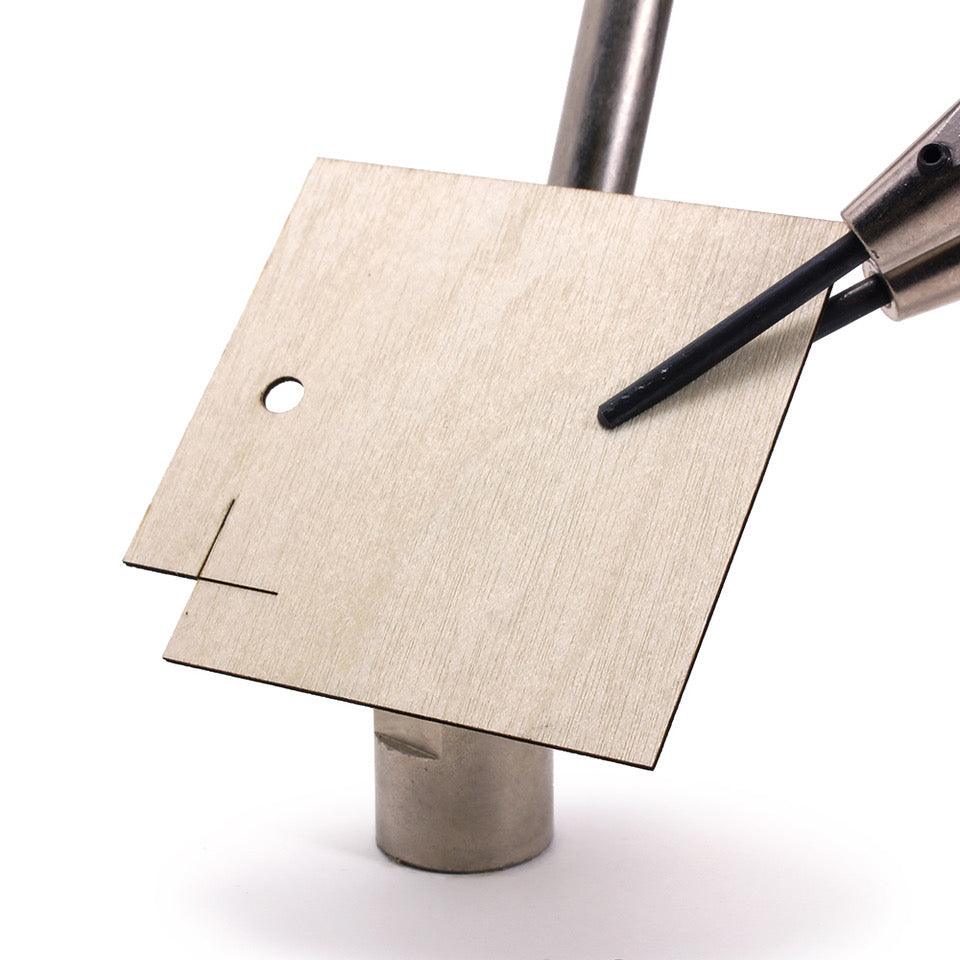
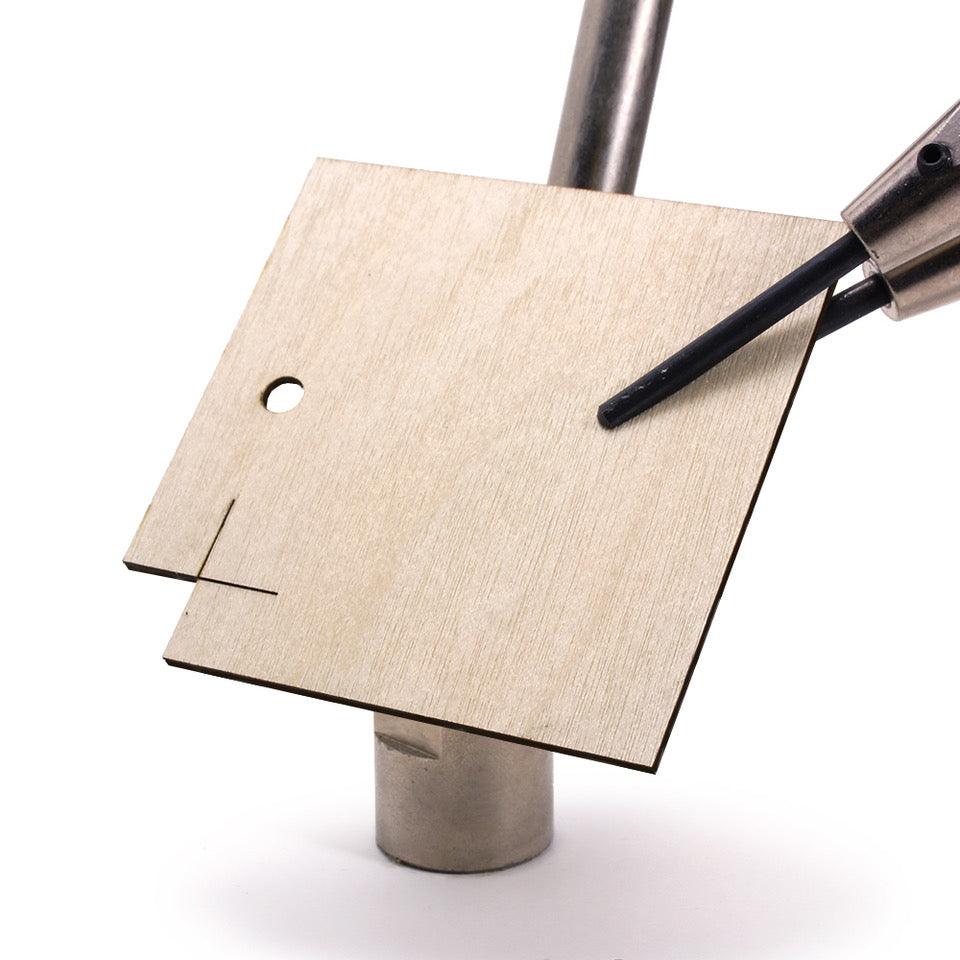
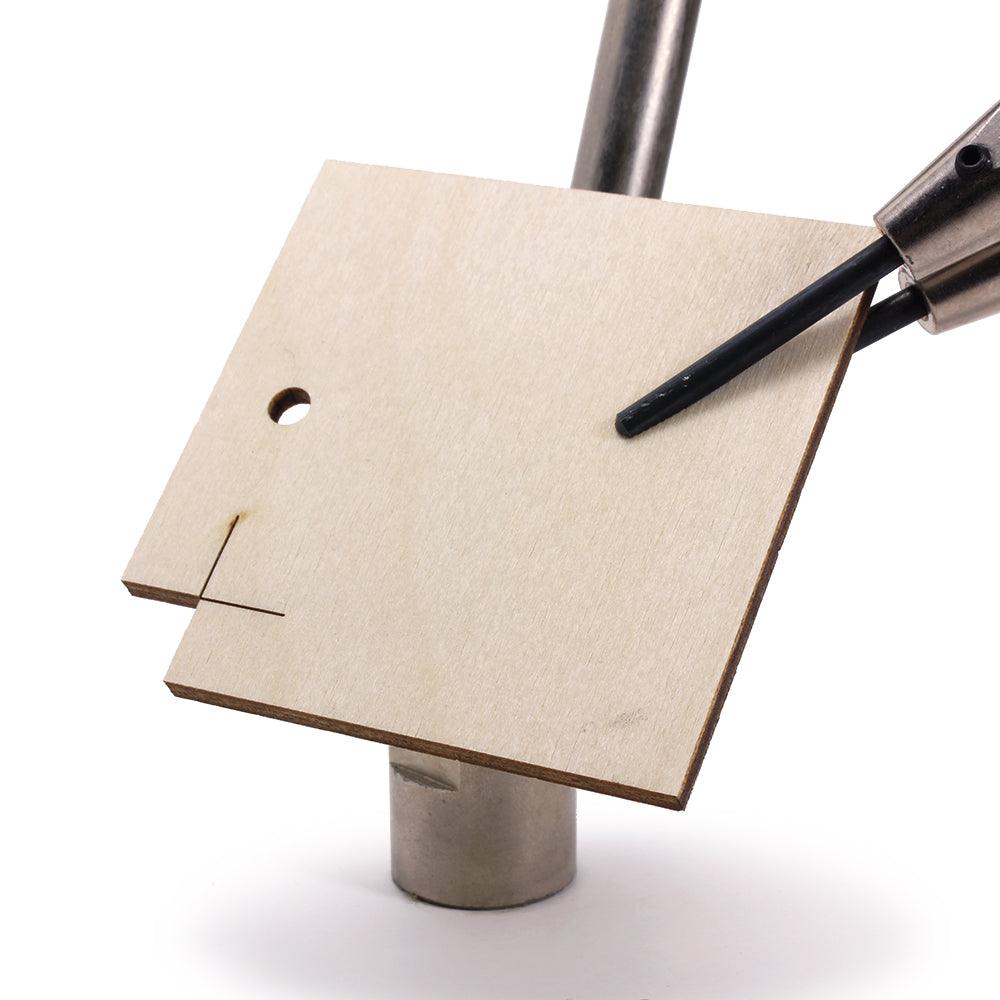
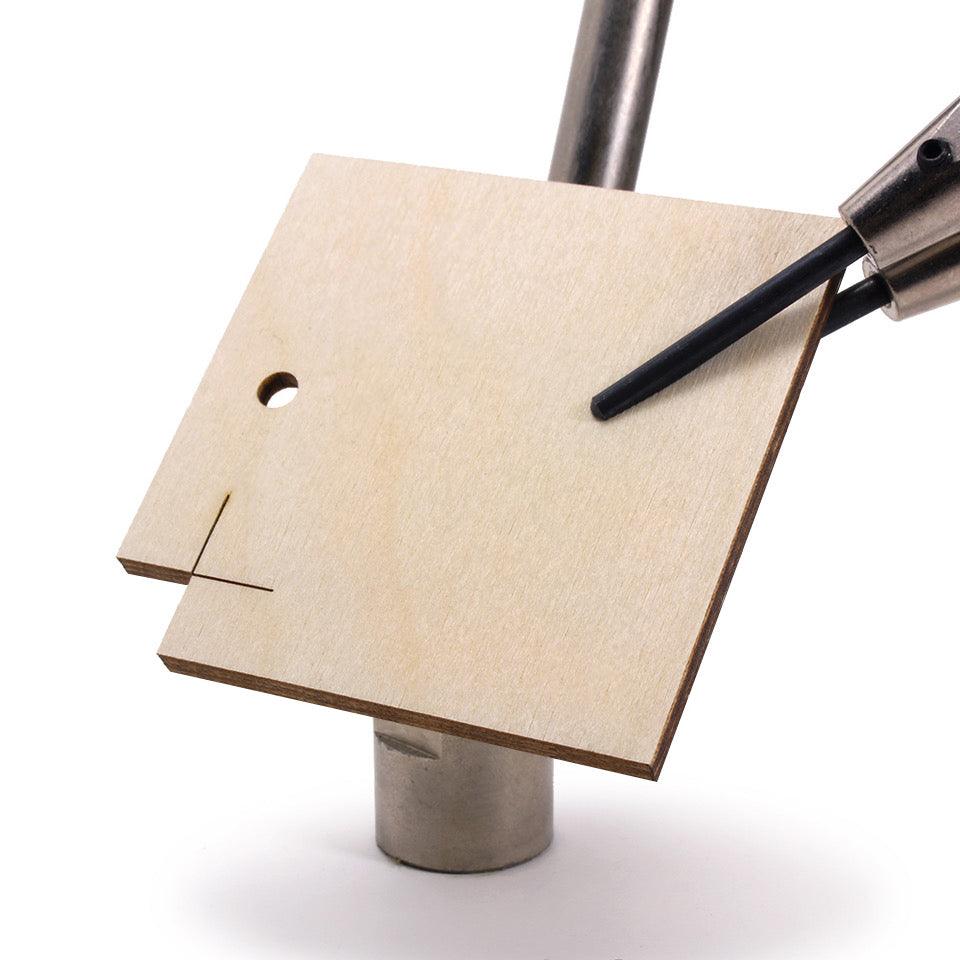
A widely used and versatile type of wood. It is hard, strong, and has a distinctive wood grain.
Properties
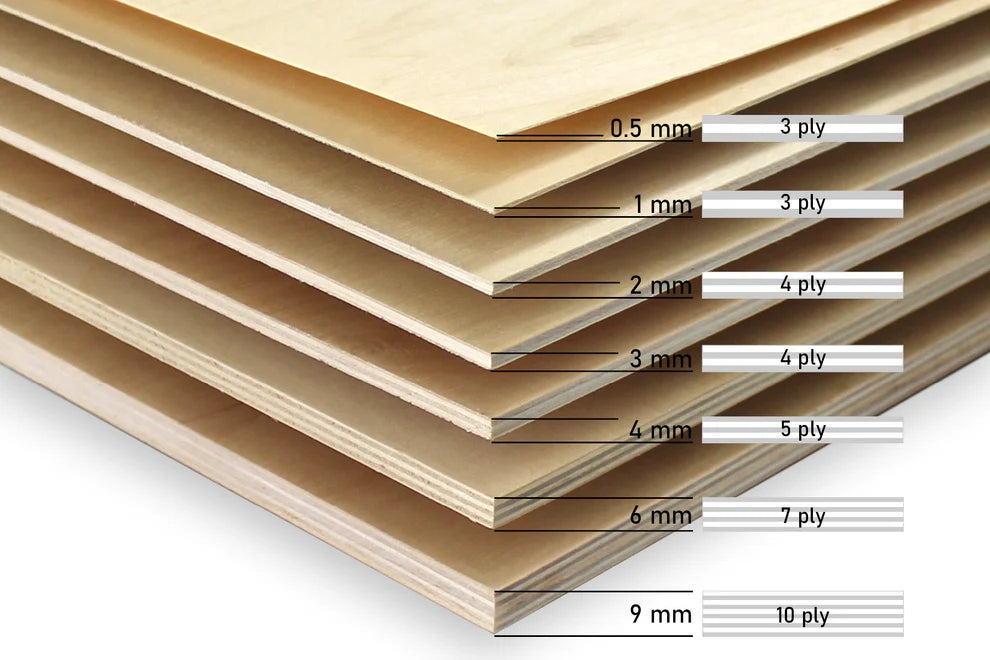
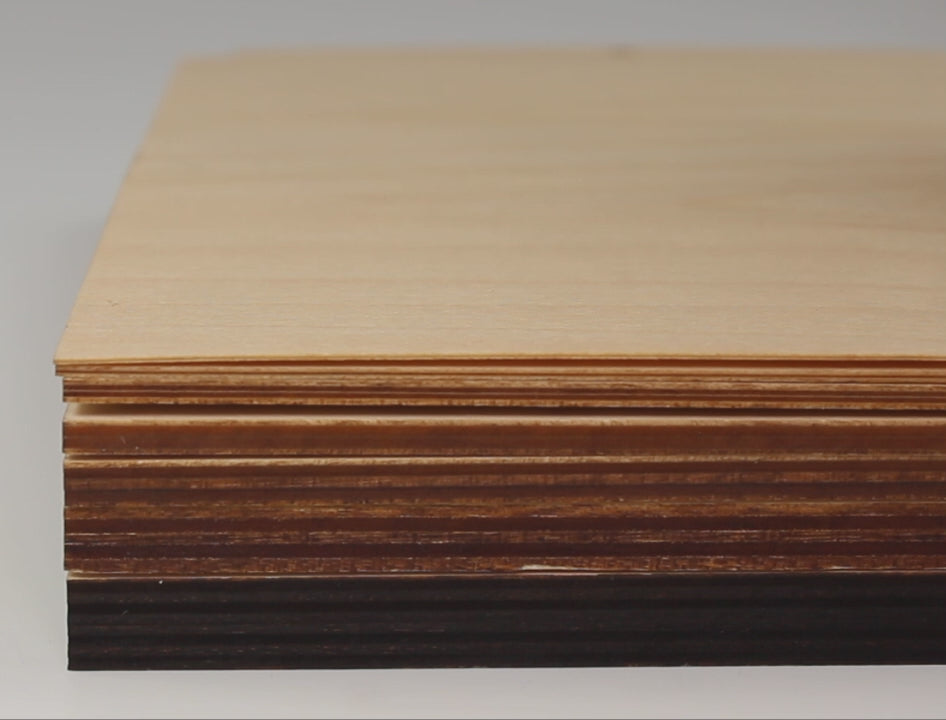
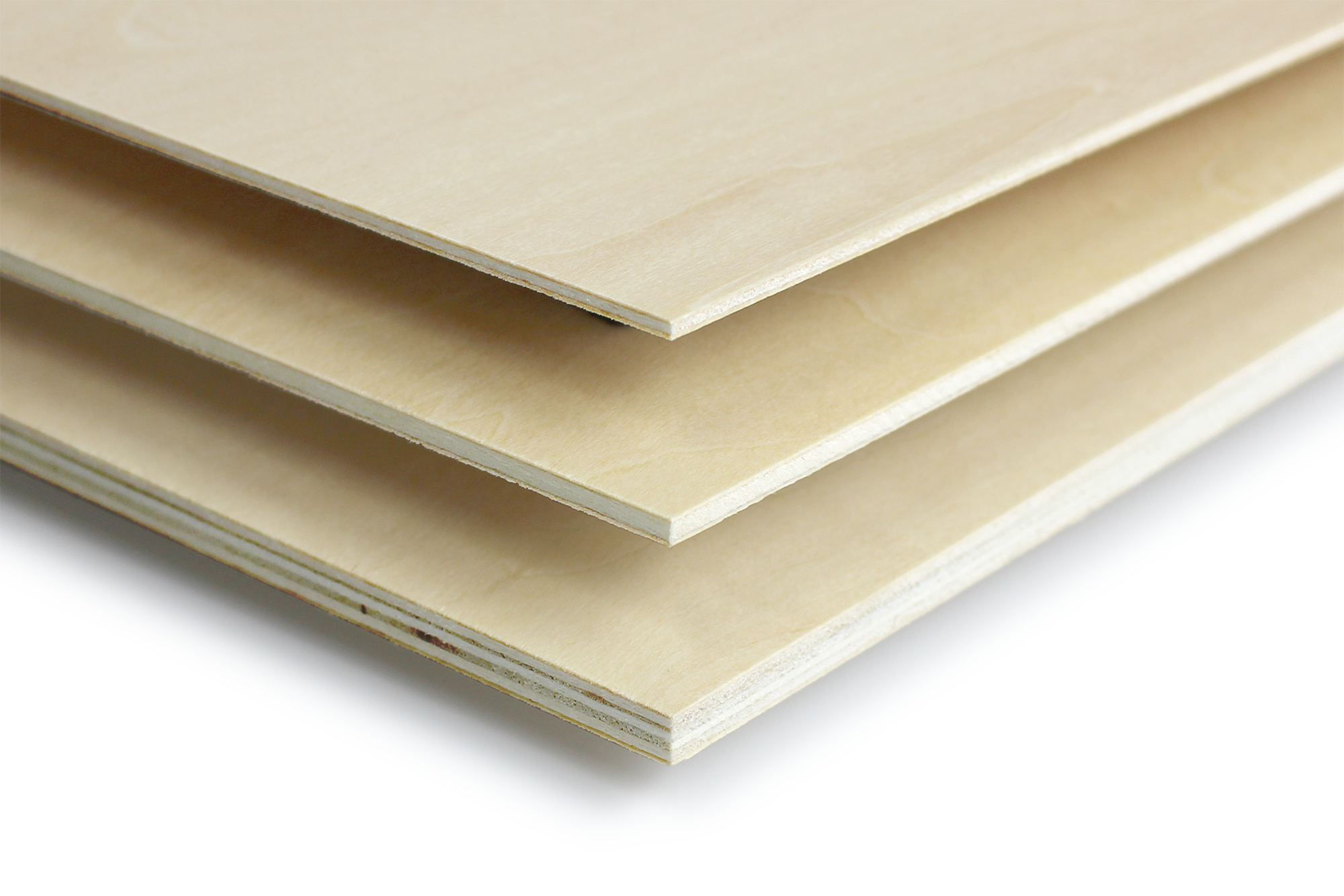
Because plywood is constructed from cross-bonded layers, it is strong in all directions and less susceptible to breakage than solid wood. However, all plywood has a main grain direction in which the panels are stiffer; this is typically along the long side of the panel. This plywood is B/B quality and has a bonding suitable for laser cutting. The internal layers are virtually knot-free. Birch is light in color and has visible but not overwhelming grain patterns. As it is a natural material, the appearance can vary from sheet to sheet.
Applications
Birch plywood is used for a wide variety of applications, from keychains to furniture, and from models to 3D printers.
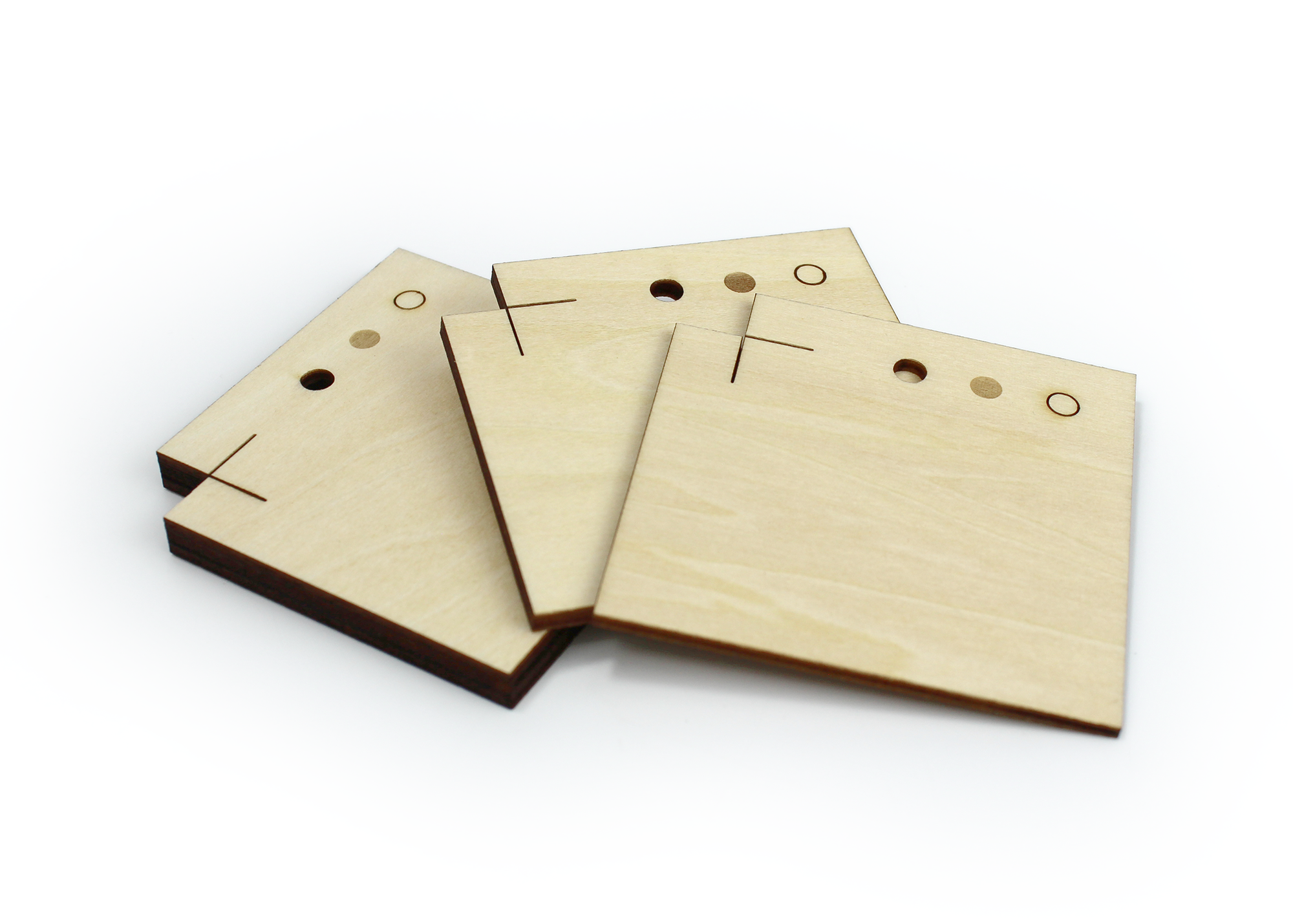
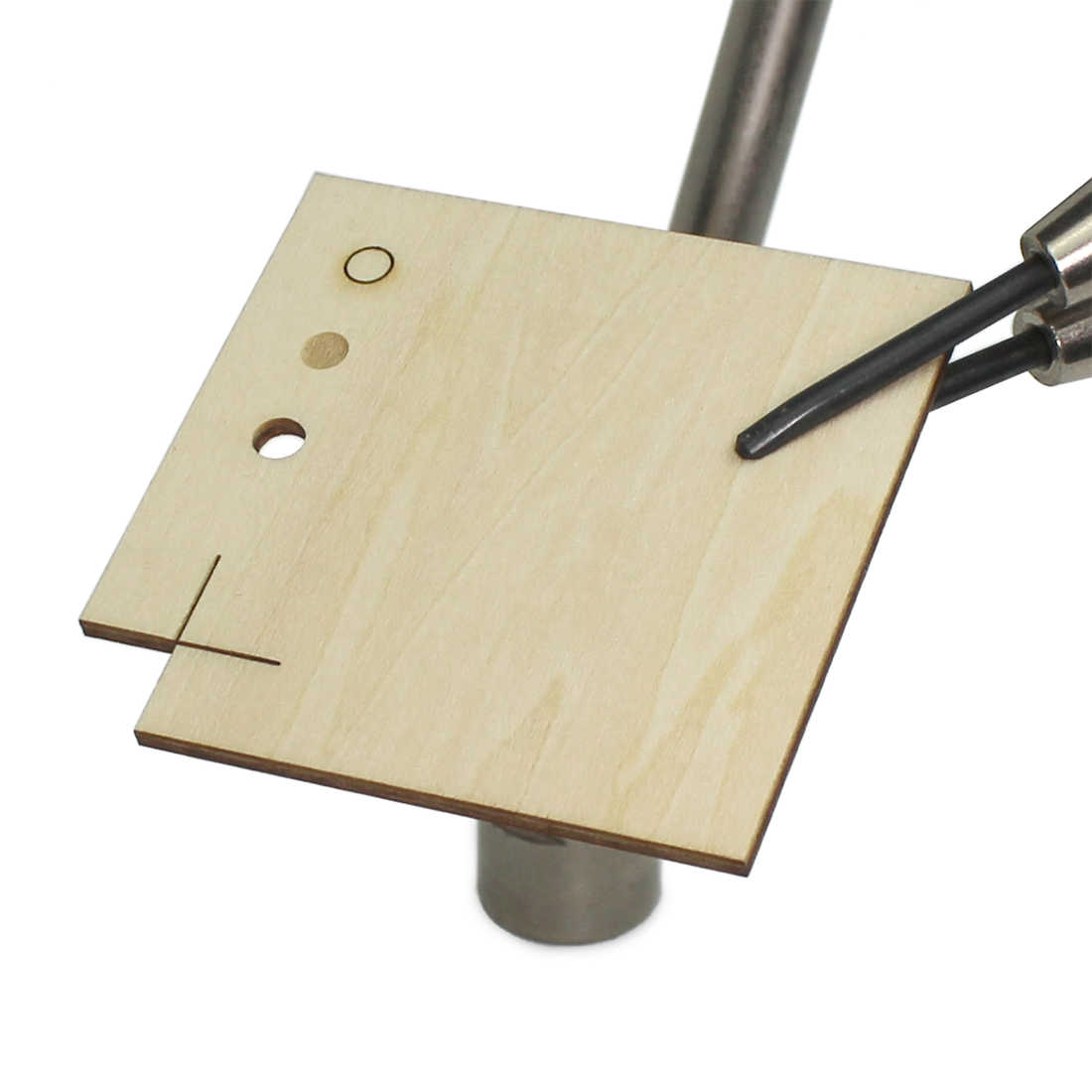
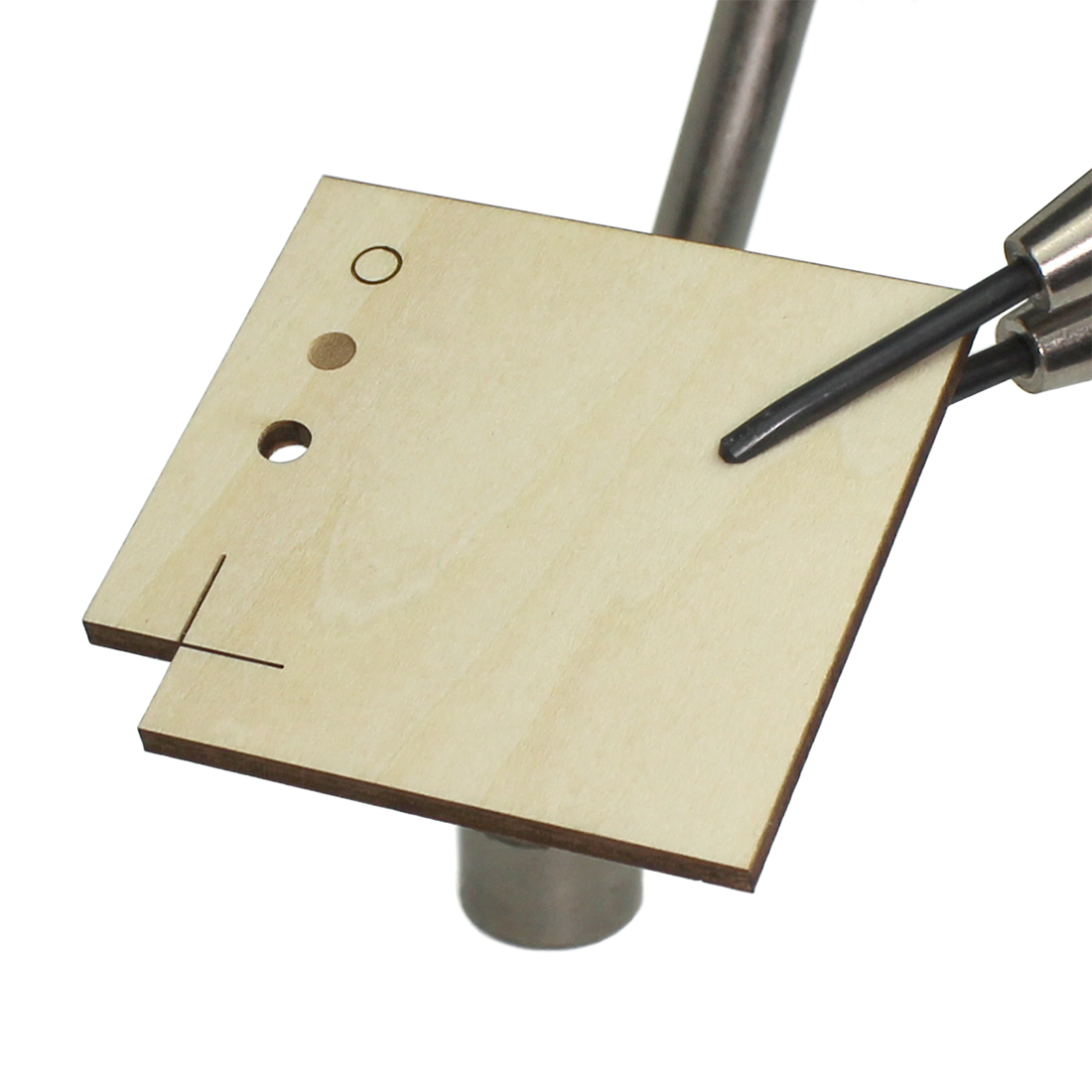
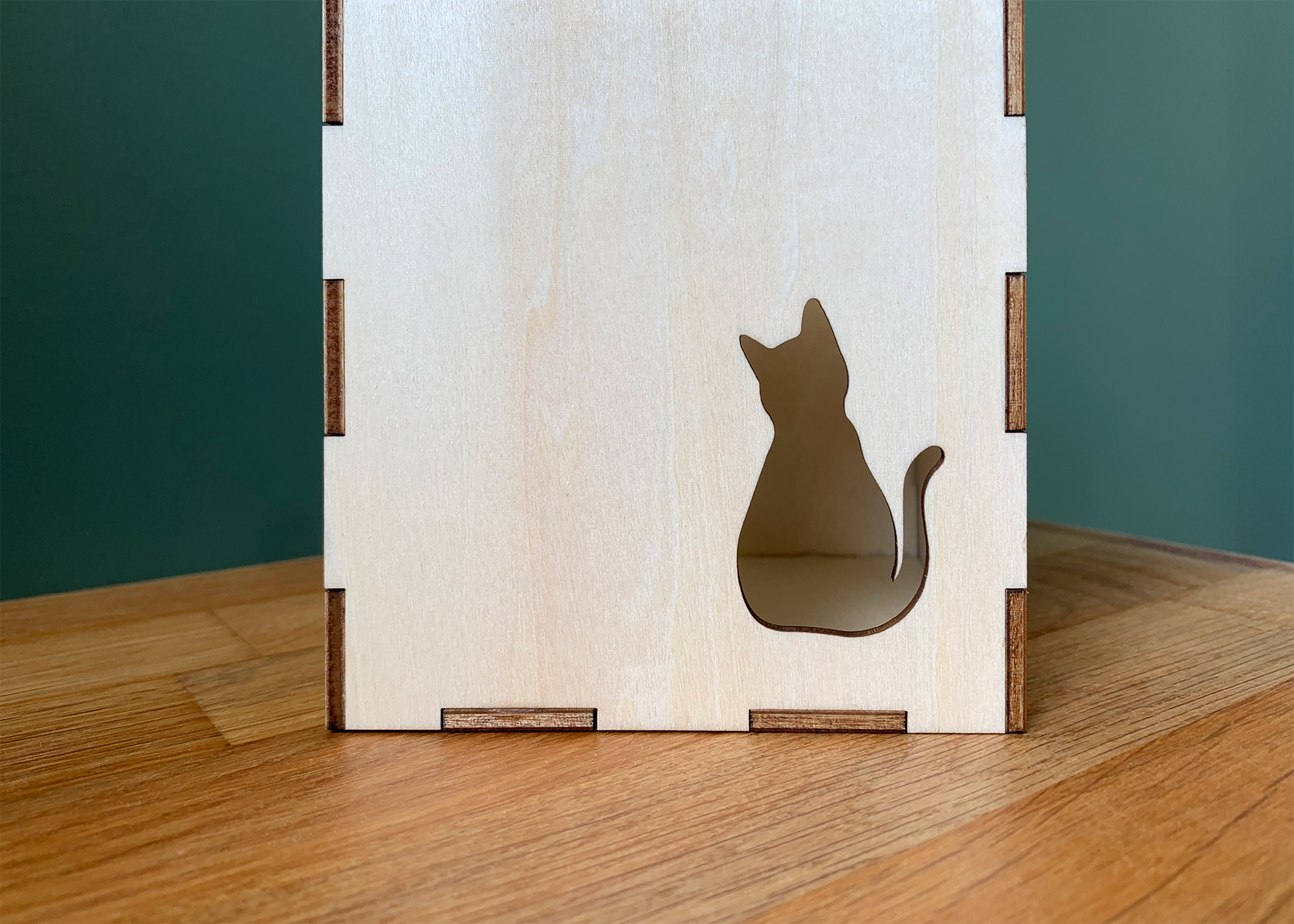
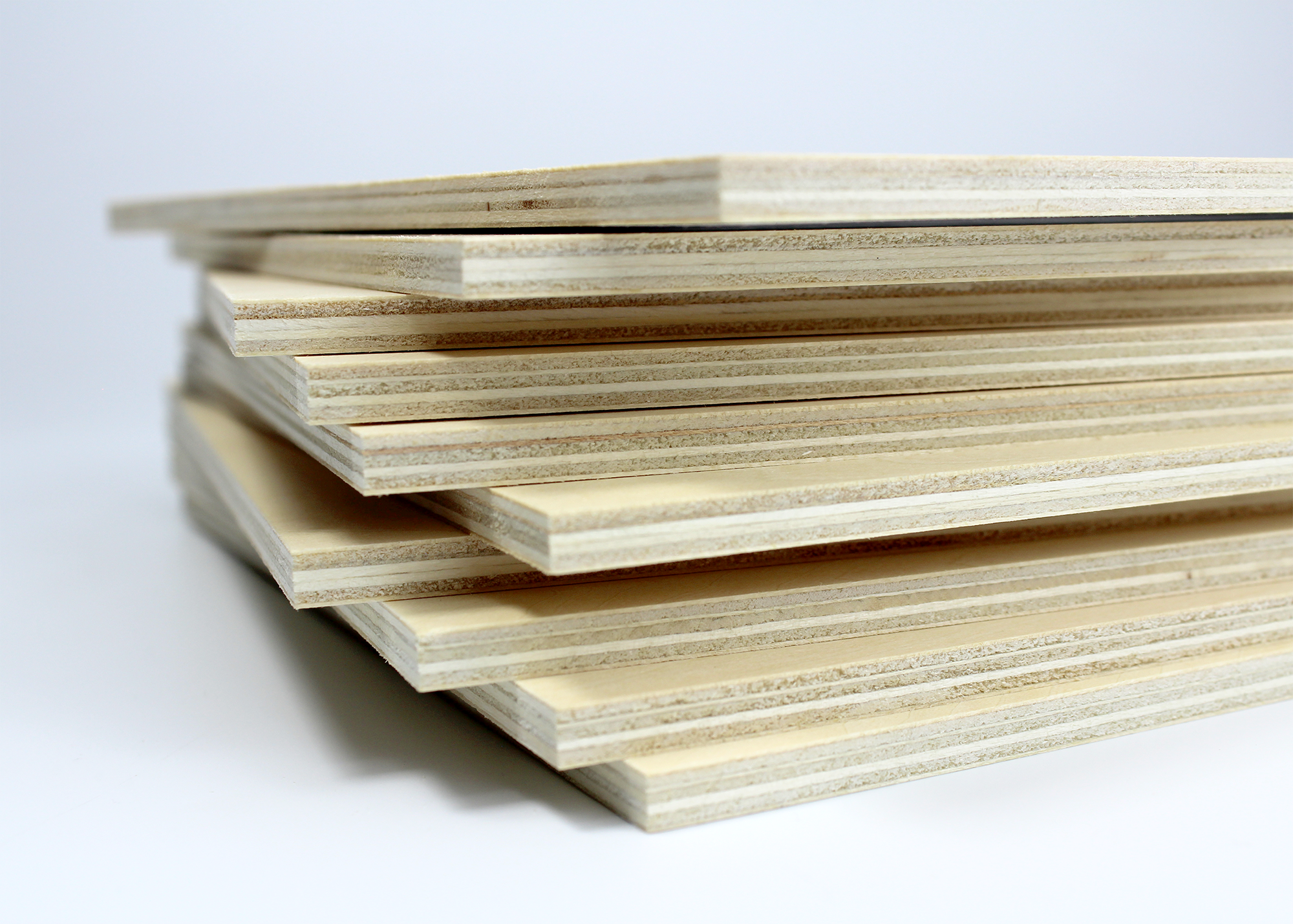
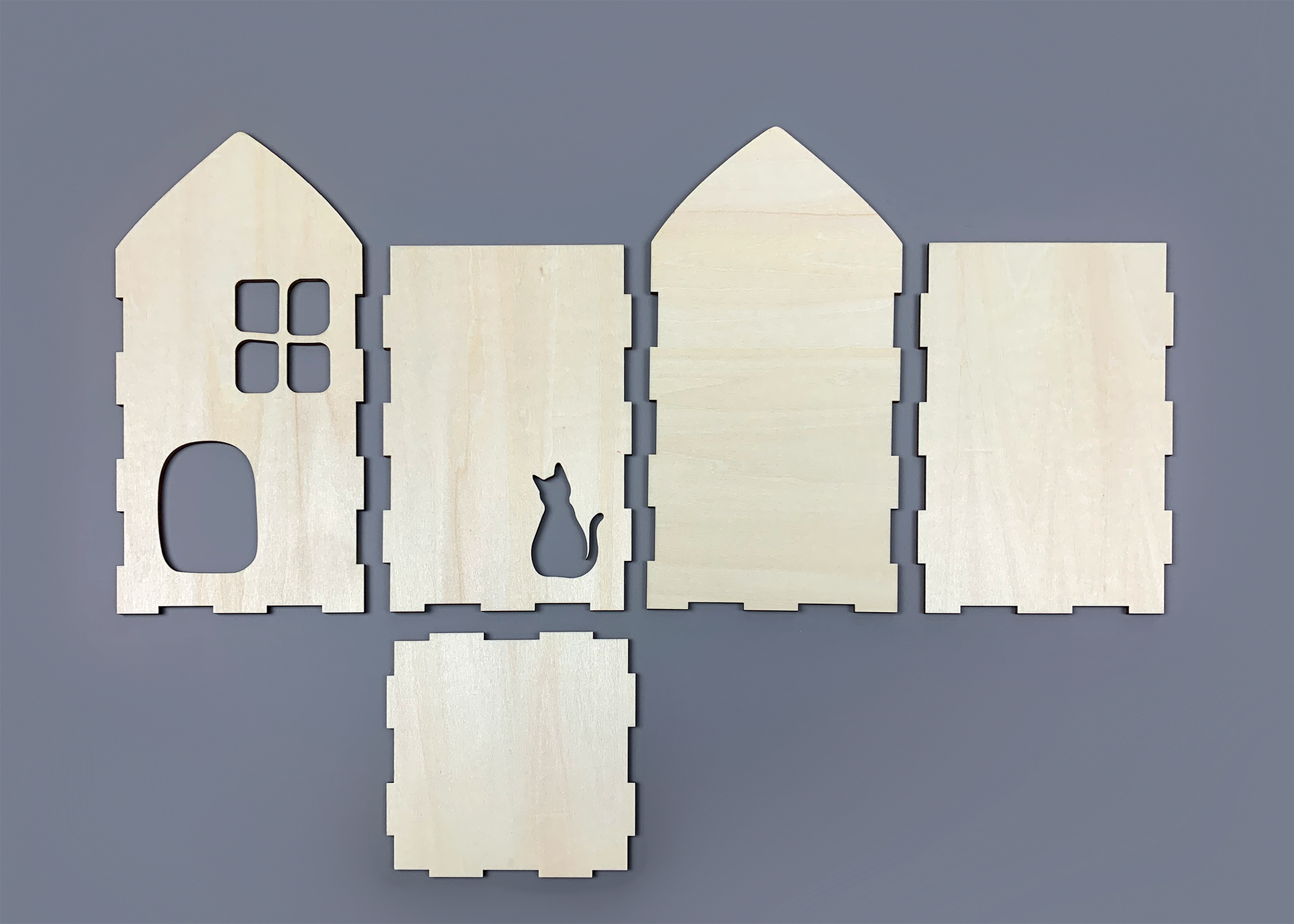
A high-quality wood species, lightweight and versatile. Lime plywood has a solid color and is particularly flat. The layers contain few knots.
Properties
Lime plywood is composed of cross-glued layers, which provides strength and stability in all directions. This makes it less susceptible to breakage than solid wood. However, basswood plywood has a main grain direction in which thin boards up to 3 mm are stiffer. The internal layers contain few knots, which contributes to the boards' attractive appearance. Lime wood is naturally light in color, with a subtle and even grain structure.
Applications
Lime plywood (or basswood plywood) is used for many different applications, including decorative objects, furniture and art projects. Its light weight and flat boards make it ideal for precision work such as model making and musical instruments. Its attractive, almost knot-free layers also make it suitable for decorative panels and interior finishes. For outdoor use, however, the material must be finished to provide weather protection.
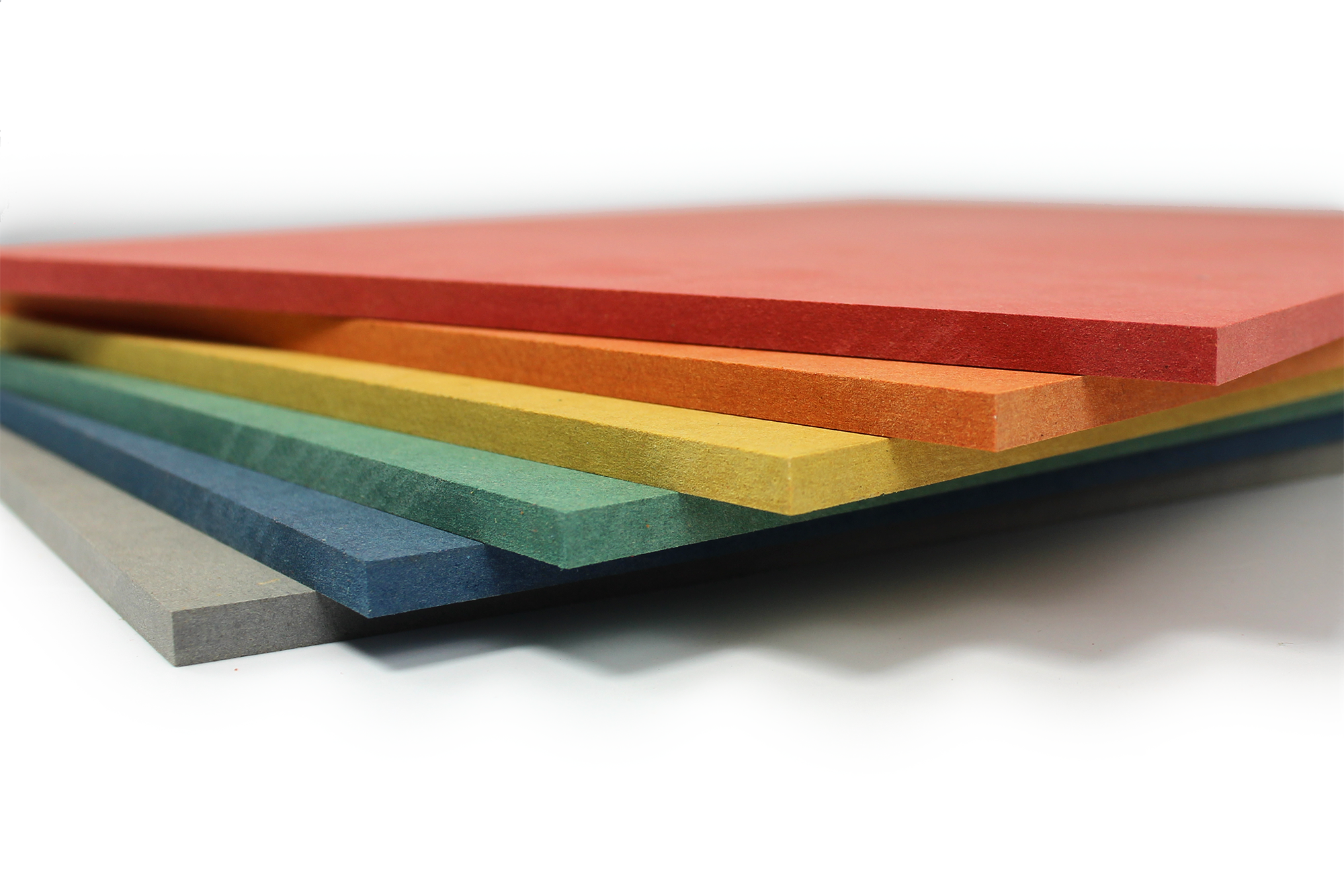
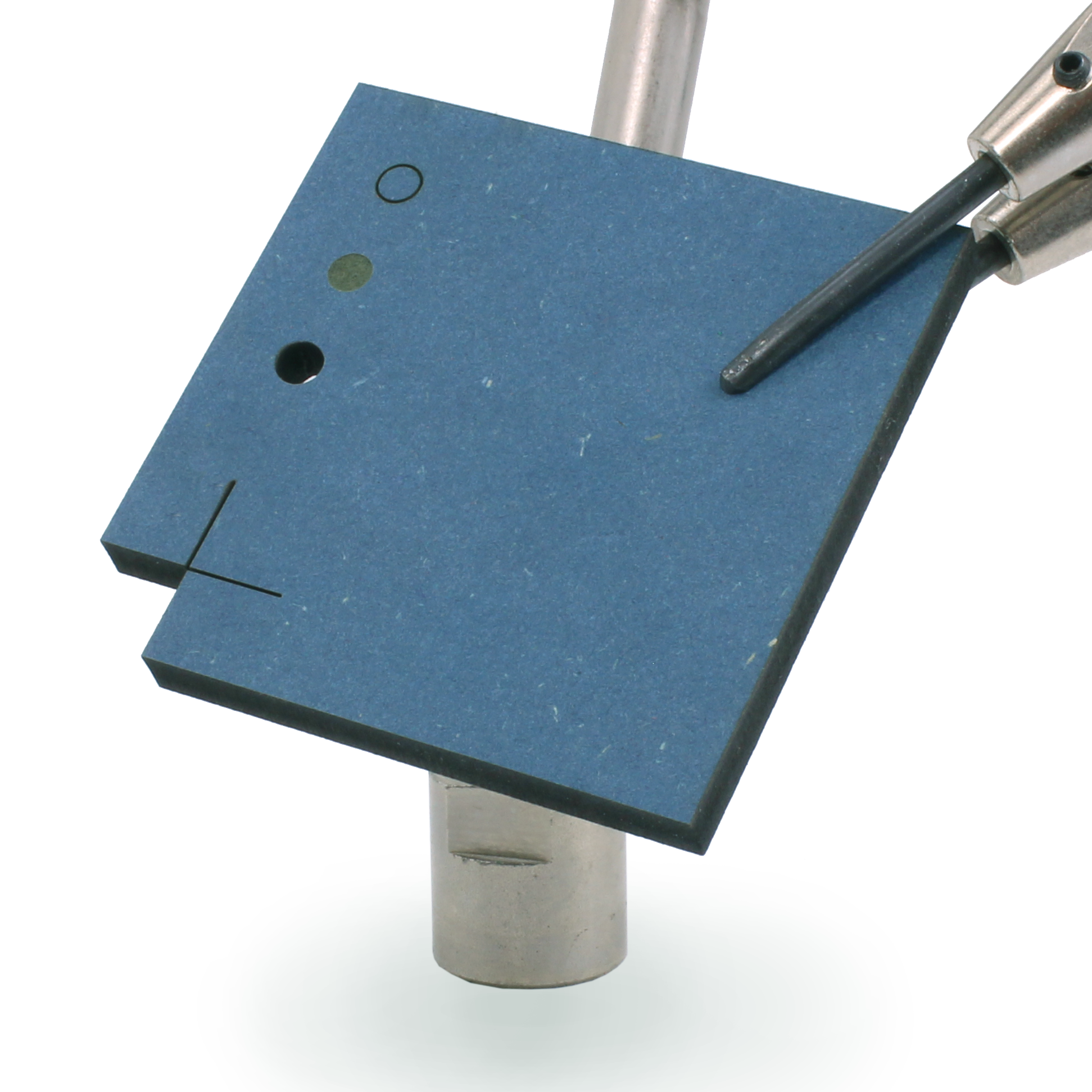
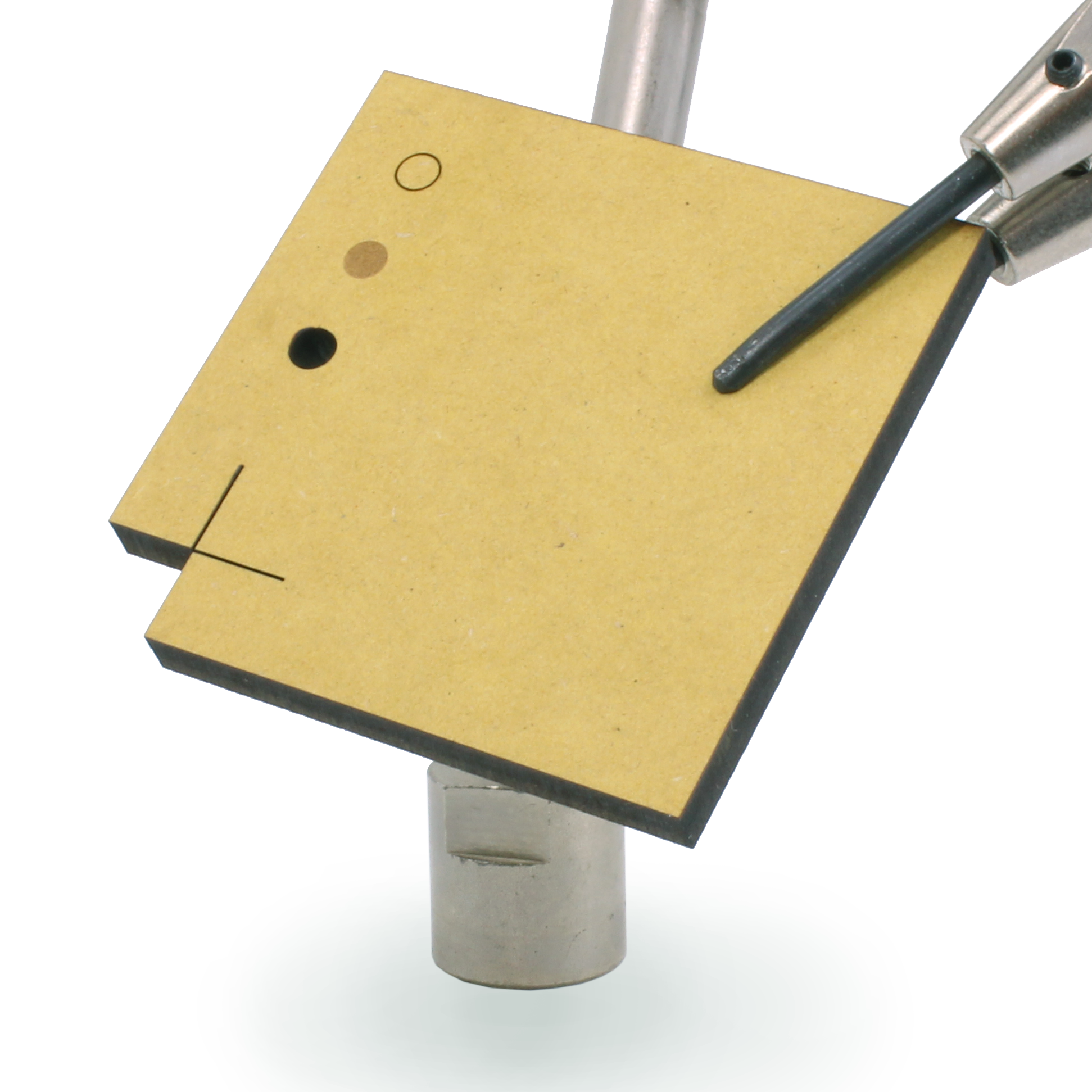
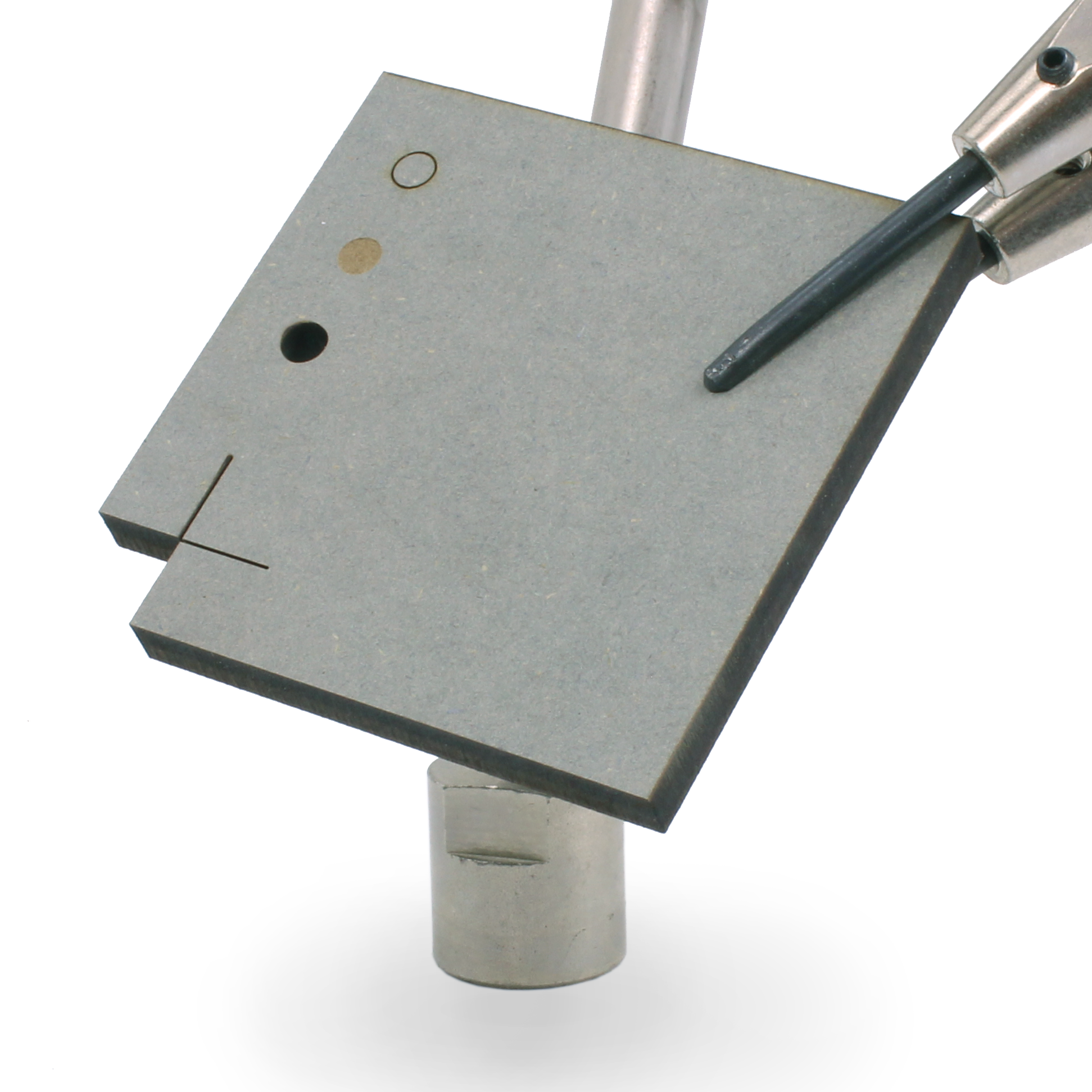
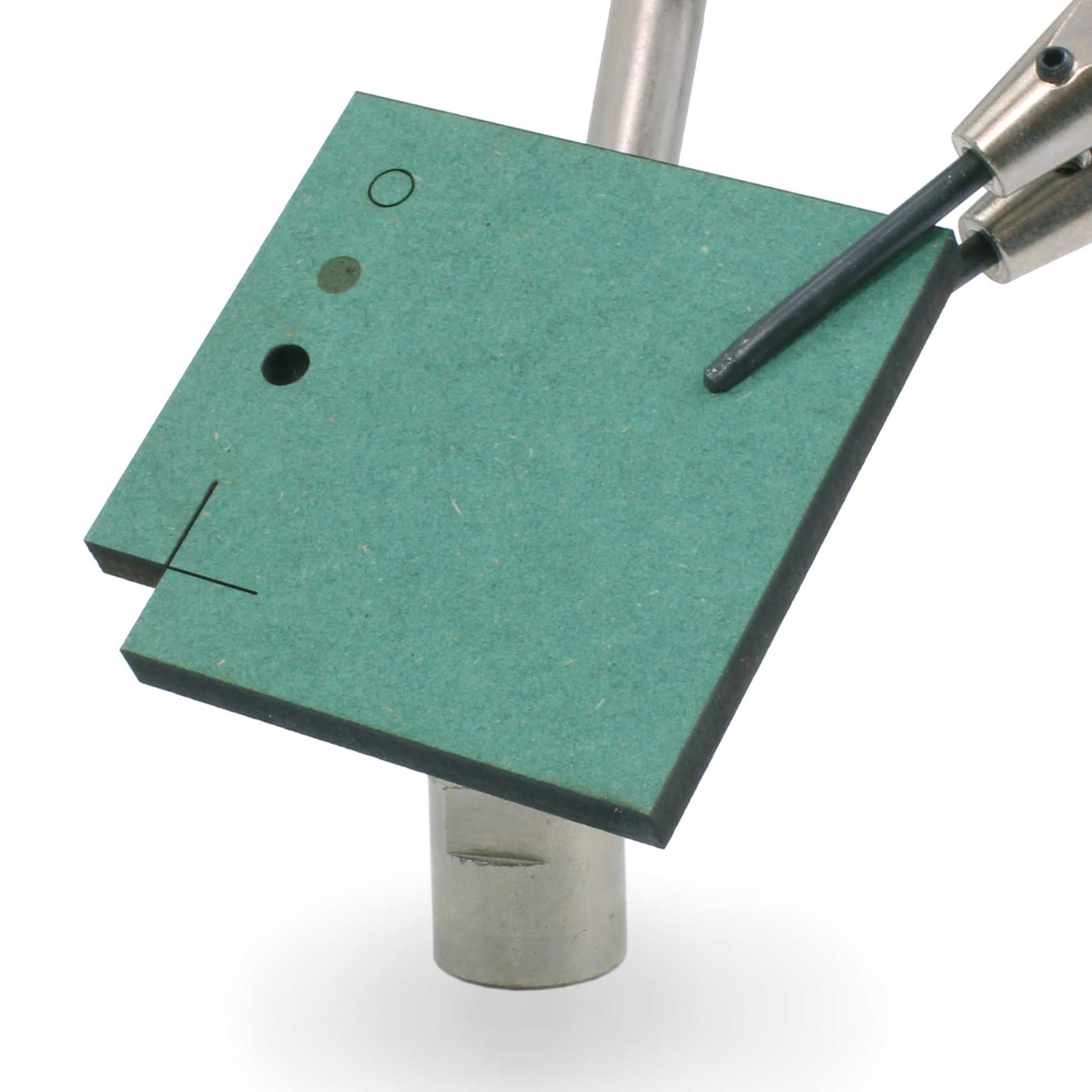
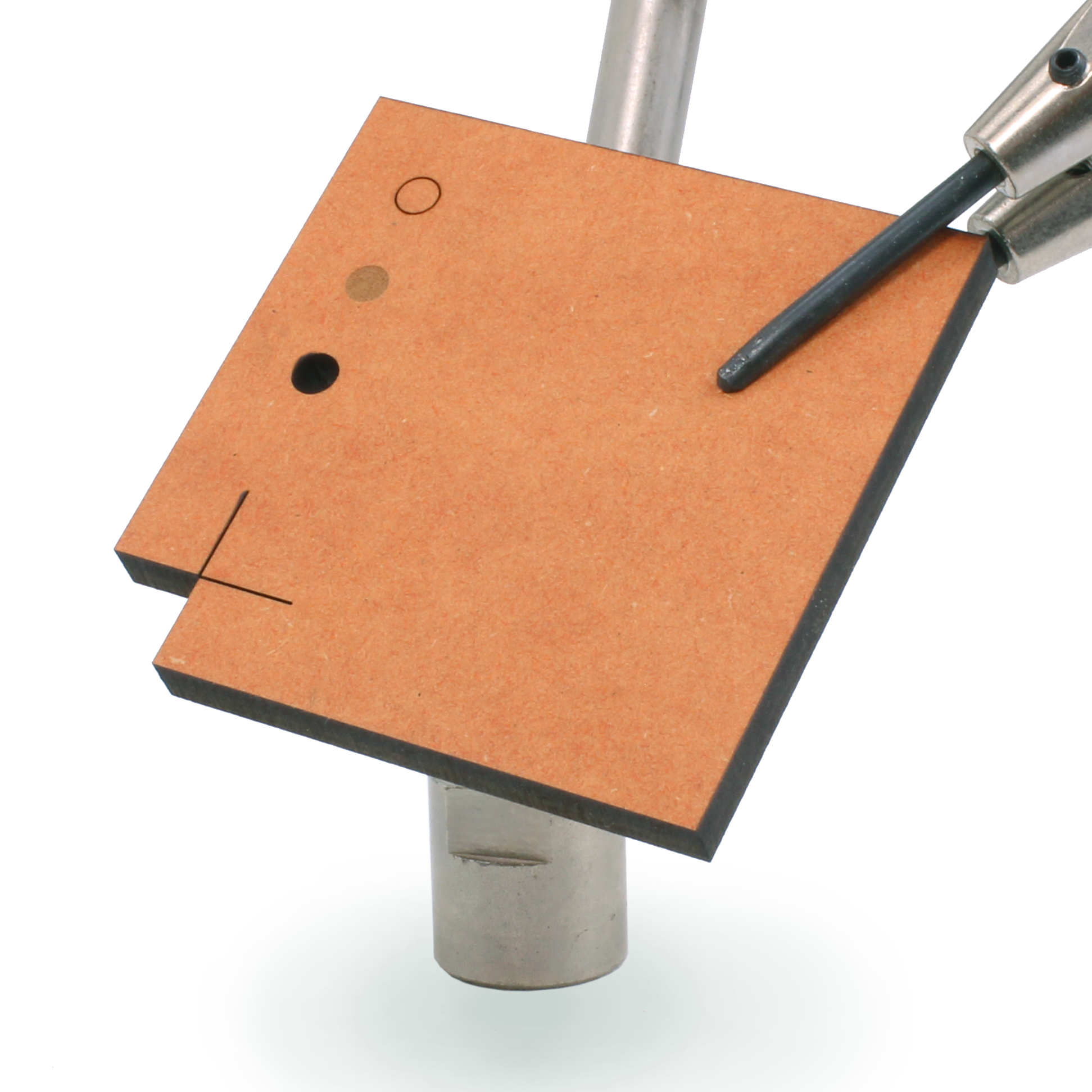
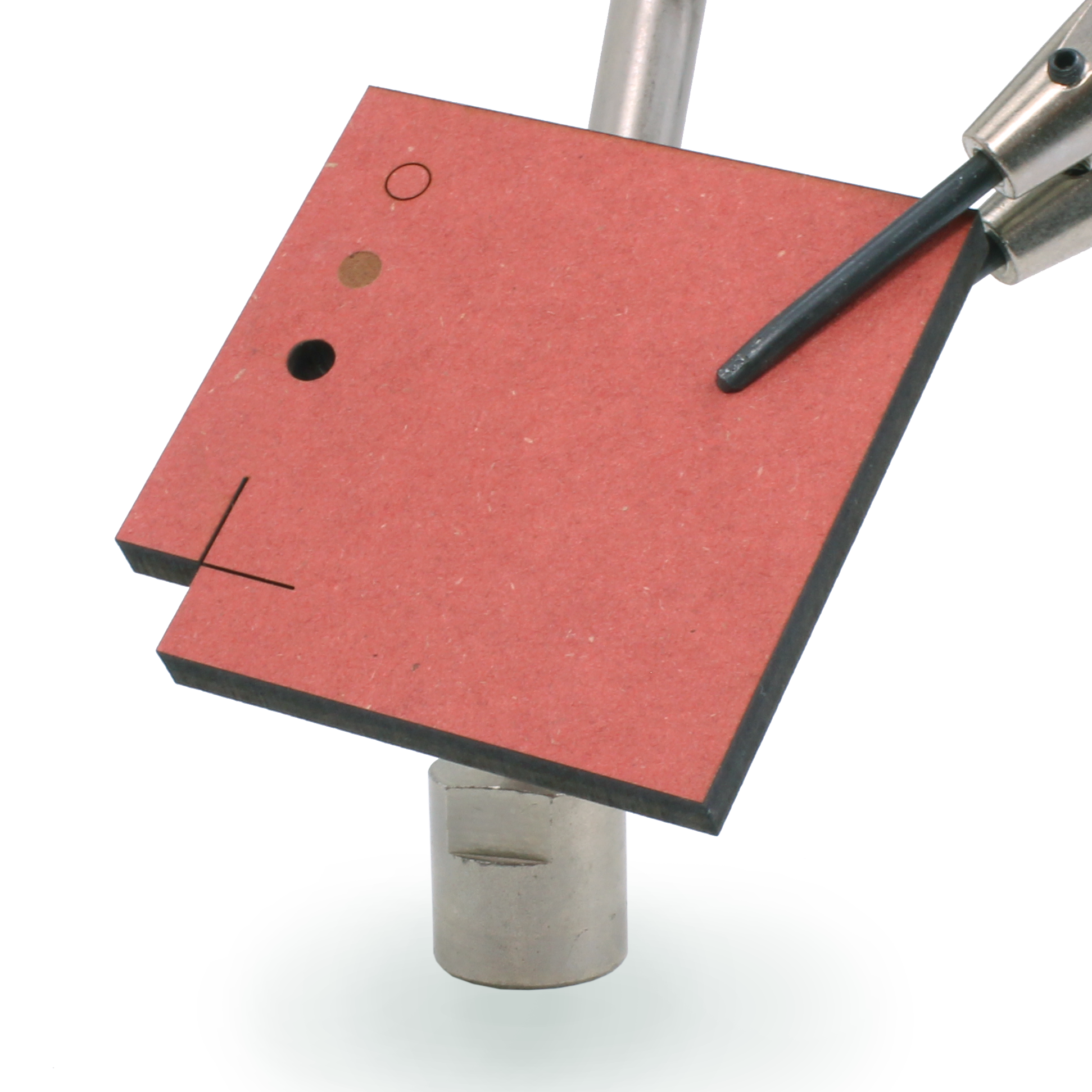
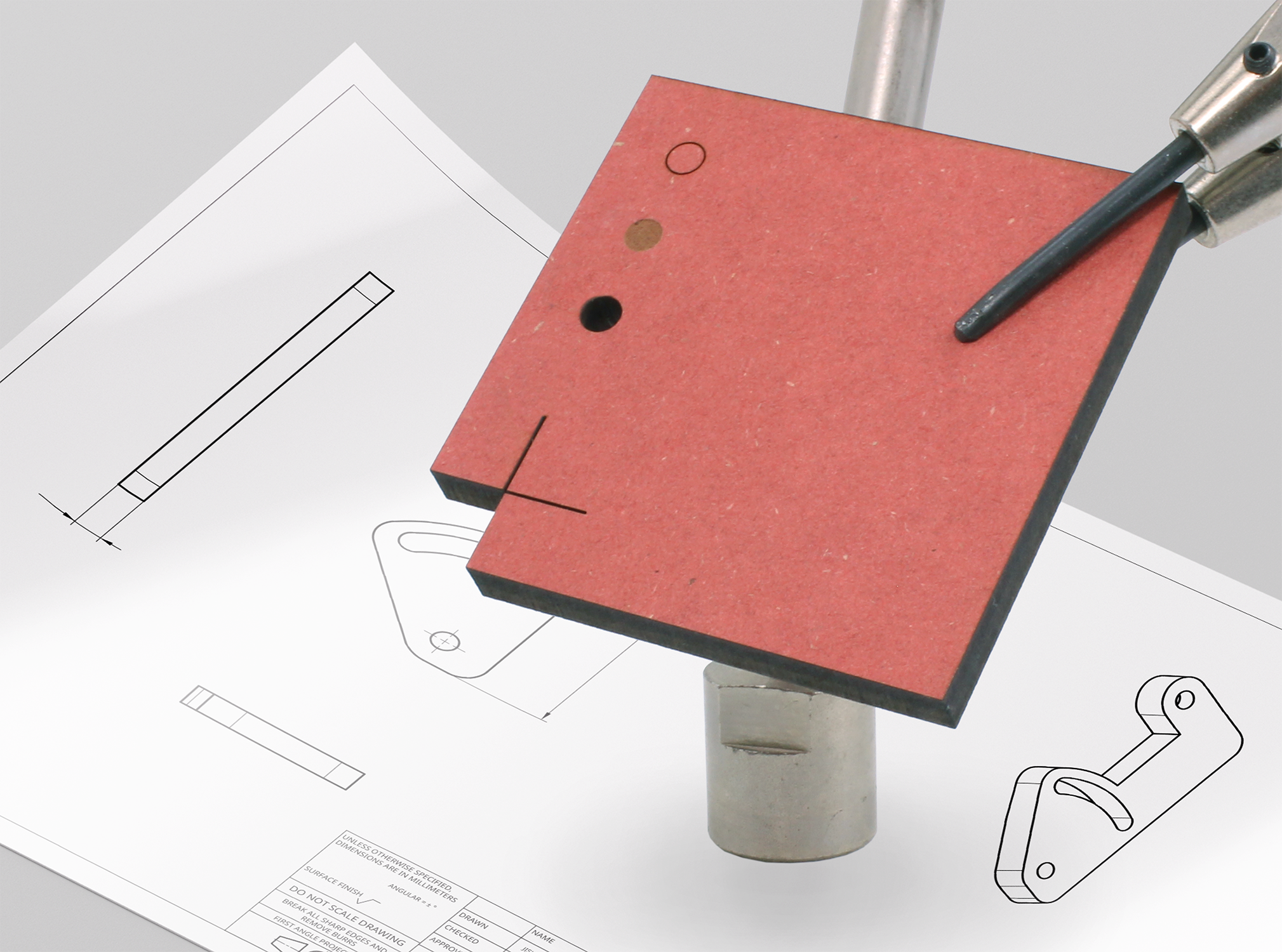
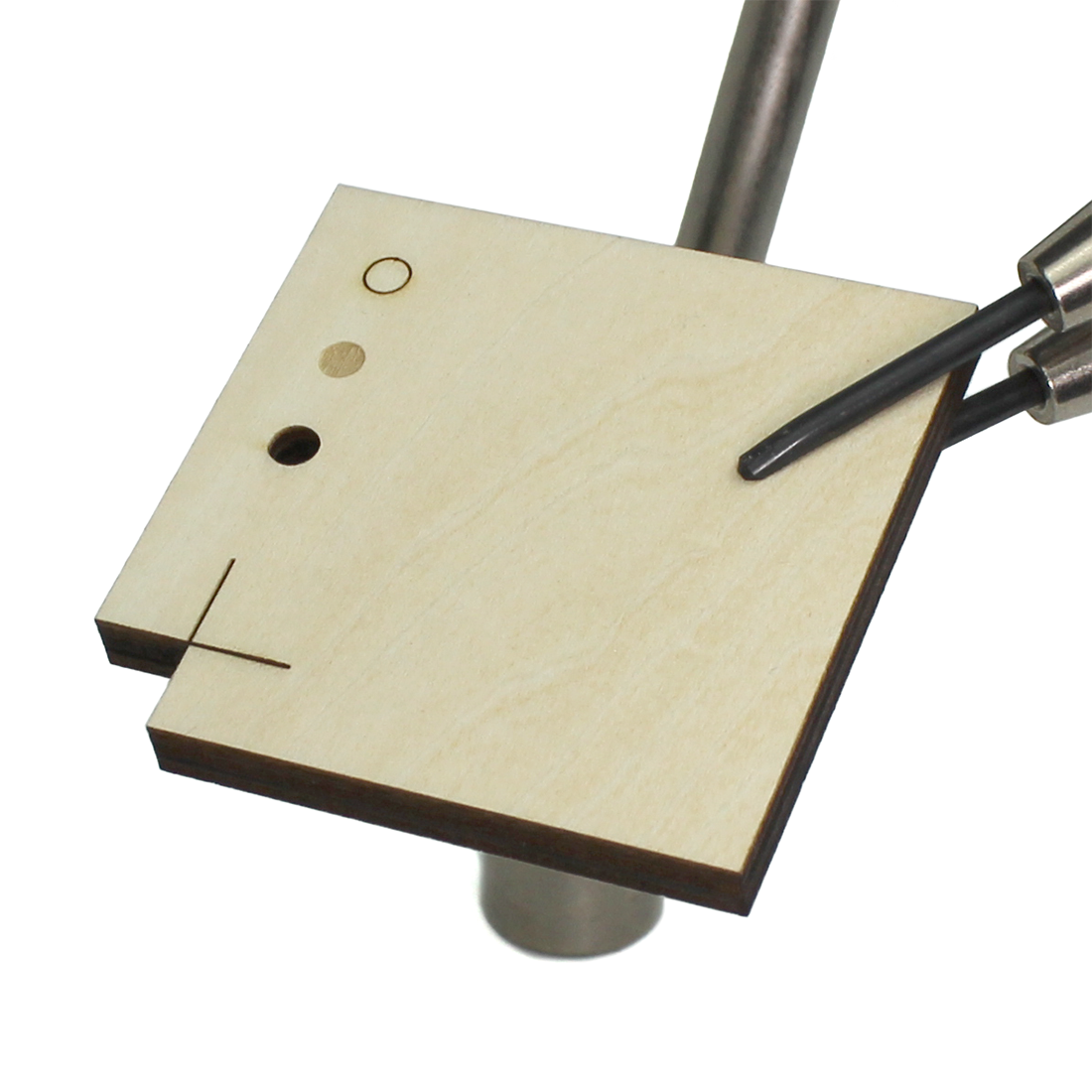
Make your own parts and save the time to paint them. This MDF is colored throughout and has a nice soft appearance.
Colored MDF is hard and strong, even slightly stiffer than normal MDF.
These colored boards are as easy to use as normal MDF: They are flat and strong because it consists of pressed wood fibers. The boards are equally strong in all directions because MDF is a homogeneous material. The great advantage of this through-and-through colored variant is, of course, that you immediately have beautiful colors.
For outdoor use, you can finish MDF with clear varnish. For indoor use, oil or wax is also a nice option.
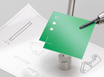
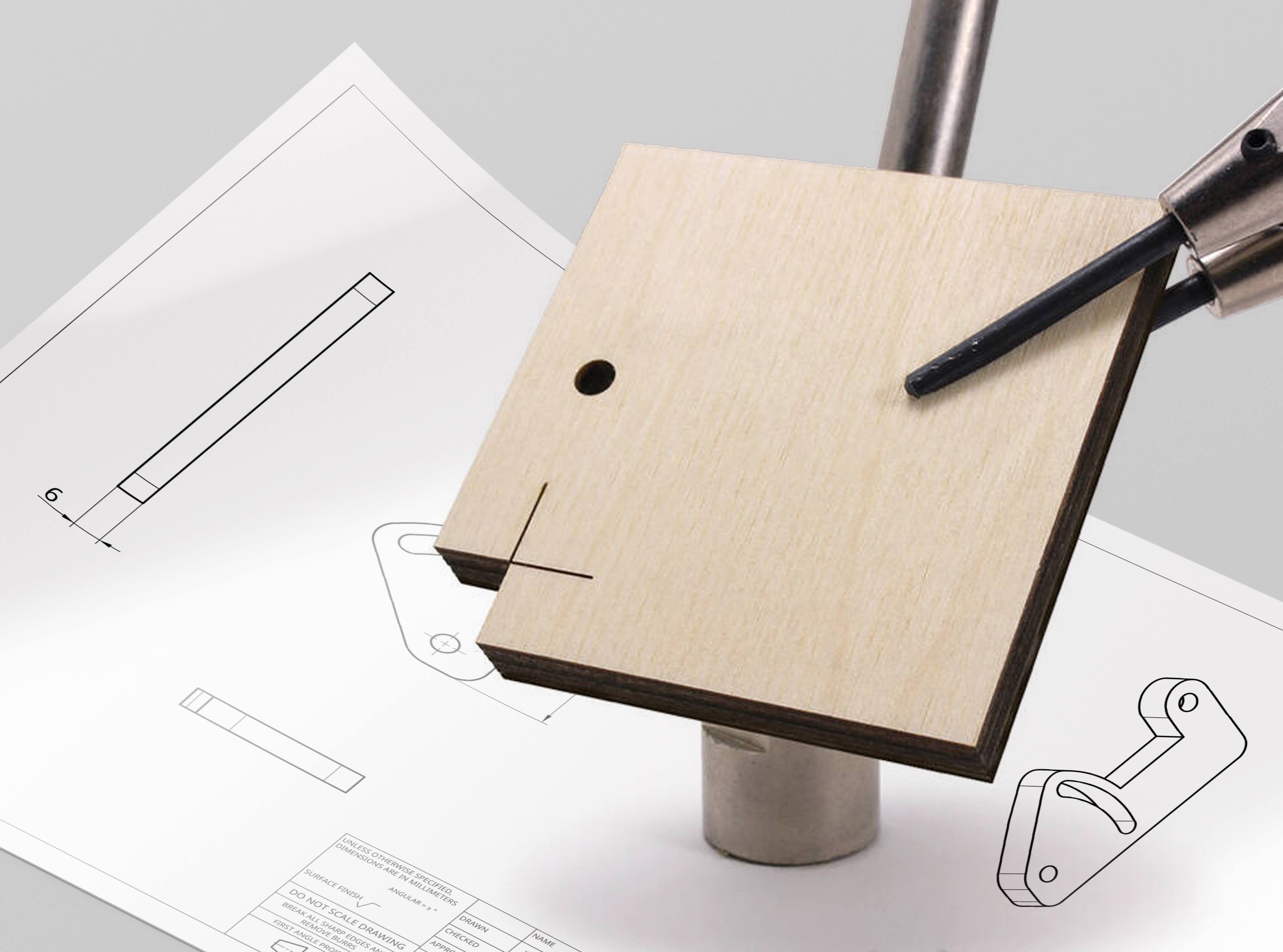
Colored MDF can be laser cut into any shape or pattern you want. The laser cut turns black which gives a nice contrast against the colored surface. The laser cut is thin (approx. 0.15mm) and precise, allowing you to make small details and precisely fitting joints.
You can choose from six colors:
- mdf green 5mm
- mdf blue 5mm
- mdf red 5mm
- mdf orange 5mm
- mdf yellow 5mm
- mdf grey 5mm
Are you looking for black MDF? here.
Acoustic panel made of wood and foam
Then choose a type of foam
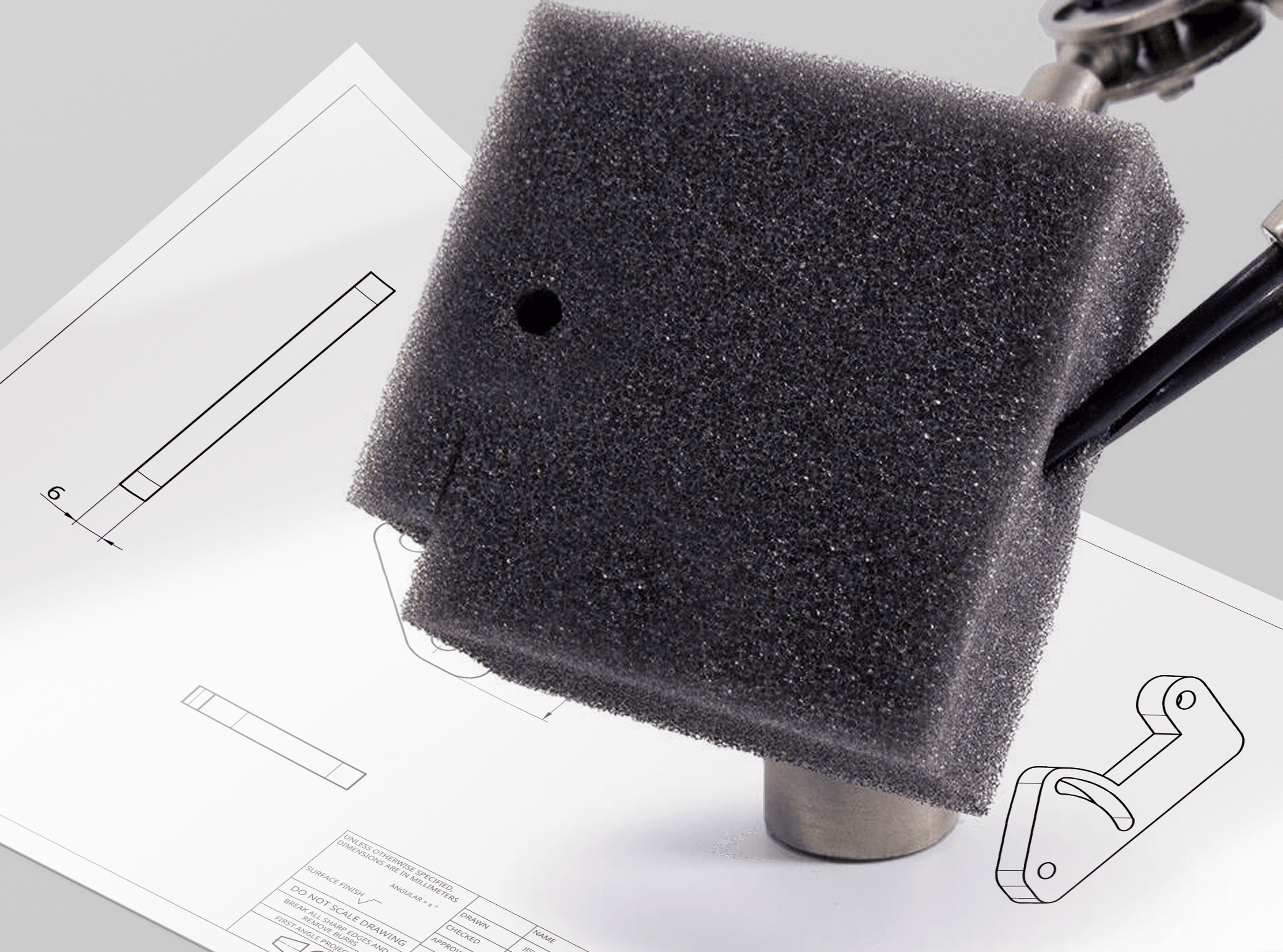
For both PE Hard foam and Soft foam, we recommend using 20 mm. This absorbs the most sound because these sheets are thicker.
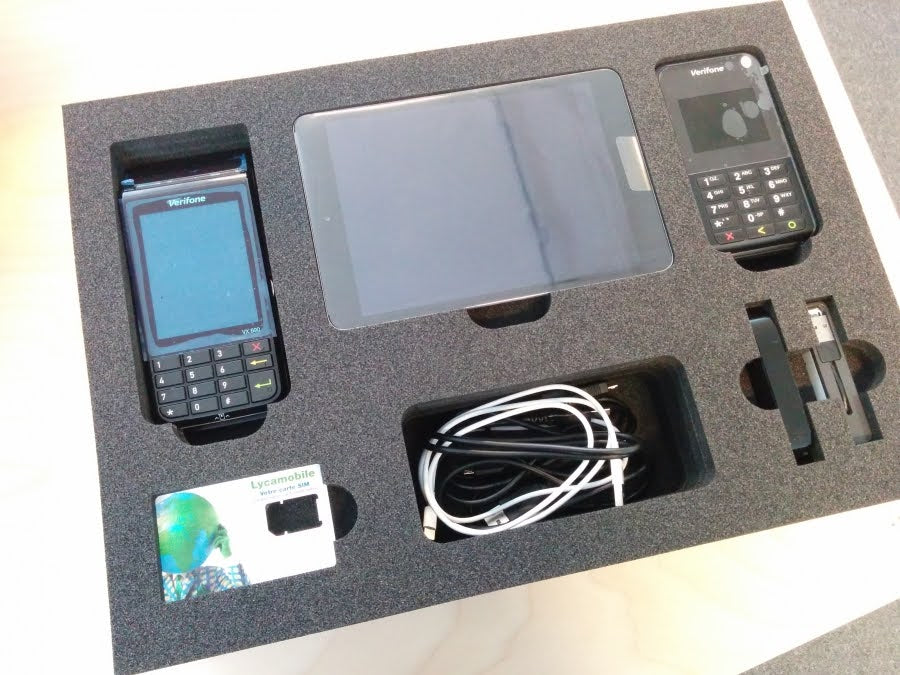
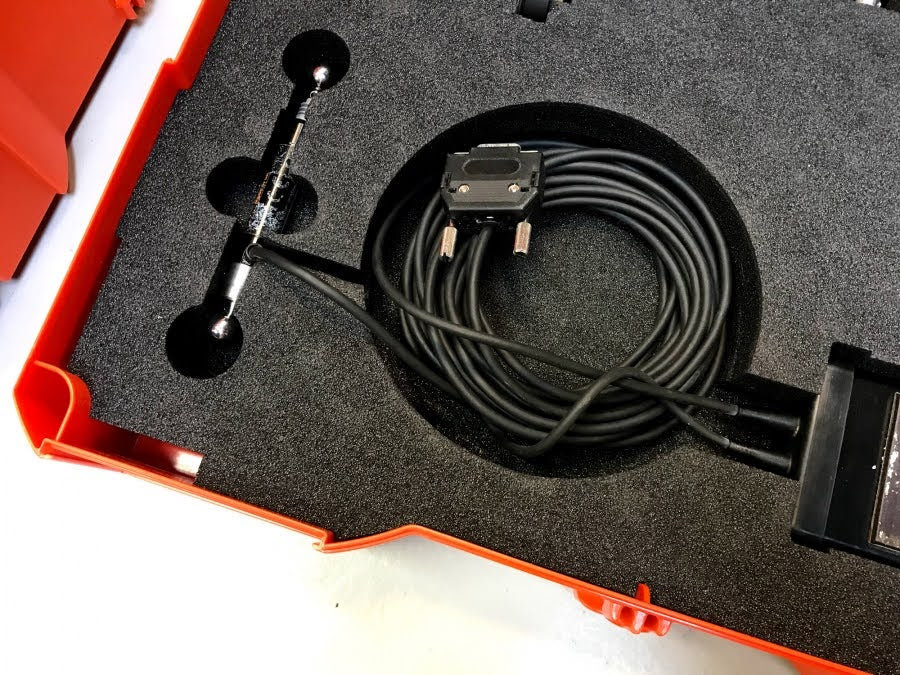
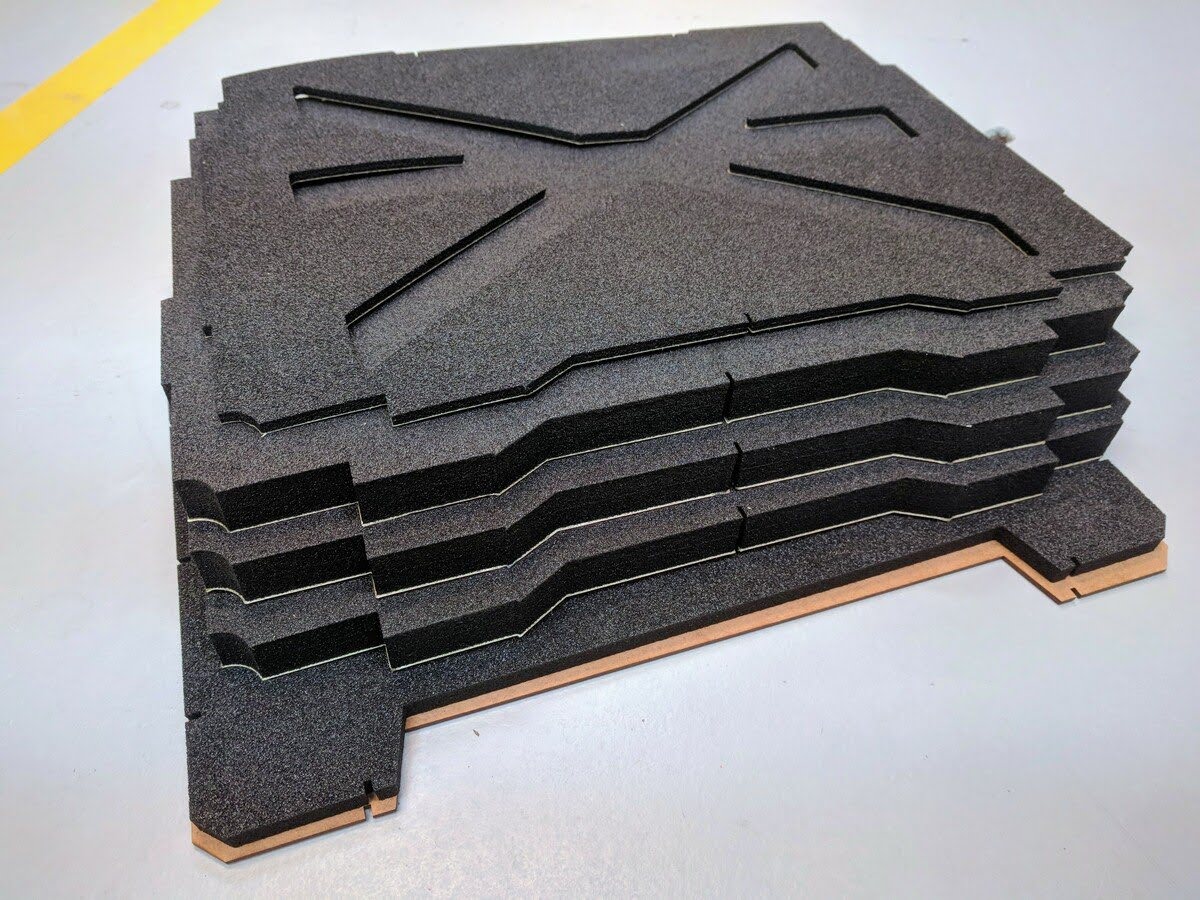
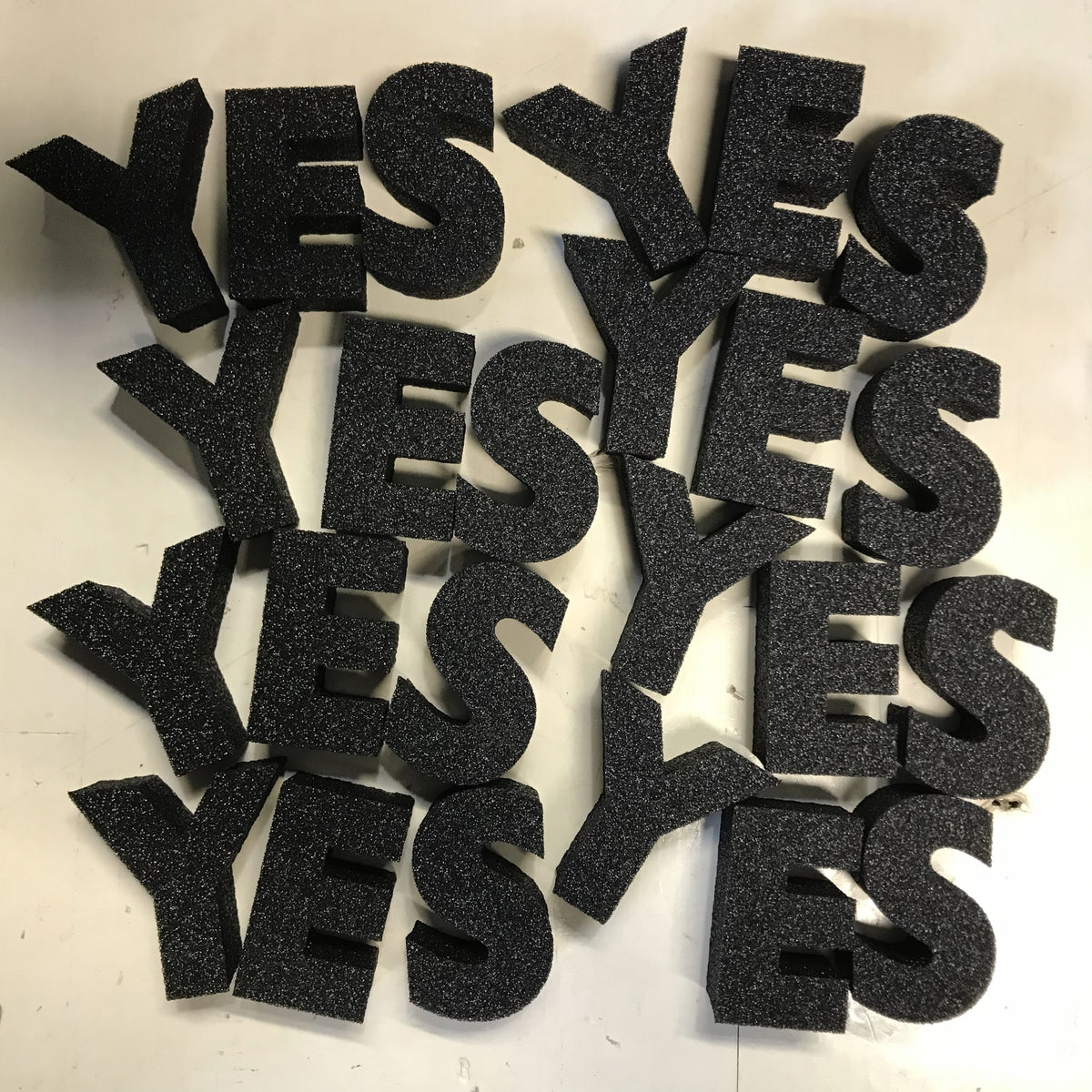
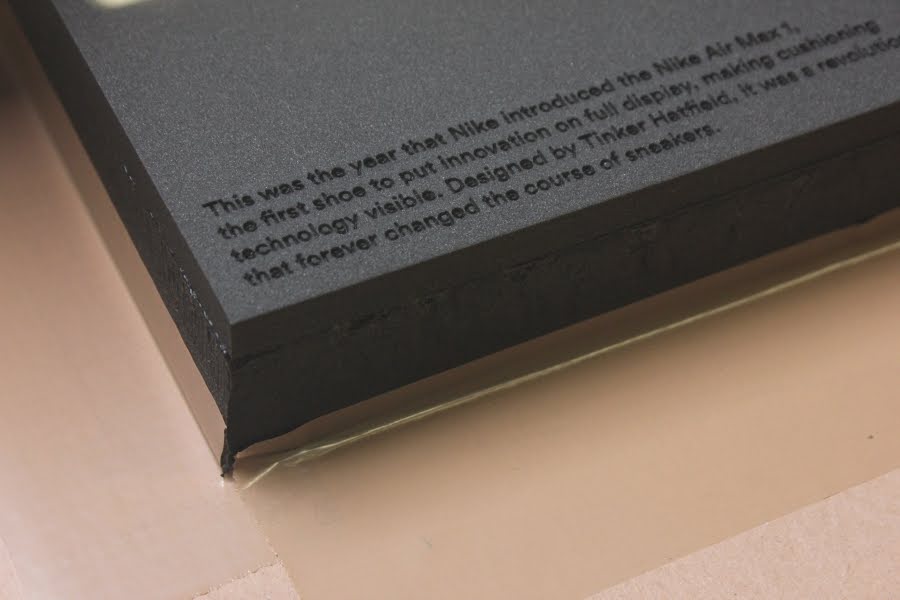
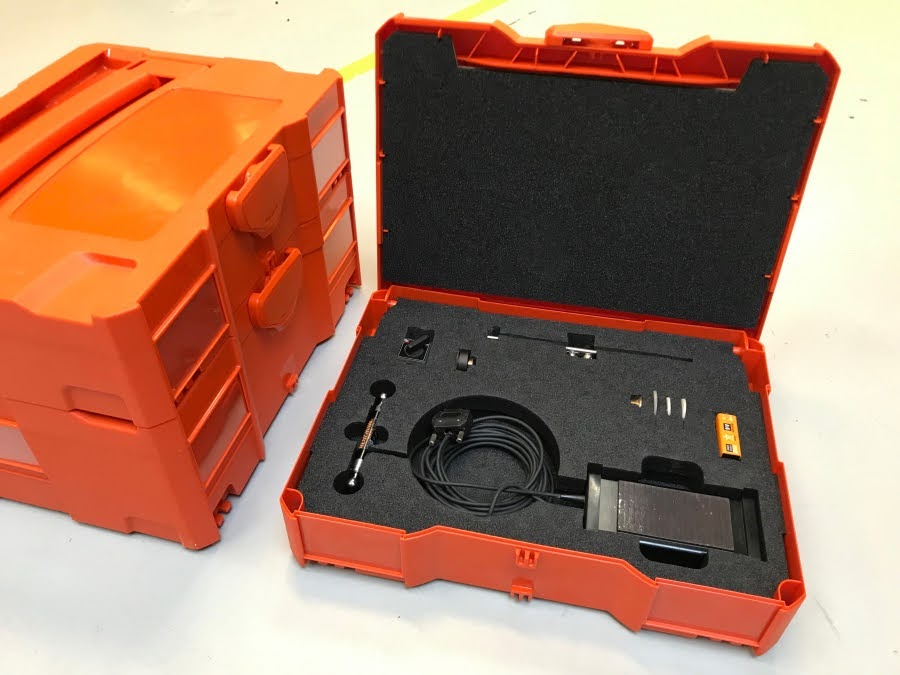
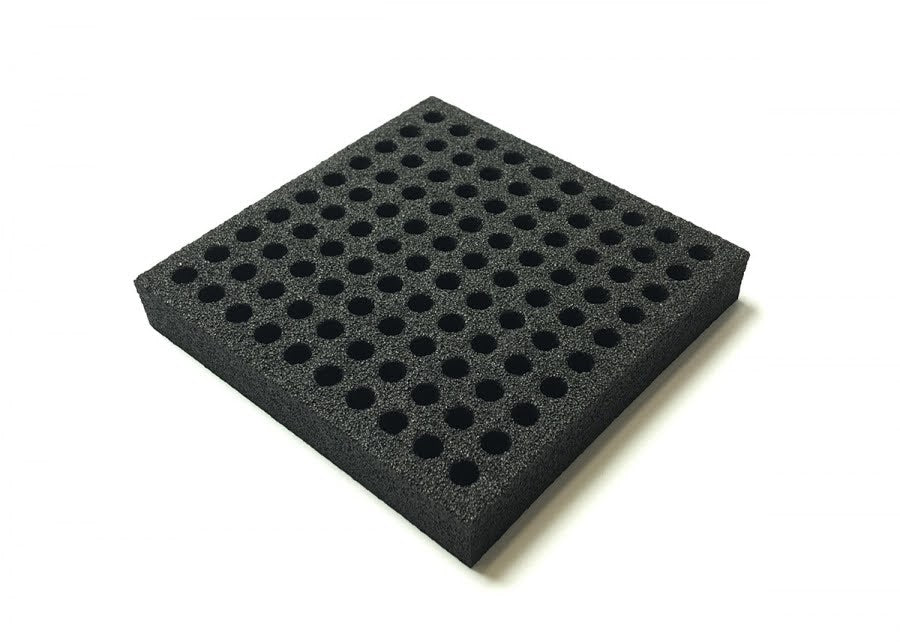
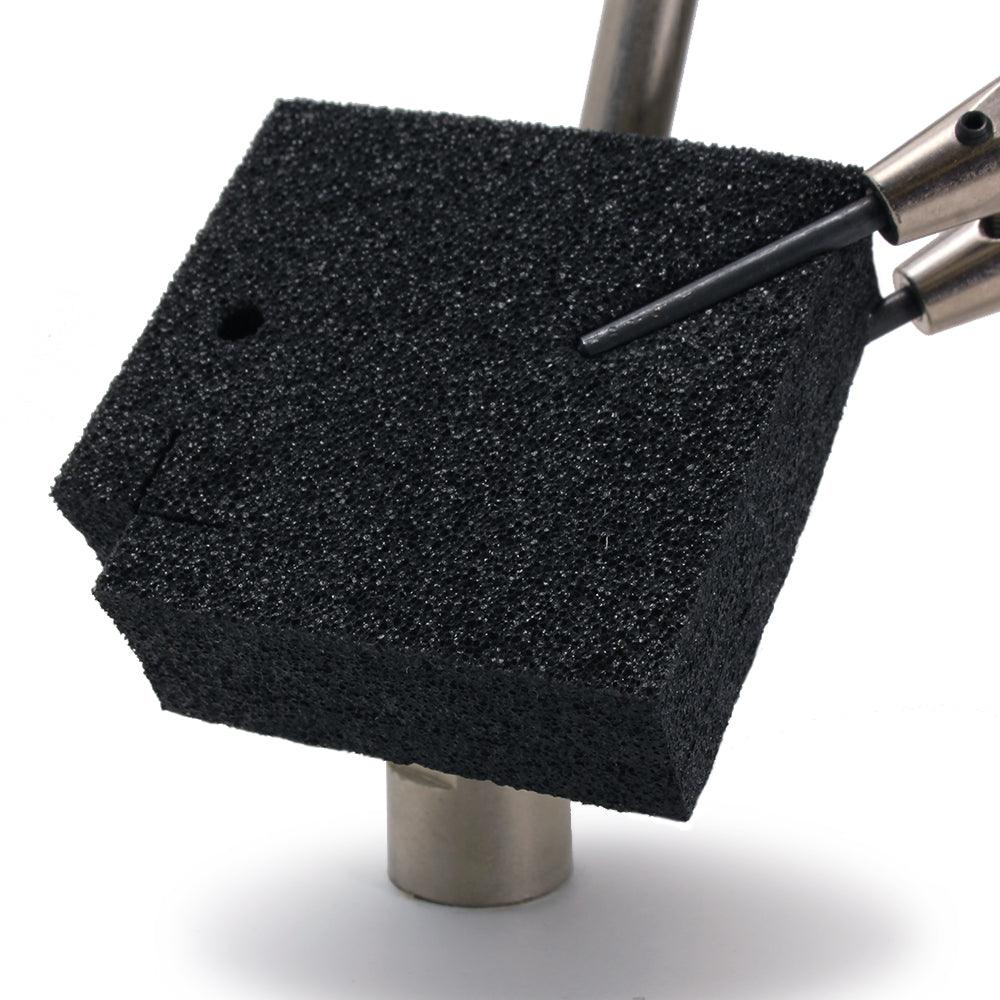
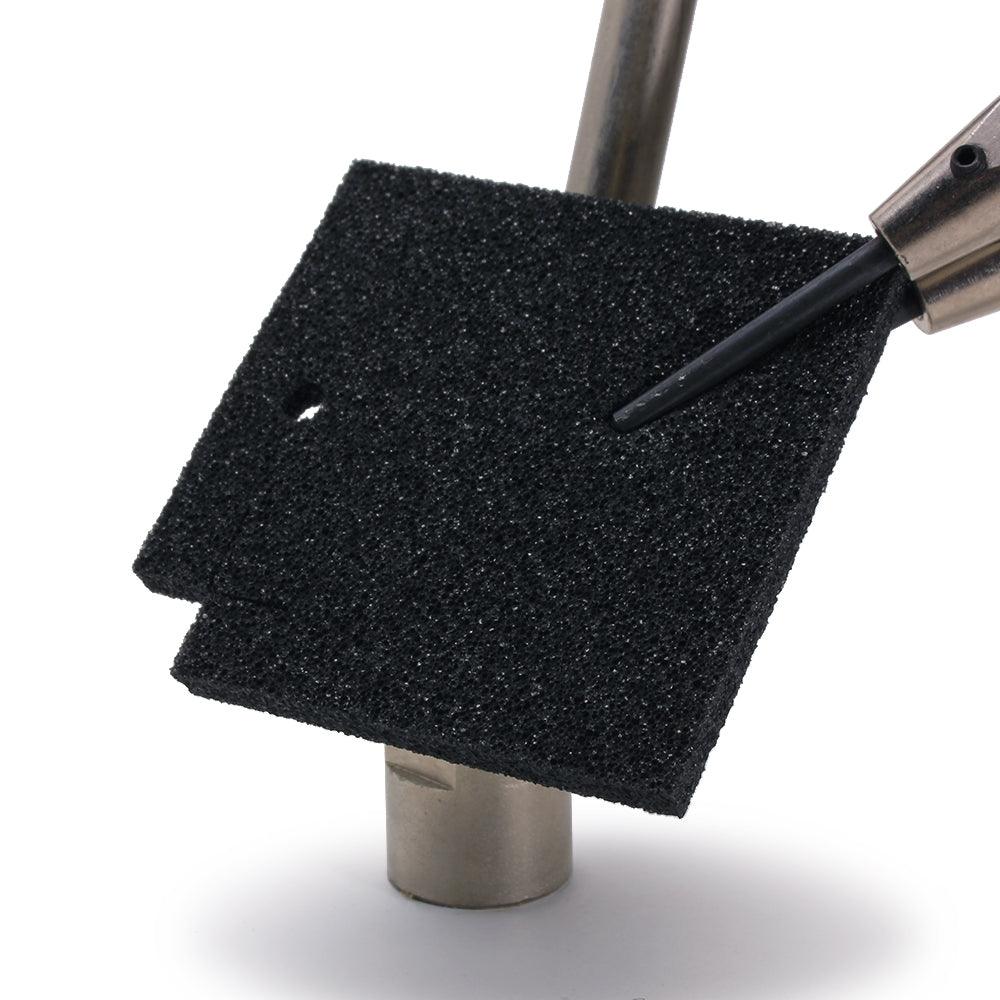
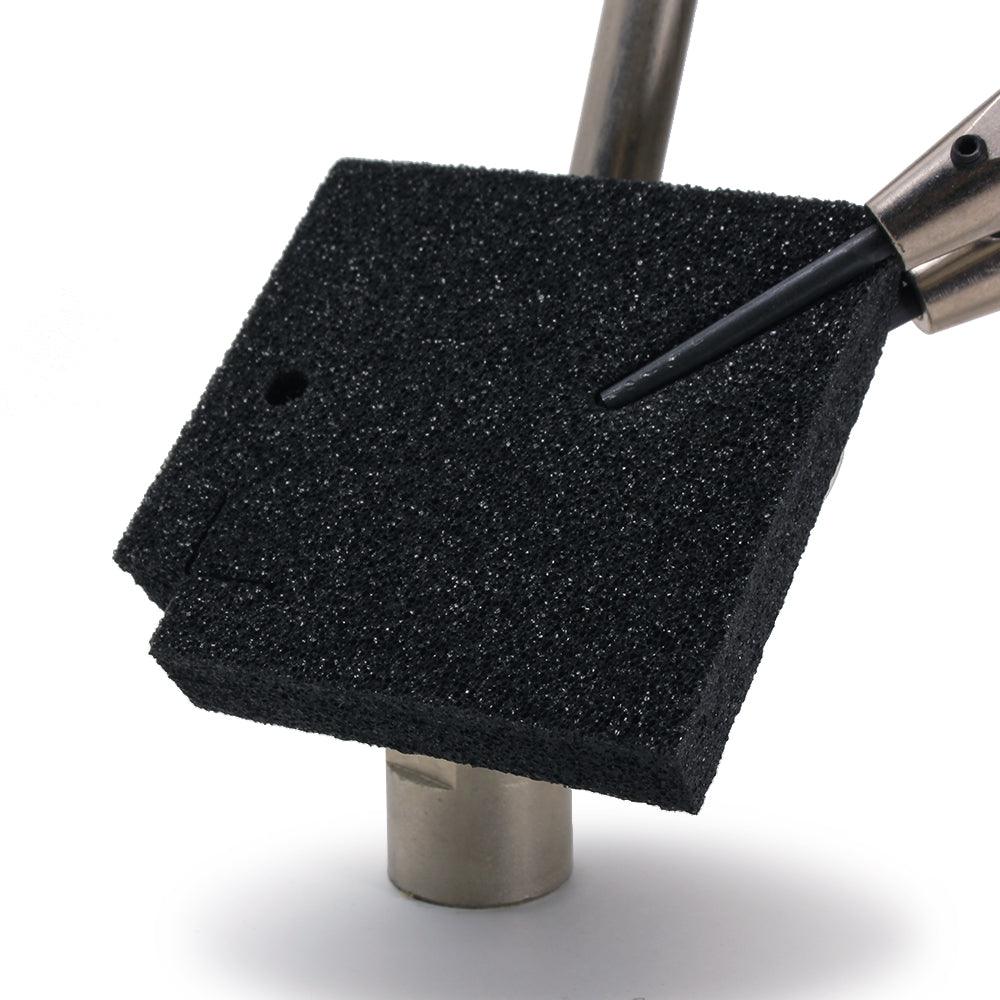
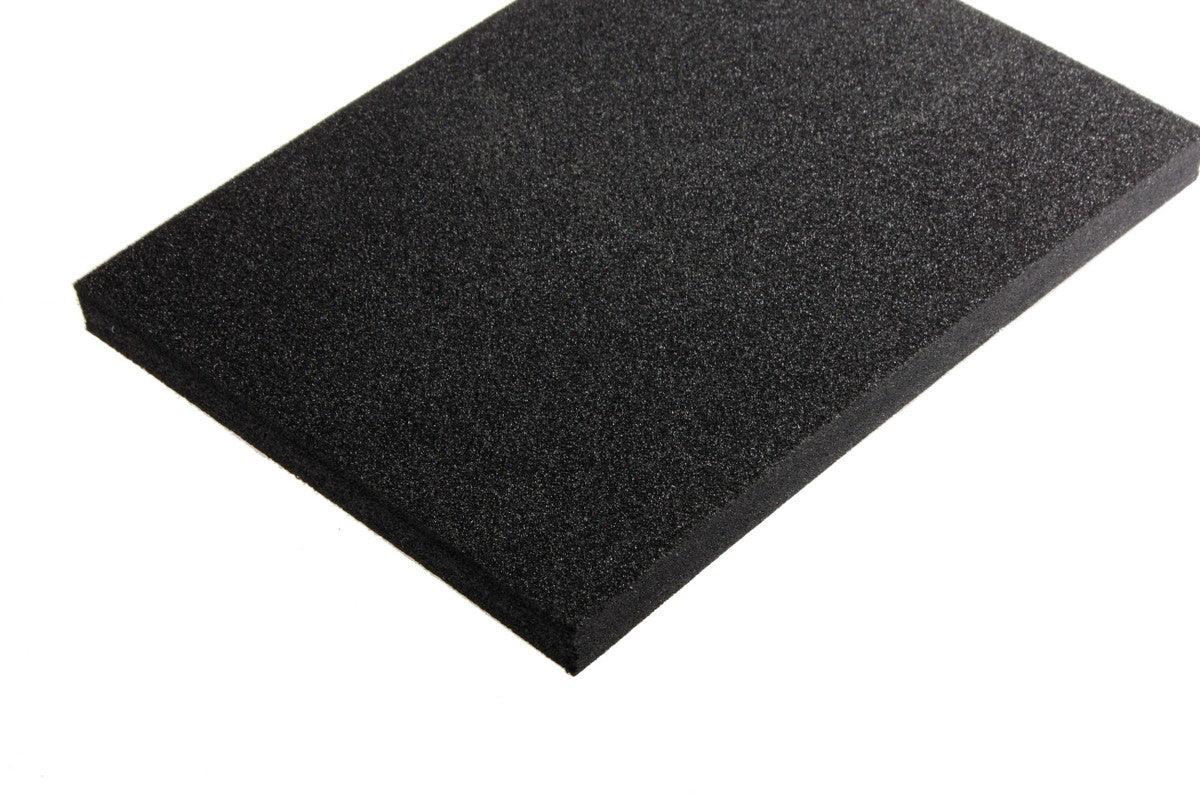
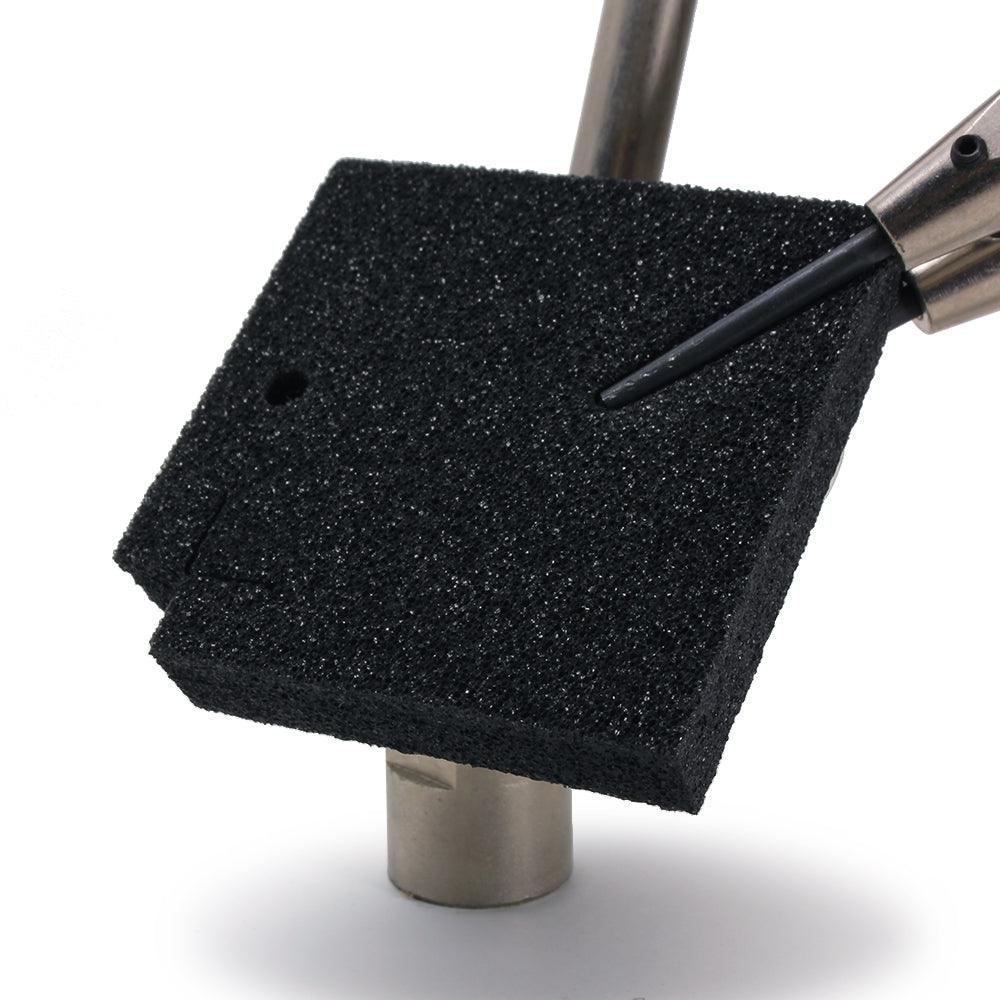
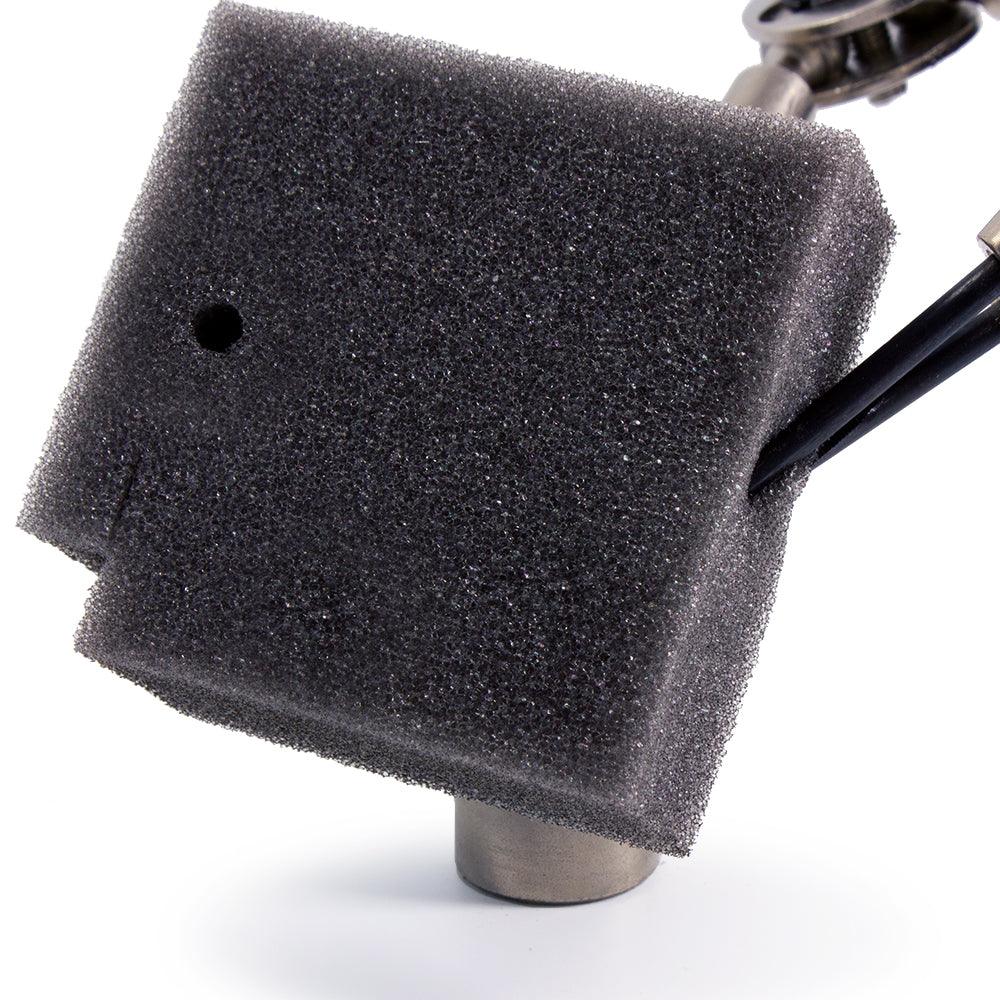
PE foam is a sturdy, resilient closed-cell polyethylene foam, well-known in the flight case industry. Use it to laser cut custom foam inlays: cut-outs that securely hold tools, measuring equipment, or products in place.
When to choose PE foam?
Choose PE foam when a component needs to be secured and protected: inlays for cases and tool drawers, shadowboards, packaging for fragile products, and damping interlayers. Its surface is fine and uniformly black, so an inlay looks finished without post-processing. Thanks to its closed cells, it does not absorb moisture or oil and is easy to clean; black PE foam is also highly resistant to UV light. If a temporary or cheaper inlay is sufficient, consider soft foam. If you are looking for a soft, compressible material for seals, then cellular rubber neoprene is the better choice.
Laser cutting PE foam: what to expect
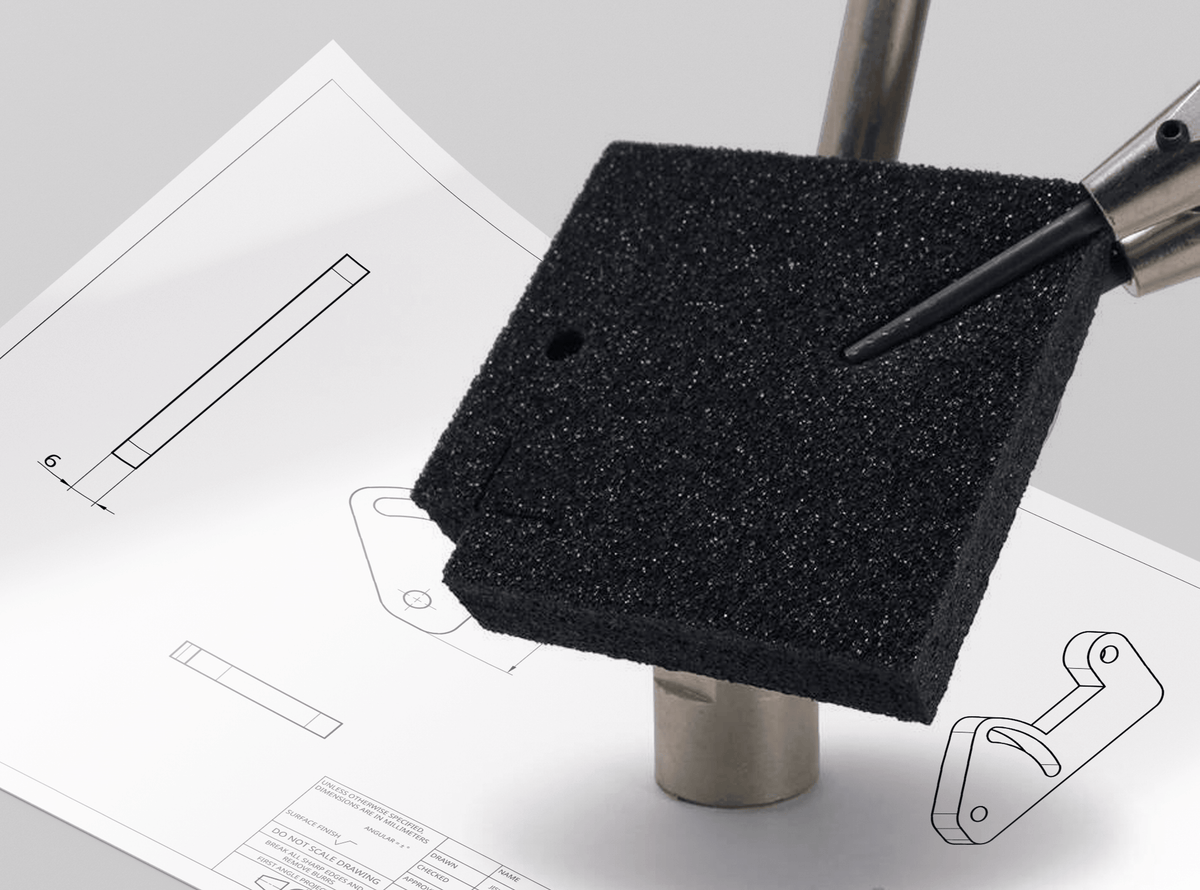
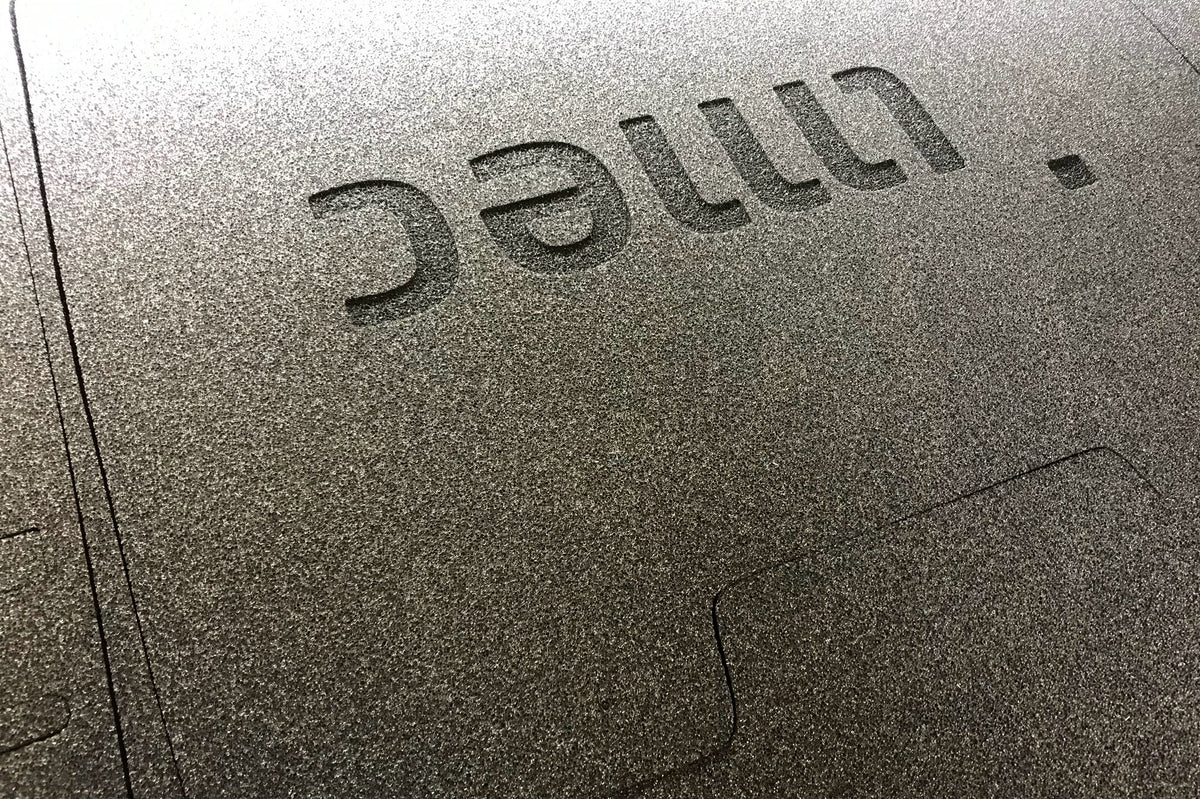
The laser melts a clean, soft cutting edge in the same colour as the surface. The edge does not rub off and has no odour; at 15 and 20 mm, the underside is slightly wrinkled. The cut is wider than with hard plastics, so bear this in mind for small details. Engrave letters, names, and logos directly into the surface. PE foam can be easily glued with contact, spray, or plastic adhesive, and you can build thick inlays from multiple layers: choose adhesive film for the underside and stick them together in one go. The dimensions that allow an inlay to clamp are included in the design tips.
A budget alternative to PE foam
Properties
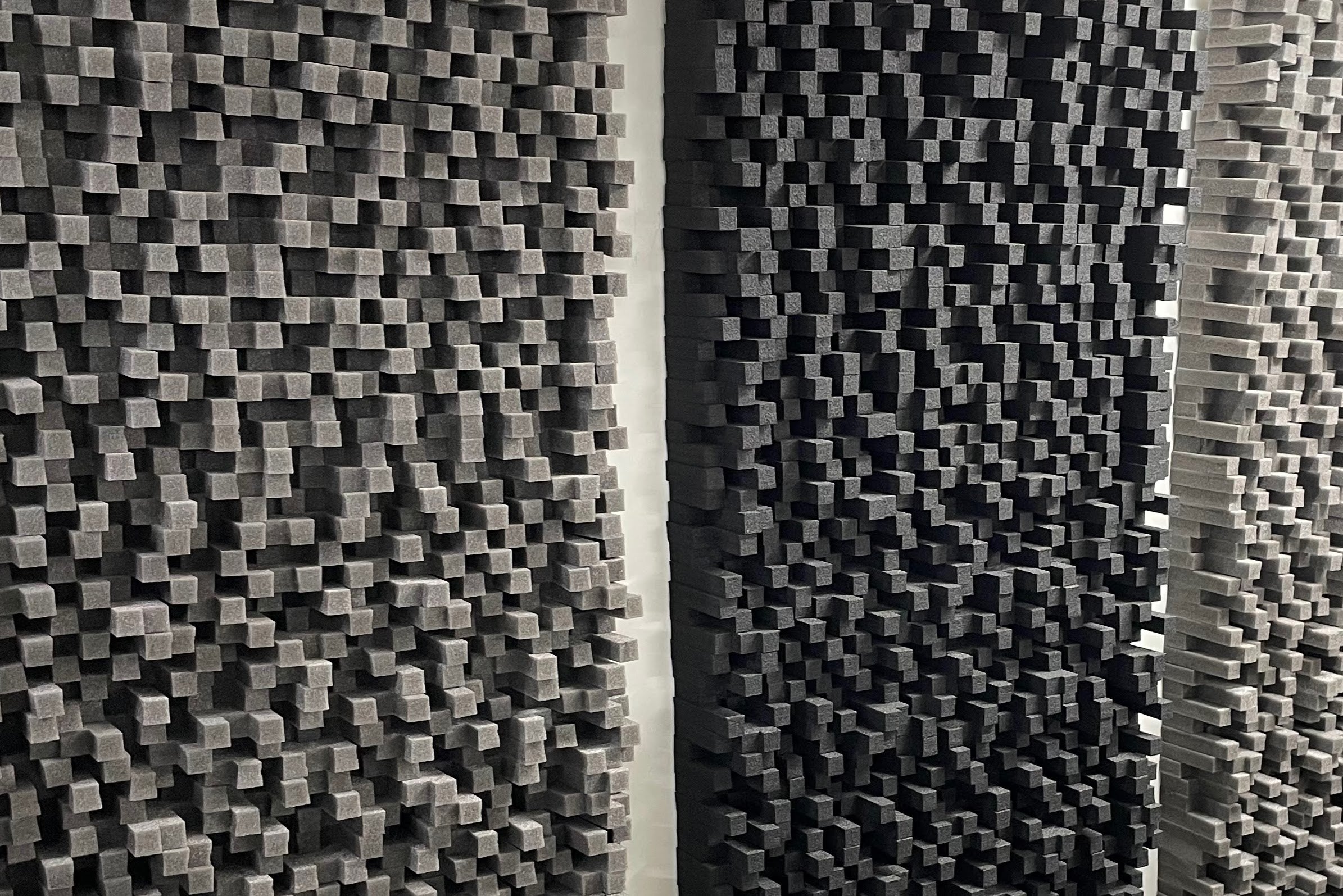
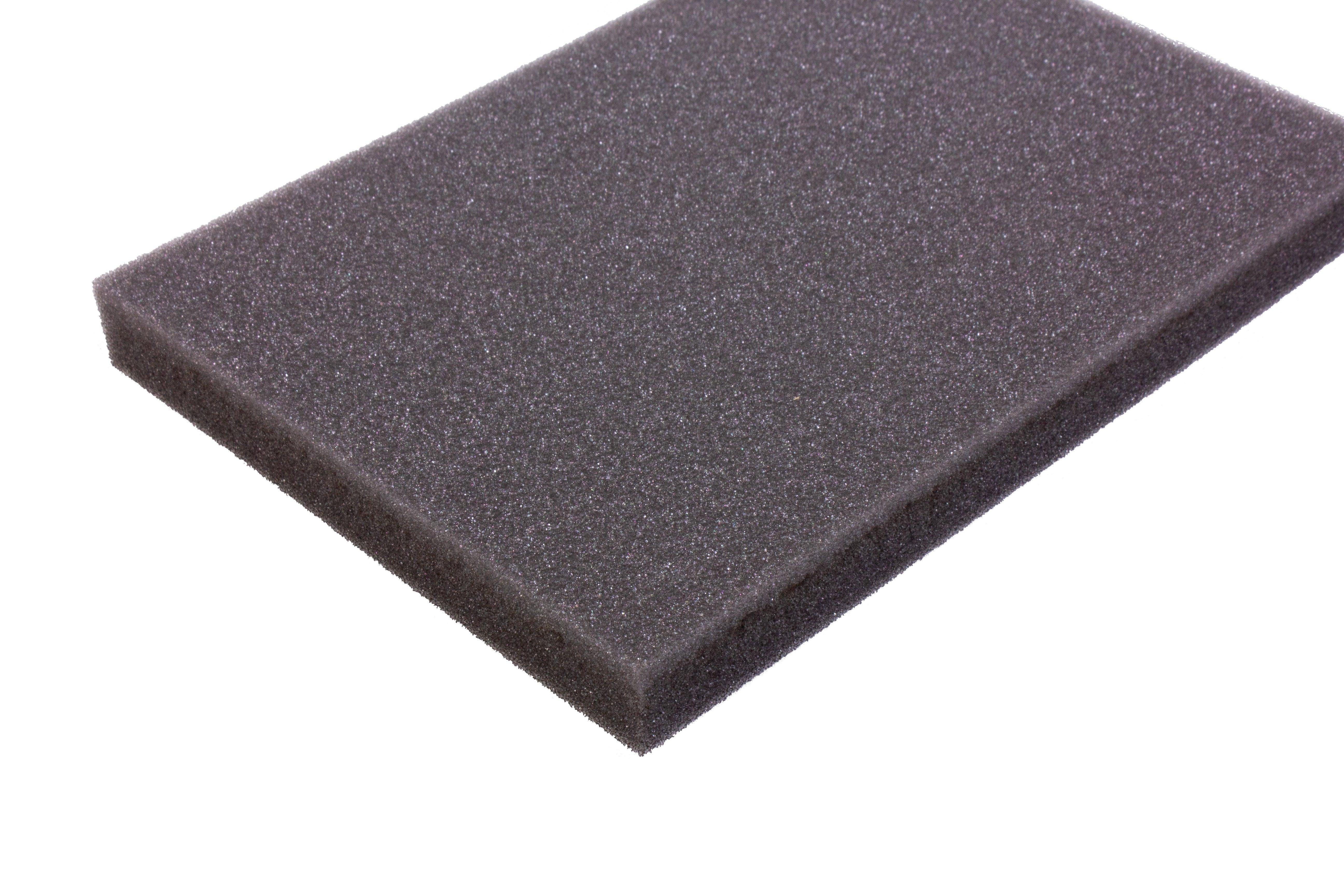
Polyether foam is known as mattress foam, but you can also laser cut shapes from it. It can in some cases be an economical alternative to PE foam in (temporary) inlays of cases and crates. However, there are some important differences from PE foam. It is less sturdy. It is lighter in weight. It is lighter in color (gray). It has open cells so it absorbs liquid. It is less suitable for detailed shapes
Example of an acoustic panel with wood and foam
24/7 Instant quotes for laser cutting
Start your project today
- Create your design using our drawing guidelines
- Upload it at account.snijlab.co.uk
- Receive your parts on the delivery date of your choice
Learn how it works. Want to talk it over first? Our support team is ready to help!
Create a free account