

































Fast, precise, and affordable
Custom gasket laser cutting
Laser Cutting Gaskets and Seals
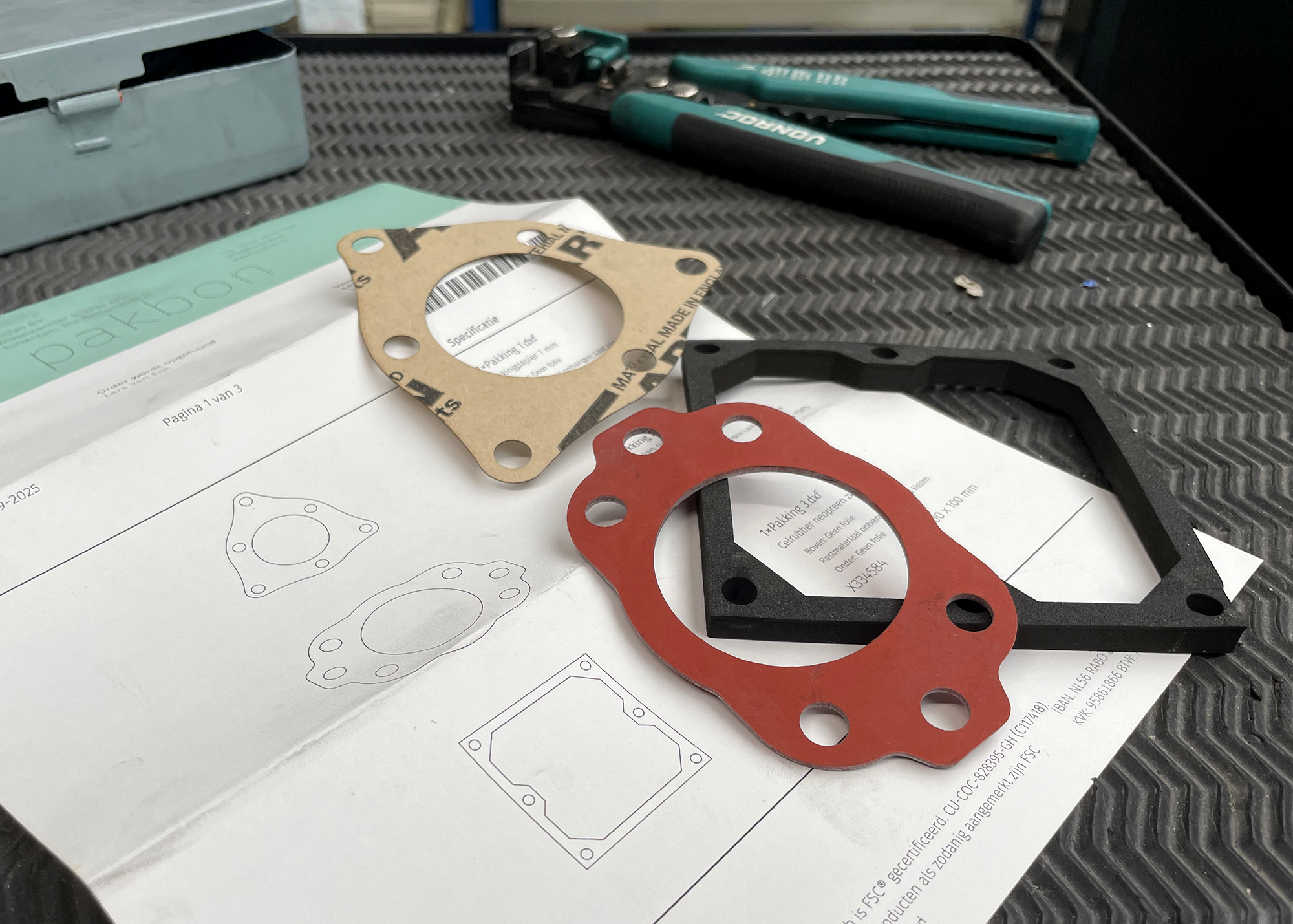
Have your gaskets laser cut by Snijlab from various materials. Laser cutting is fast and precise, allowing you to create seals without expensive dies or tools. Ideal for custom gaskets, one-off seals, prototypes, or smaller series. We'll explain how to get a custom gasket laser cut and which material best suits your application.
Laser cutting is ideally suited for making gaskets. The laser beam cuts through the material without contact, allowing for precise execution of complex shapes. Since no mold or die is required, startup costs are low.
The result is always custom work that perfectly matches your design. Whether you need a flange gasket, an electronic seal, or a heat-resistant seal, laser cutting provides high accuracy, short delivery times, and the freedom to easily adjust your design when needed.
Materials for Custom Gaskets
Filters
4 products
What is a Gasket?
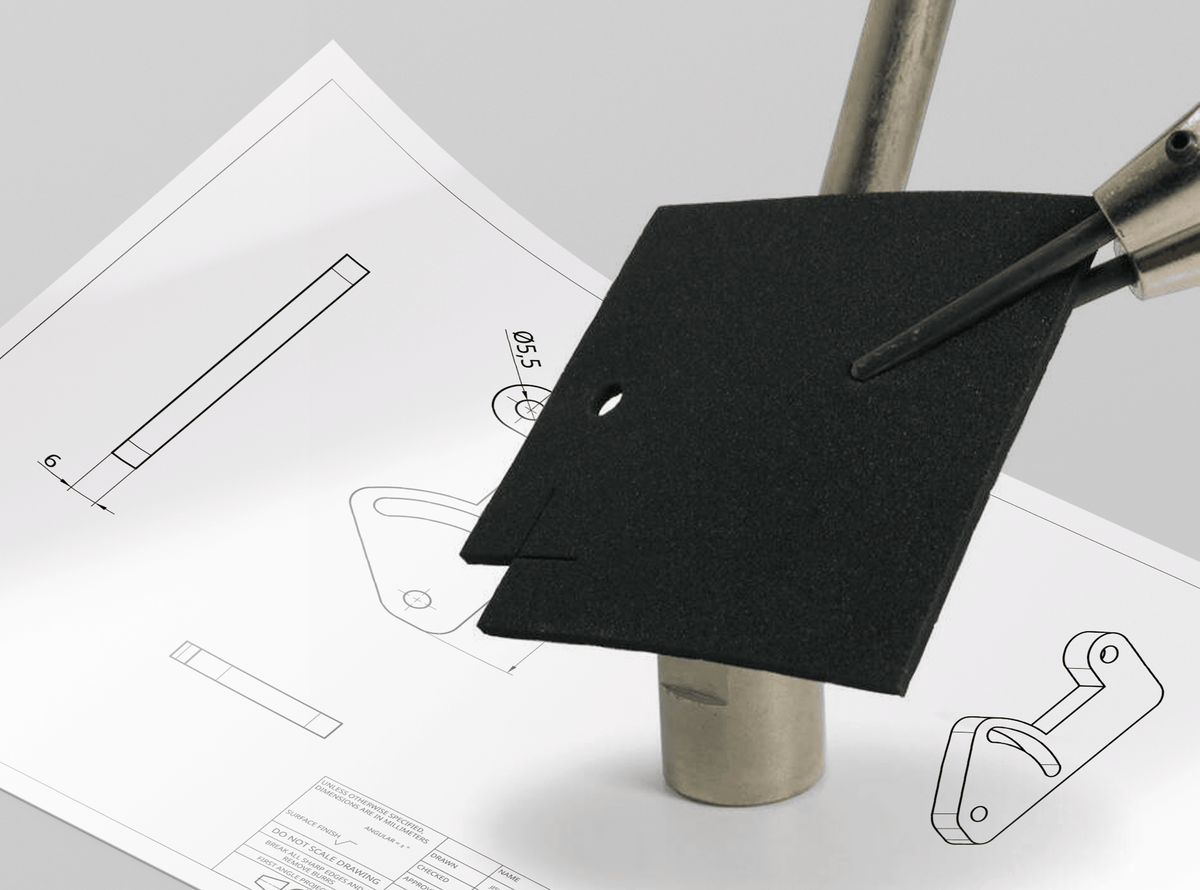
A gasket is a seal, usually made from a flexible material. A gasket is used to fill the space between two mating surfaces, typically in a machine, pipeline, or car engine, to prevent liquids or gases from leaking.
Gaskets prevent leaks and hold components in place, which is why they must be made of materials that are not only flexible but also heat-, oil-, and moisture-resistant. Specific requirements vary by application.
Many terms are used for approximately the same purpose. A gasket is also referred to as a seal or flange.
Why Laser Cut a Custom Gasket?
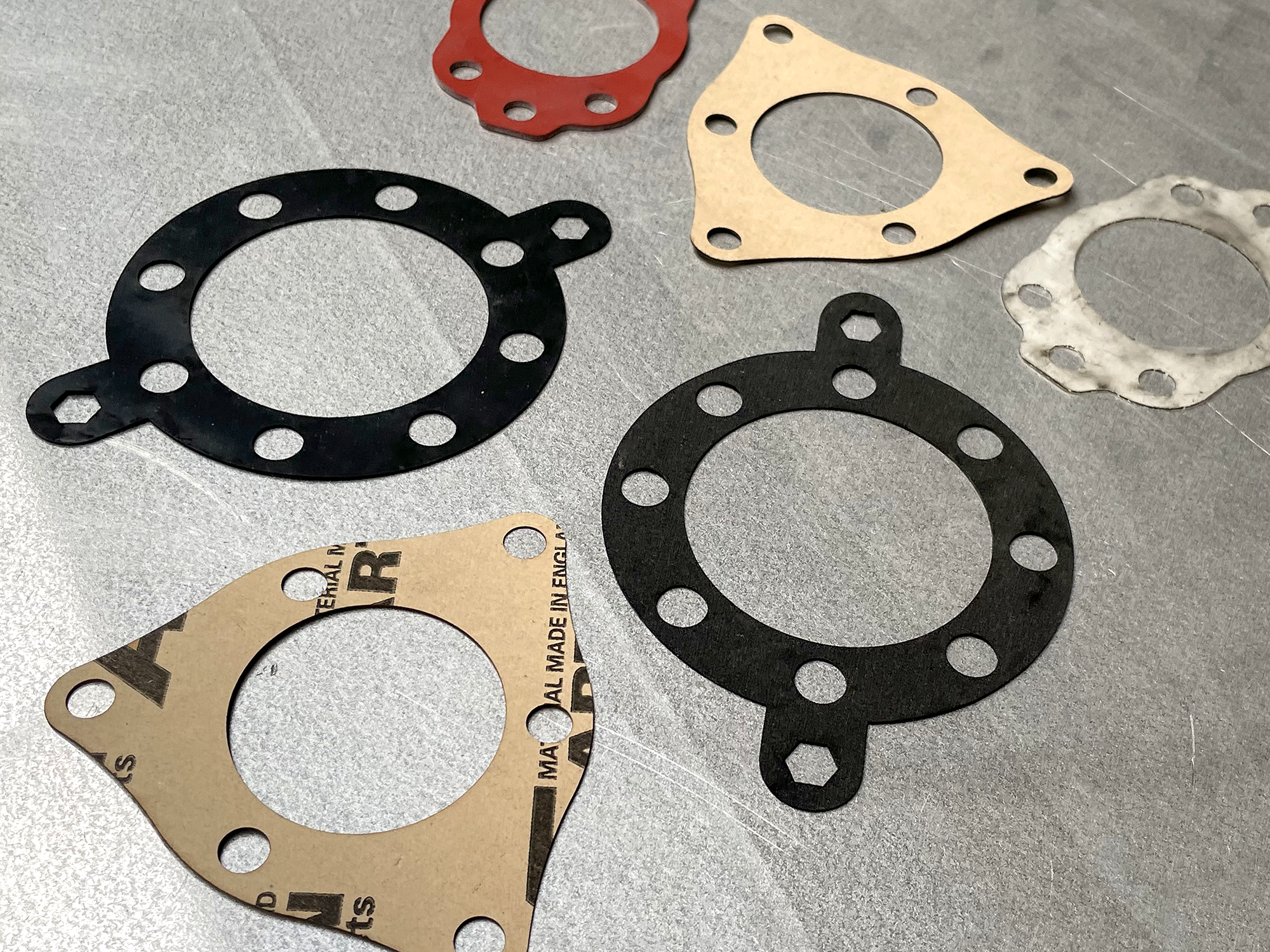
Gaskets and seals are used in countless applications: from engines and pumps to electronics, medical devices, and kitchen applications. Often, gaskets are still manually cut from gasket paper when only one piece is needed. For large series, stamping with molds is usually chosen. Laser cutting is the perfect solution for the in-between category.
The great advantage of laser cutting gaskets is that you can order from a single piece and easily scale up to medium-sized series. Because no molds or dies are required, startup costs are low, and production can start quickly. Furthermore, the design always remains flexible. If a change is needed in the future, the drawing can be easily adjusted without incurring additional costs for new tooling.
With custom gasket laser cutting, you can be sure that the seal perfectly matches your component. This makes the method particularly suitable for rubber gaskets and seals that are not available in standard sizes or whose shape needs to be regularly adjusted.
The Benefits of Laser Cutting Gaskets
- Rapid prototyping with express delivery
- Easy scaling from a single piece to series
- Flexibility to adjust the design in the future
- Precise work with rubber, gasket paper, silicones, and neoprene
How to make your own custom gasket?
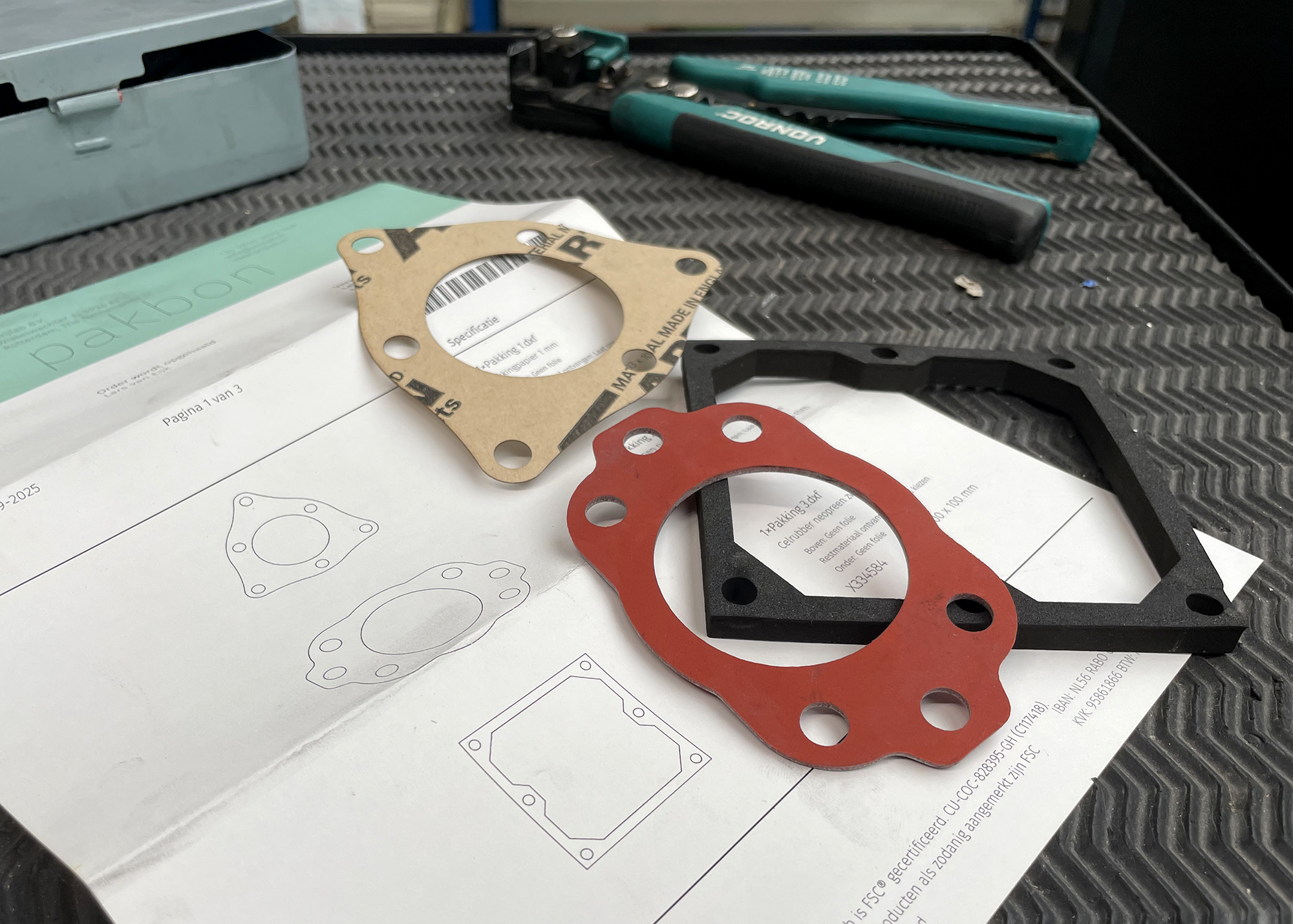
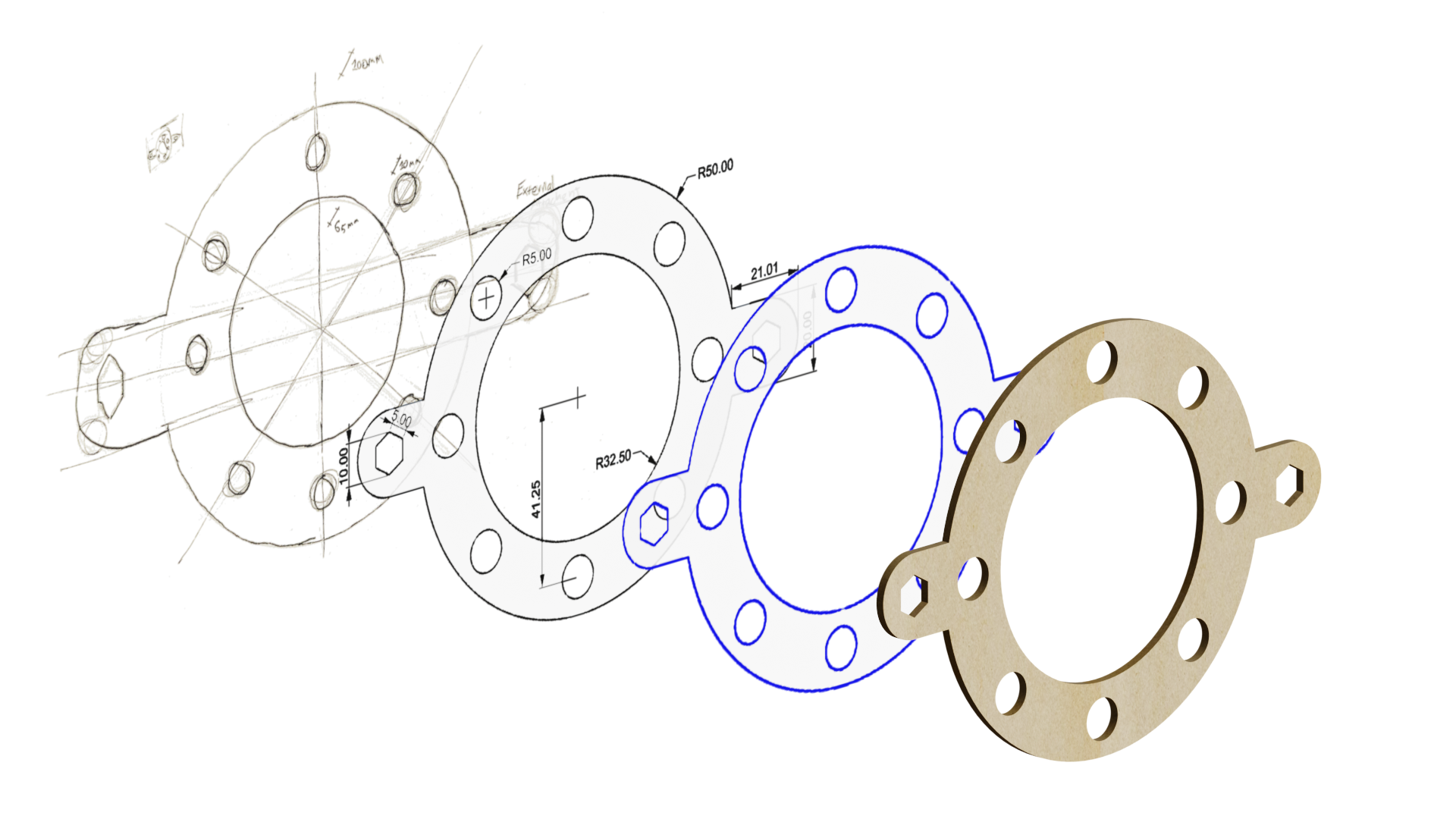
Order from a single piece. All you need is a CAD or vector drawing. You can find general information about laser cutting here, but we're happy to give you extra tips for gaskets, flanges, and seals.
Step-by-step: drawing a gasket
- Create a drawing of the shape you need
- Convert it to a vector drawing in software like Adobe Illustrator, AutoCAD, or Rhinoceros
- Apply the drawing rules
- Export as .dwg, .dxf, .ai or .pdf
- Upload your file to your free Snijlab account
- Choose material and delivery time
- Check the instant quote and order
Tip: Replacing an old gasket? Place it on a flatbed scanner and scan it in. This gives you a quick and accurate basis for your drawing. Always double-check the dimensions afterwards.
How to get an instant quote for a gasket?
Want an instant quote first? Follow the same steps and upload your drawing. After choosing a material, you'll see the price instantly. The number of pieces and delivery time affect the final cost.
Downloading a quote is easy:
- Place your design in the shopping cart
- Go to the order overview
- Click on ‘Download quote’
This way, you can generate multiple non-binding quotes, for instance, with different delivery times.
How to make your own custom gasket?
Order from a single piece. All you need is a CAD or vector drawing. You can find general information about laser cutting here, but we're happy to give you extra tips for gaskets, flanges, and seals.
Step-by-step: drawing a gasket
- Create a drawing of the shape you need
- Convert it to a vector drawing in software like Adobe Illustrator, AutoCAD, or Rhinoceros
- Apply the drawing rules
- Export as .dwg, .dxf, .ai or .pdf
- Upload your file to your free Snijlab account
- Choose material and delivery time
- Check the instant quote and order
Tip: Replacing an old gasket? Place it on a flatbed scanner and scan it in. This gives you a quick and accurate basis for your drawing. Always double-check the dimensions afterwards.
How to get an instant quote for a gasket?
Want an instant quote first? Follow the same steps and upload your drawing. After choosing a material, you'll see the price instantly. The number of pieces and delivery time affect the final cost.
Downloading a quote is easy:
- Place your design in the shopping cart
- Go to the order overview
- Click on ‘Download quote’
This way, you can generate multiple non-binding quotes, for instance, with different delivery times.
What Types of Gaskets Are There?
There are many different types of gaskets and similar components. Common names also include flanges, seals, or washers. Below, we'll delve deeper into commonly used types.
- Flange gaskets are gaskets placed between two flanges to create a leak-tight connection. They are often used in piping systems, machinery, and installations where liquids or gases are transported under pressure.
Insulation gaskets or isolator plates are used to separate two materials and prevent electrical or galvanic conduction. Often applied in flange connections of different metals to prevent corrosion, or as thermal insulation.
Seals is a collective term for all components that ensure liquids, gases, or substances remain within a confined space. This can include rubber rings, gaskets, or other sealing materials.
Sealing elements is a broader term often synonymous with seals or gaskets. It refers to any material that closes an opening to prevent leakage or ingress of liquids, air, or dirt.
Head gaskets (cylinder head gaskets) are located in engines between the cylinder head and the engine block. They ensure that combustion gases remain in the cylinder and prevent oil or coolant from leaking. Head gaskets are also used in pumps and compressors. These compression gaskets are often made of a metal-containing material, which we cannot laser cut.
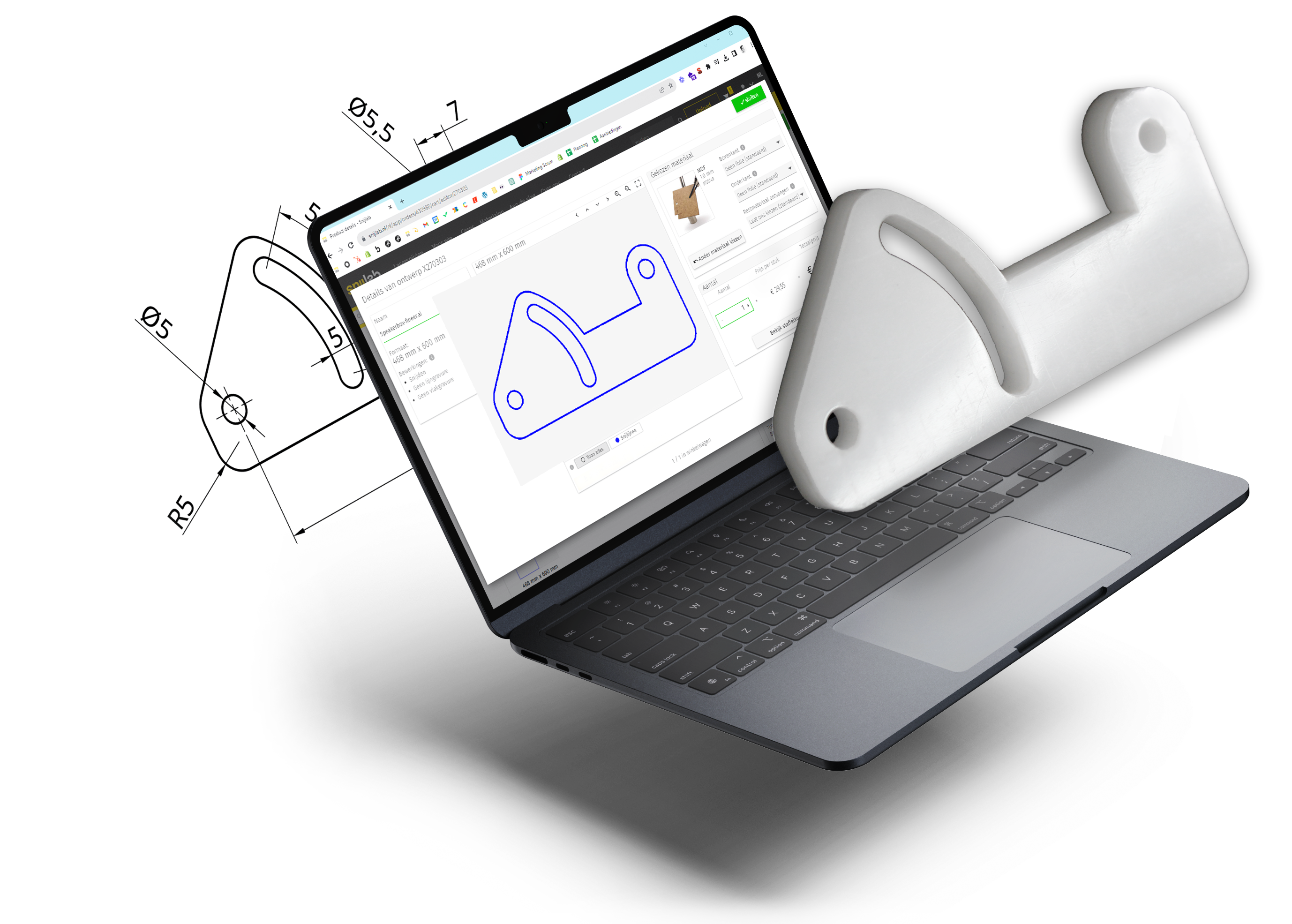
How do I create a design for laser cutting?
Start here if you want to know how to create a design for laser cutting. We give you tips and an overview of our tutorials.
Which Material Should I Choose for My Gasket?
Choosing the right material depends on the application. Consider the temperature, the liquids or gases you want to seal, and the mechanical load. Below, you'll find an overview of our materials and their typical applications.
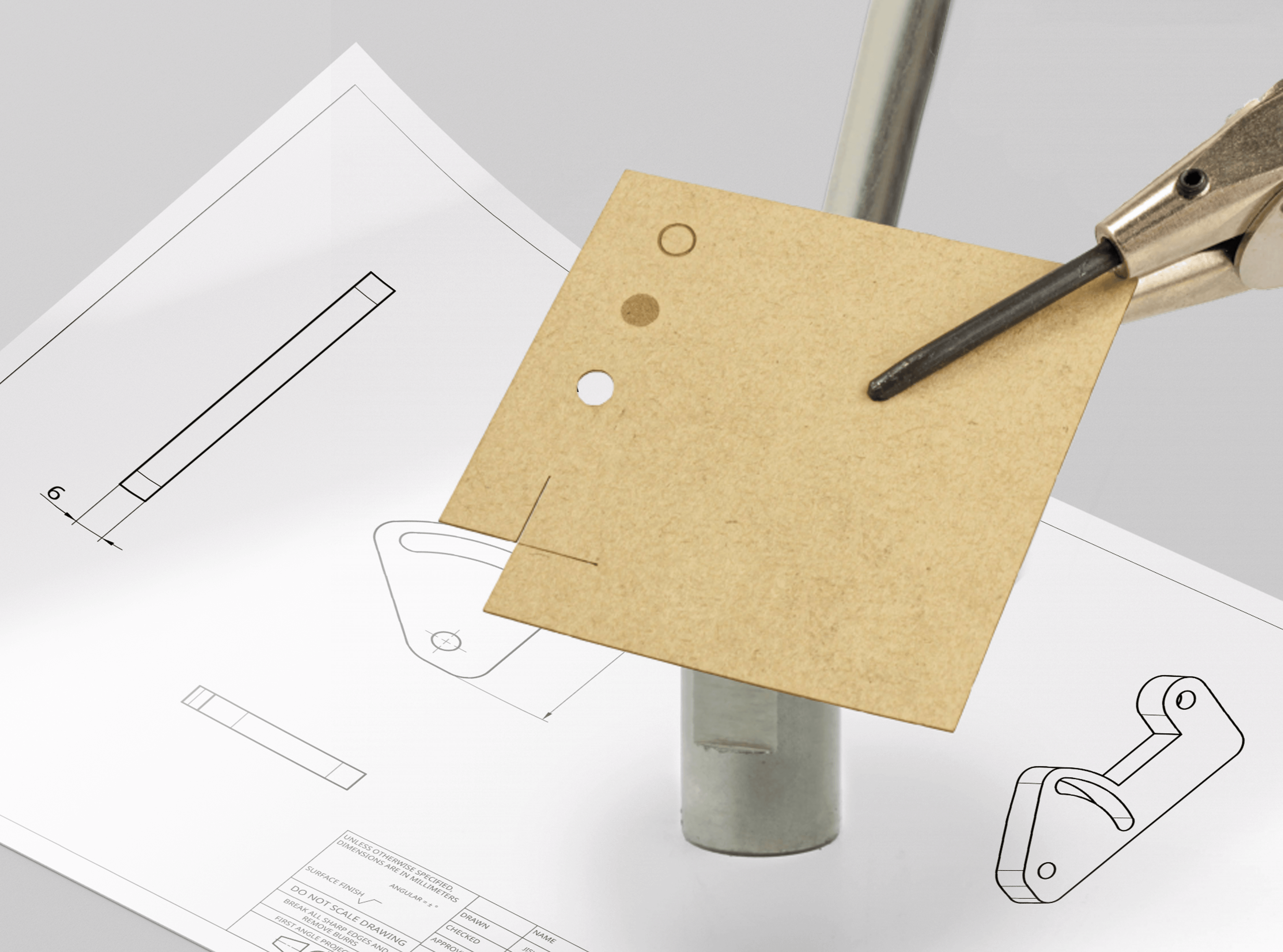
1. Gasket Paper
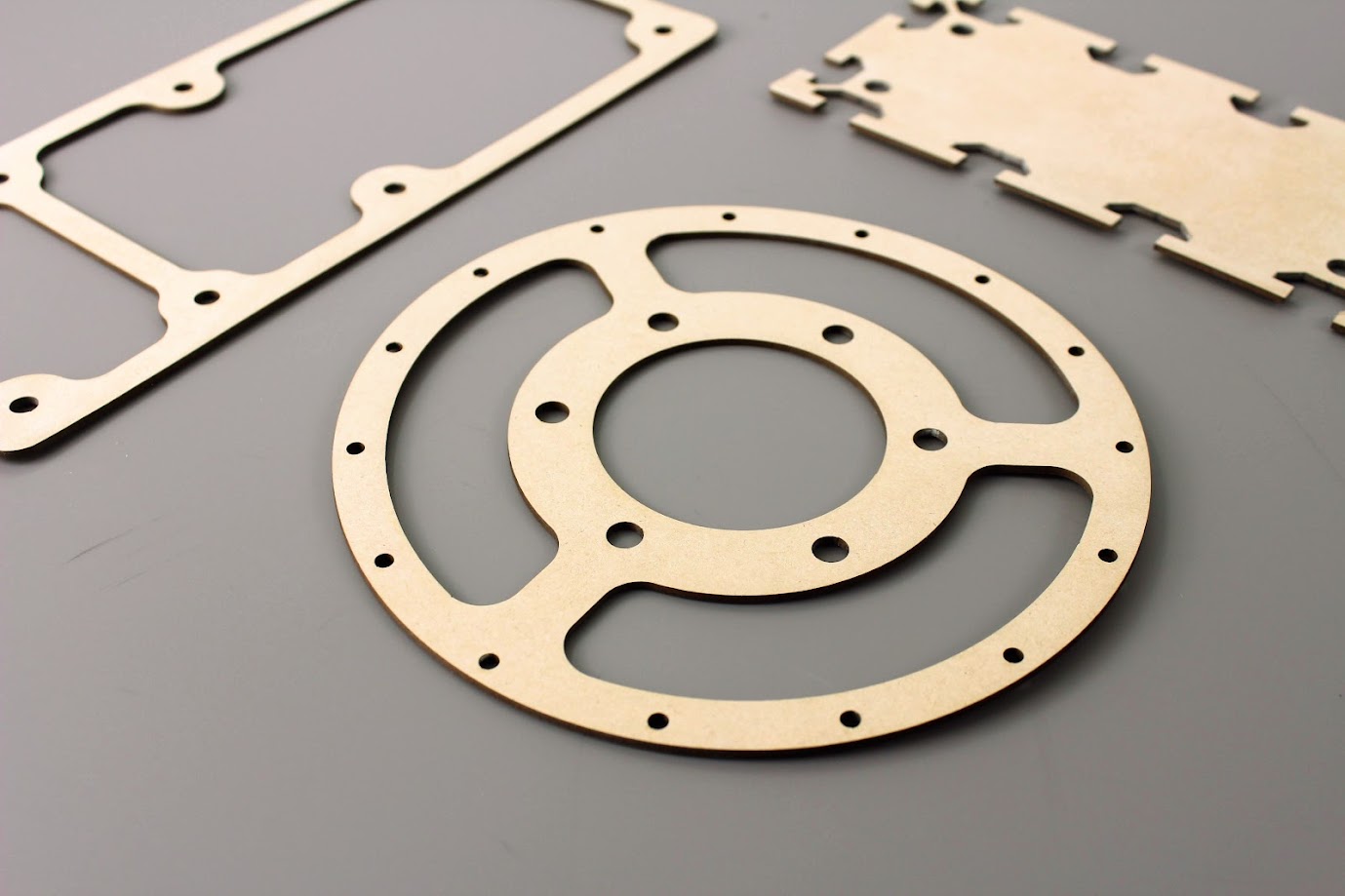
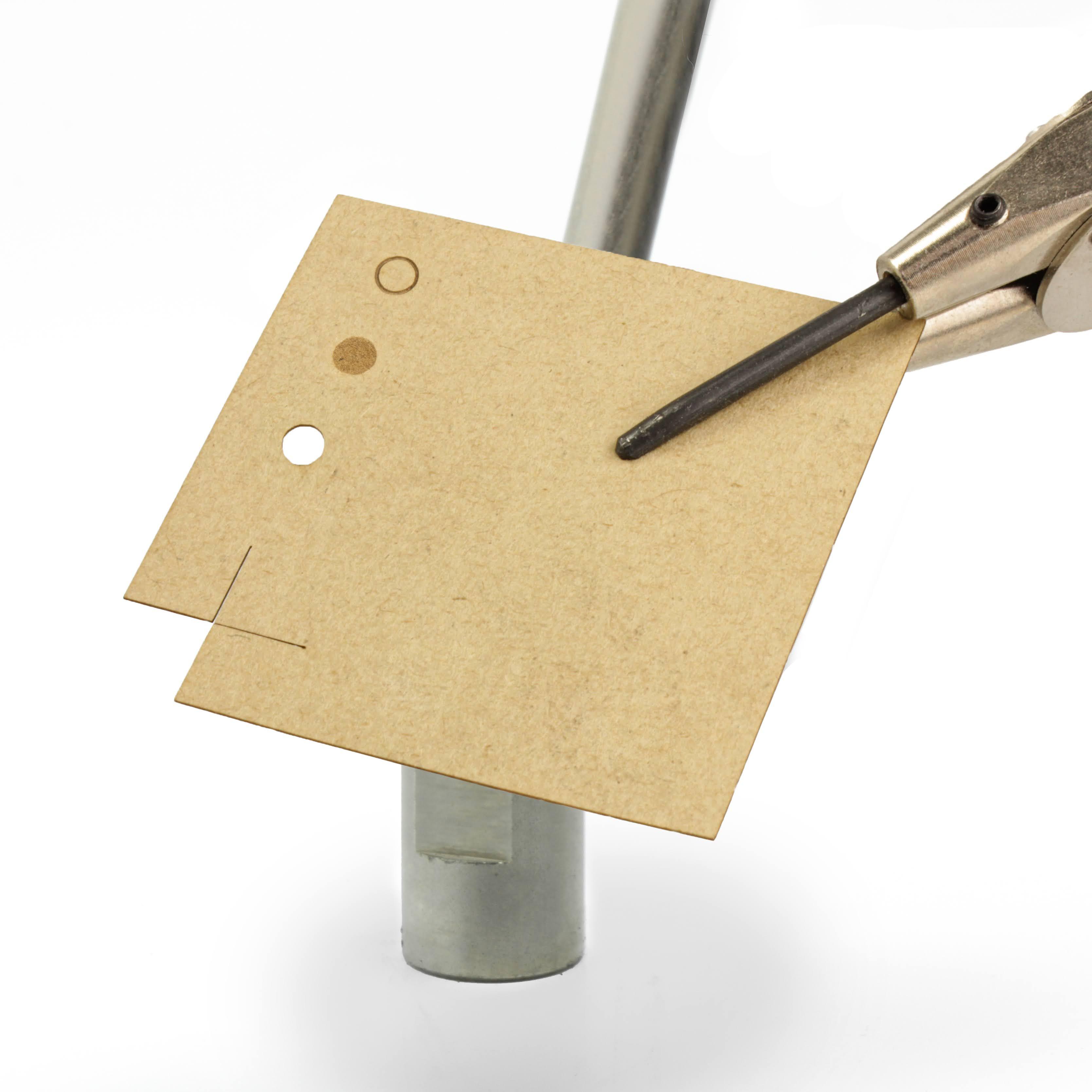
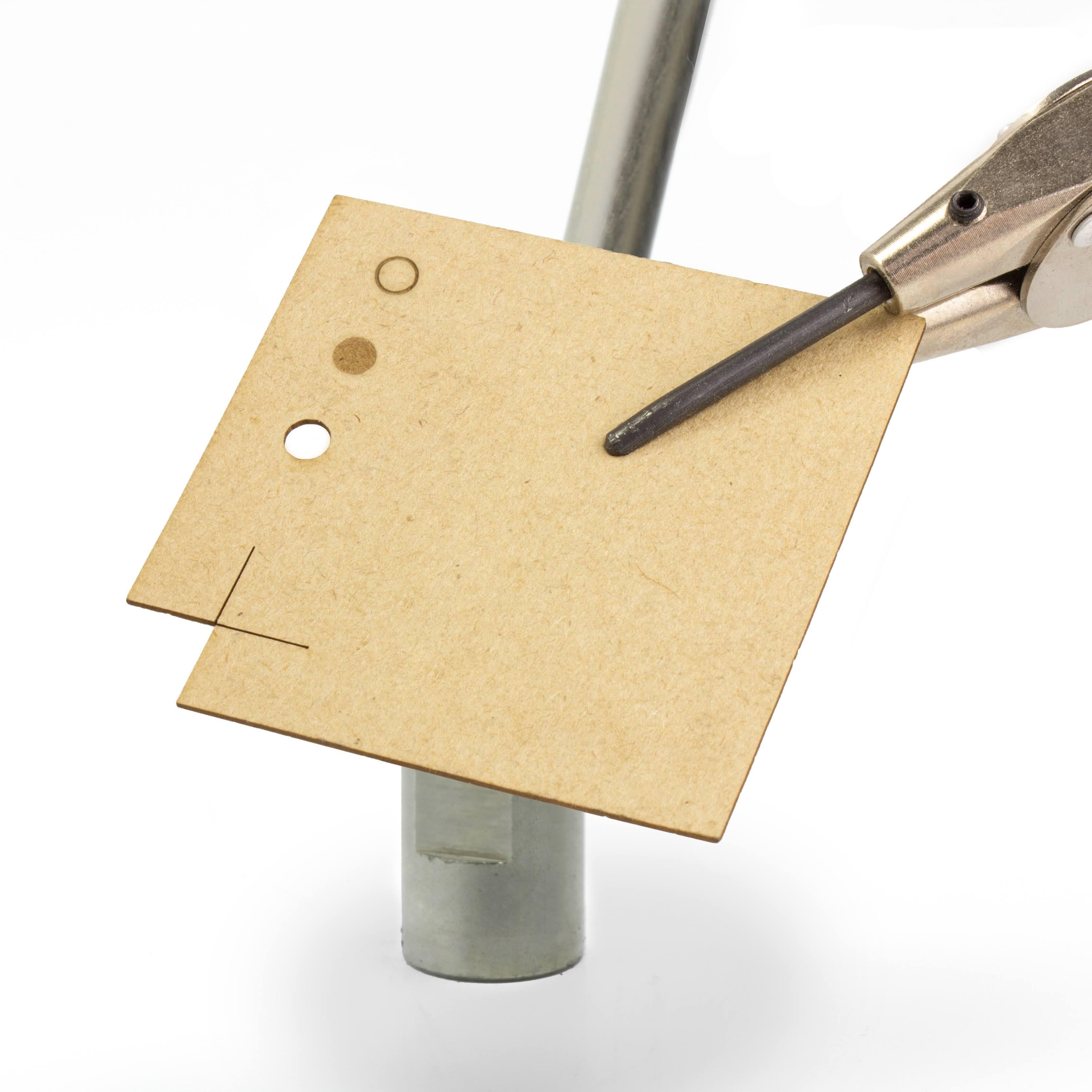
Gasket paper is, as the name suggests, the first choice for gaskets in engines, machines, and automotive parts. It is impregnated, heat- and oil-resistant, and has high sealing capabilities. Ideal for flange gaskets or applications involving oil or fuel.
- Resistant to oil, fuel, and heat up to 120 °C
- Asbestos-free and durable in use
- Highly suitable for fine, detailed gaskets
Typical applications: engines, machines, automotive parts
Features
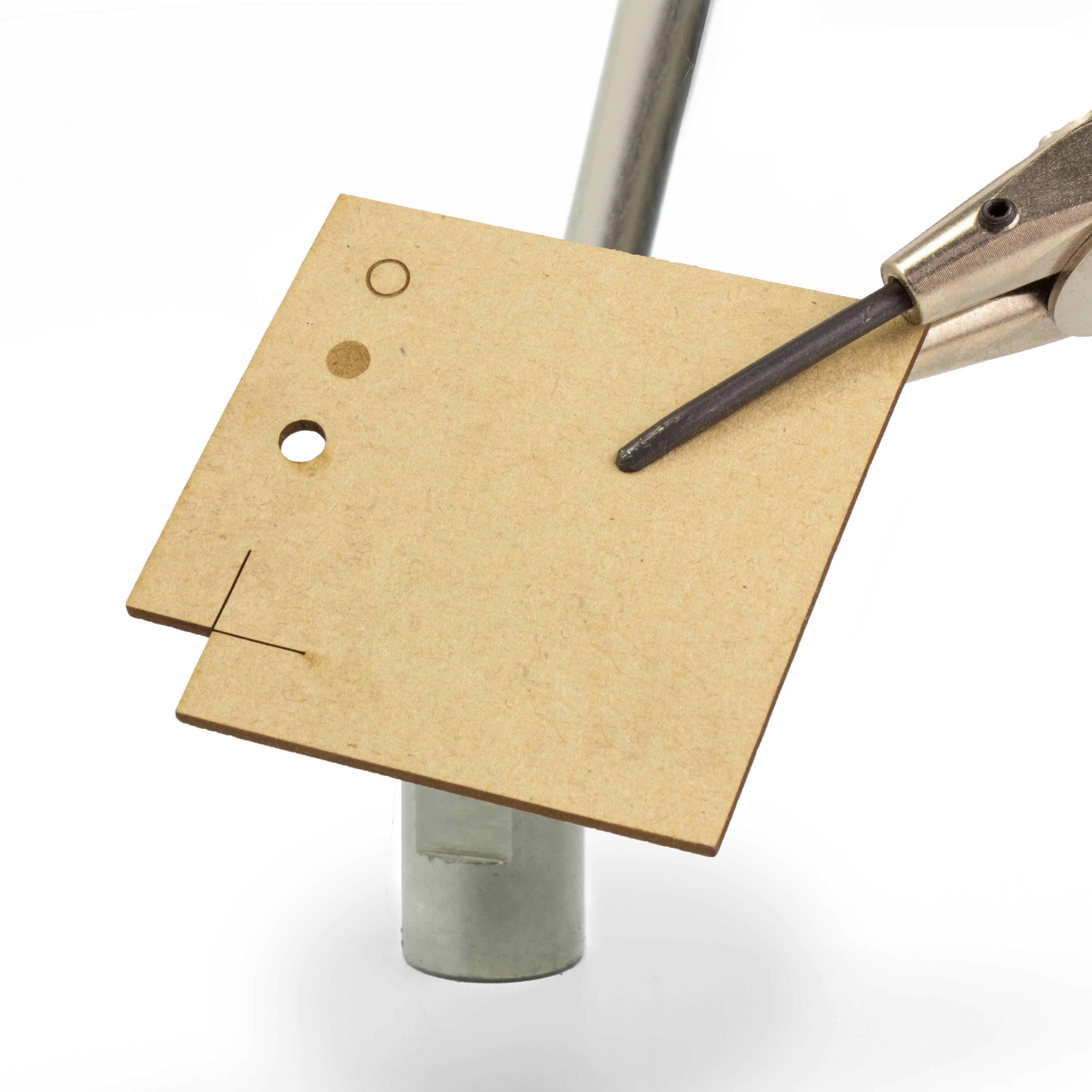
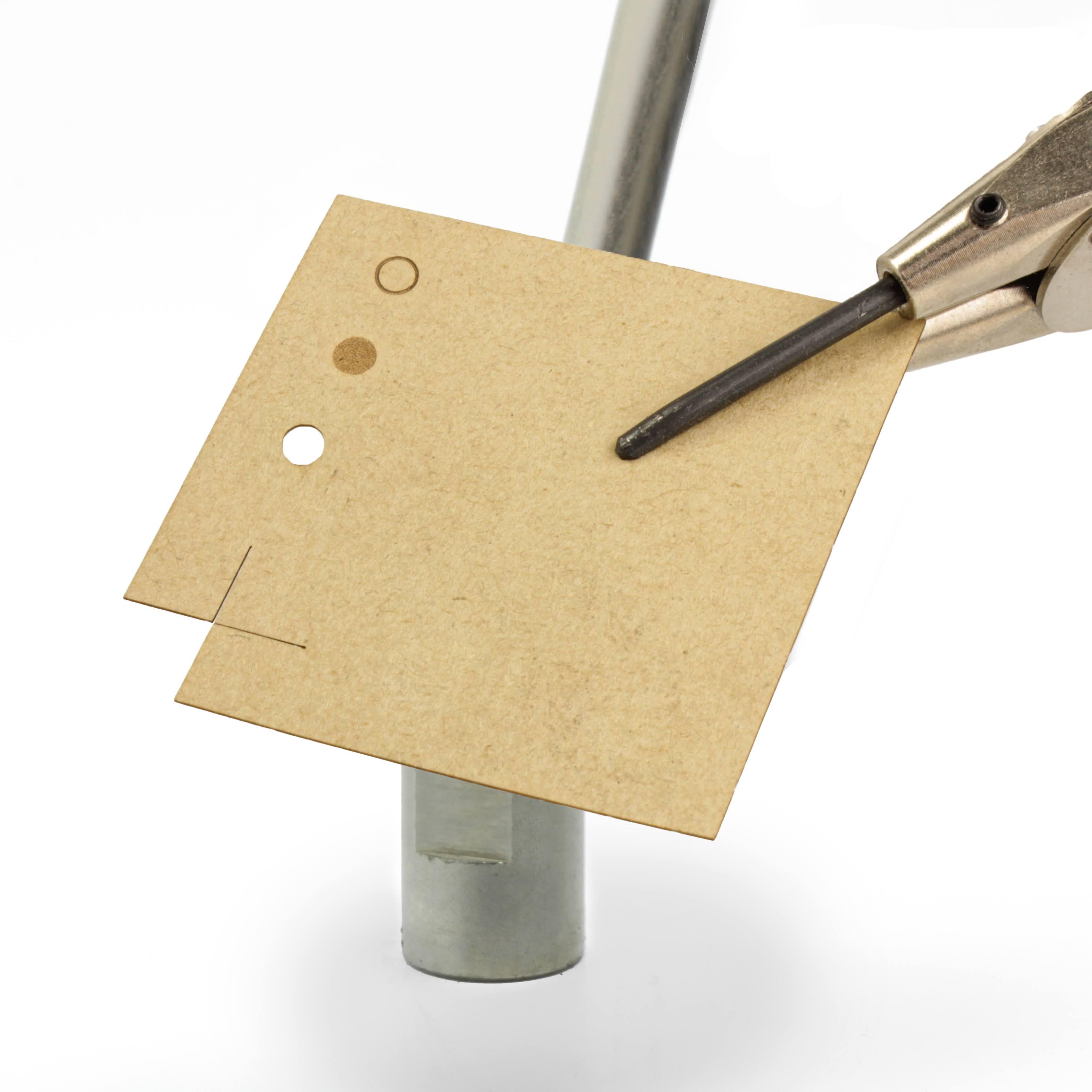
Gasket paper has high sealing ability and is resistant to heat, fuel and oil. It can be used in applications up to 120 degrees Celsius and is free of asbestos.
Applications
Gasket paper is often used in industry for making seals in machinery, auto parts and various equipment. It is fuel and oil resistant. Laser-cut gaskets can be cut very detailed due to non-contact machining.
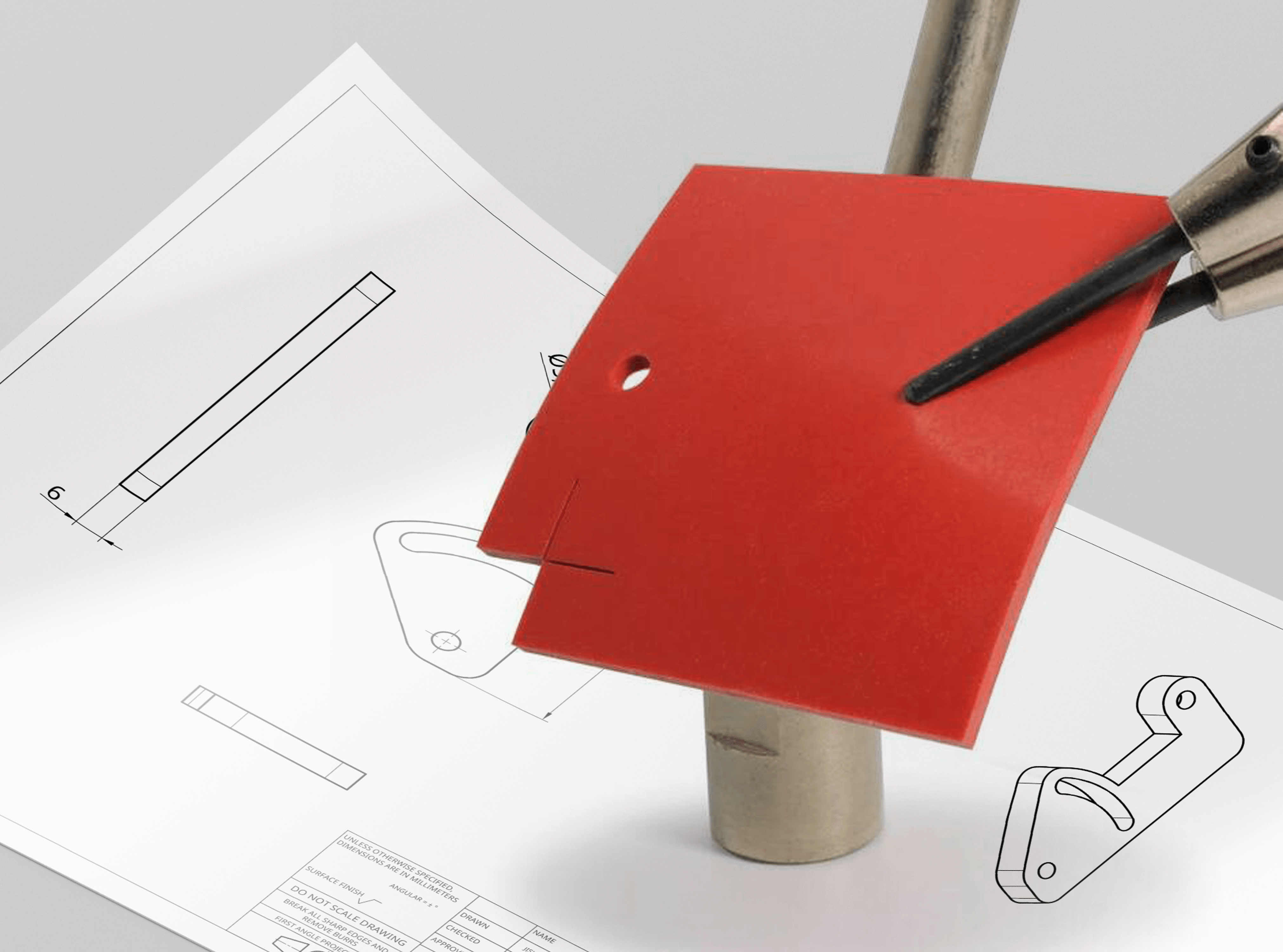
2. Silicone Rubber
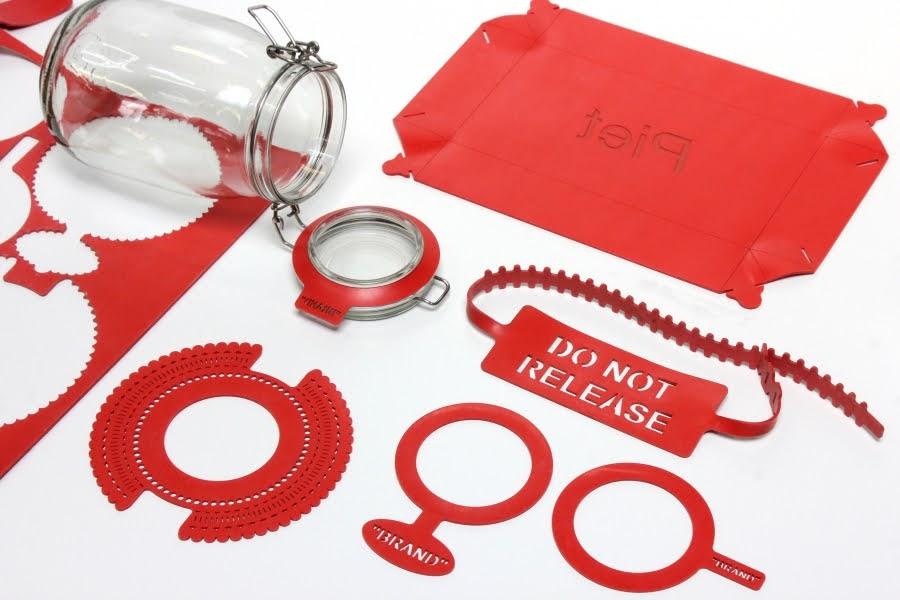
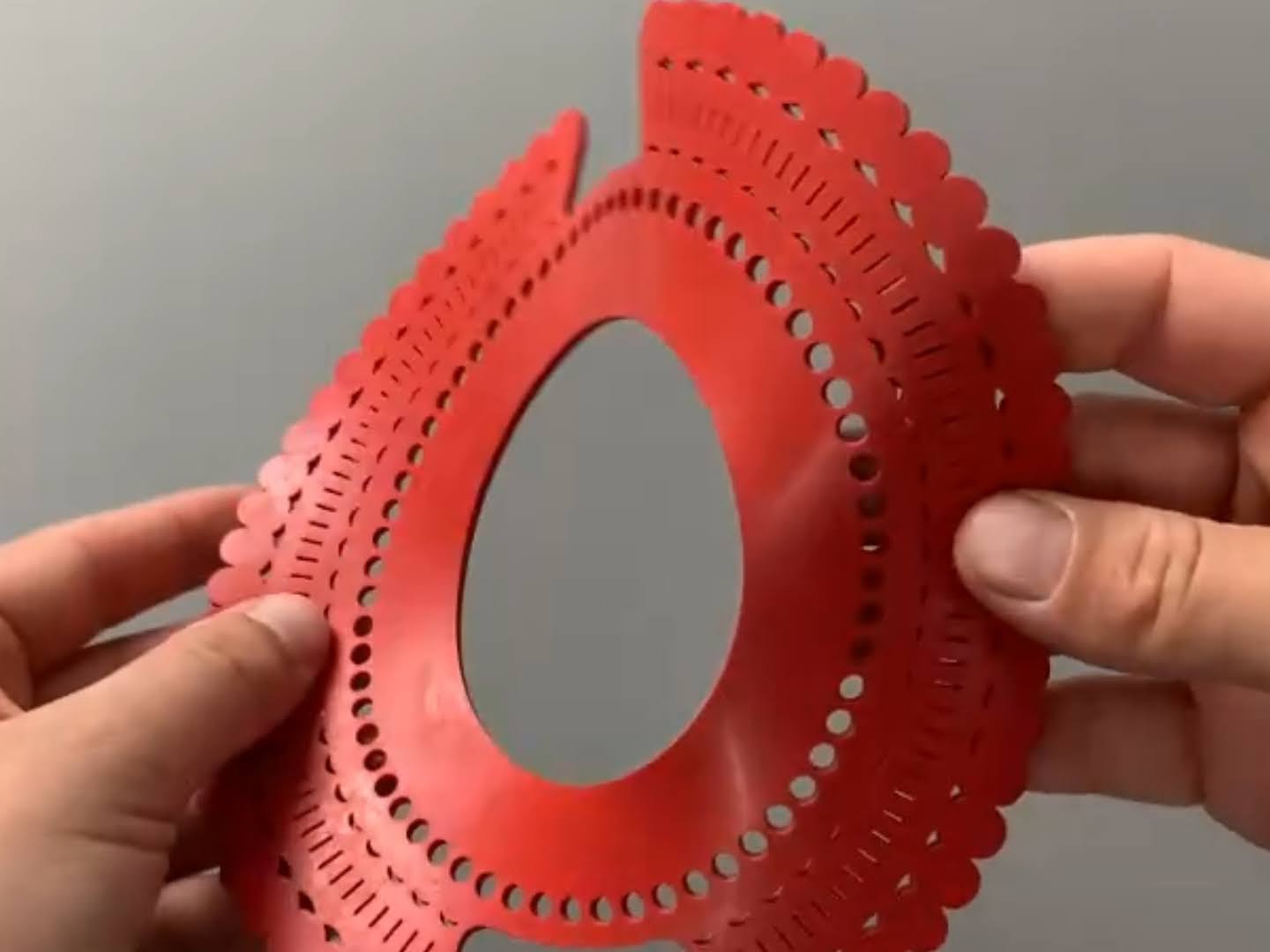
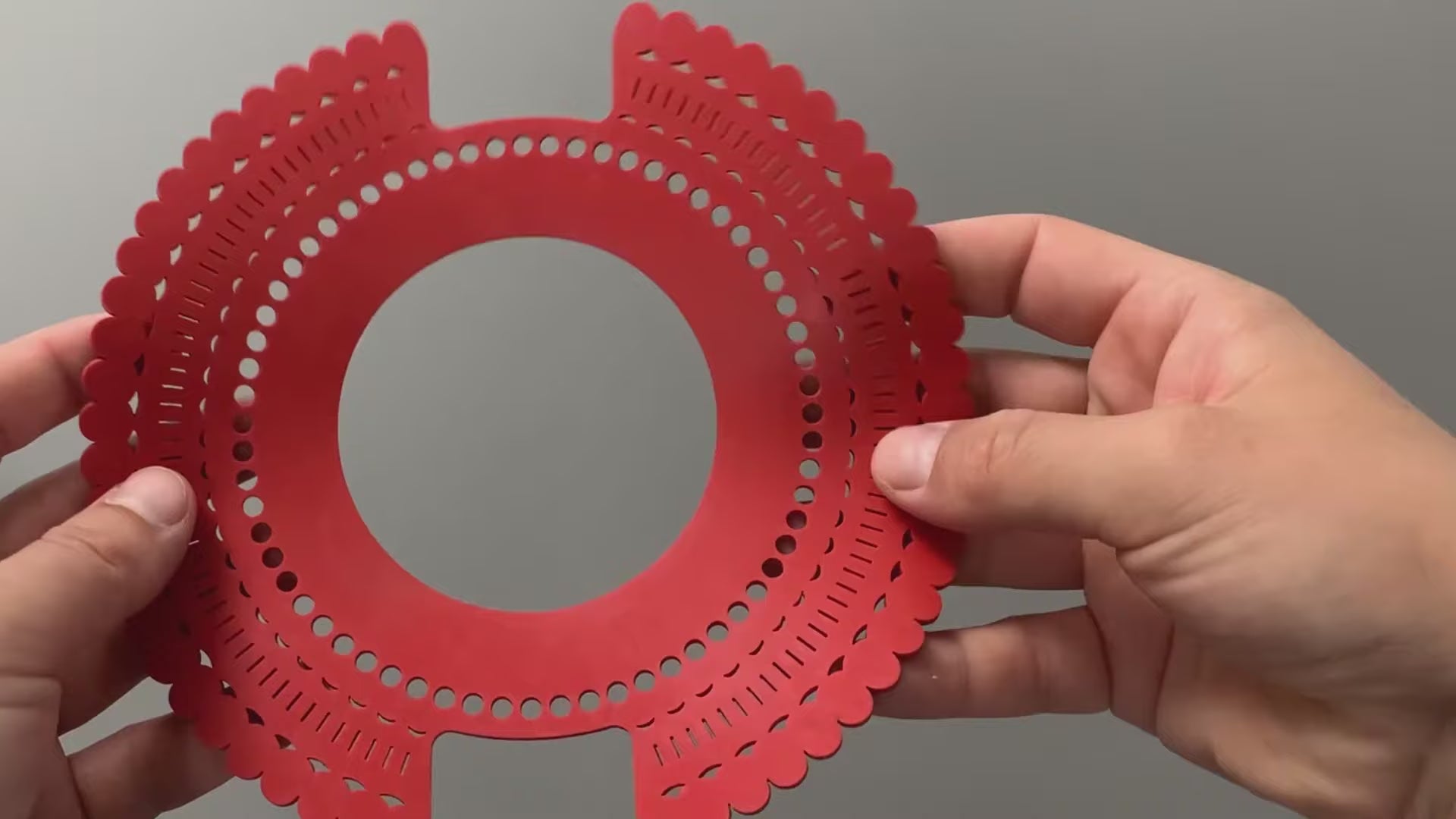
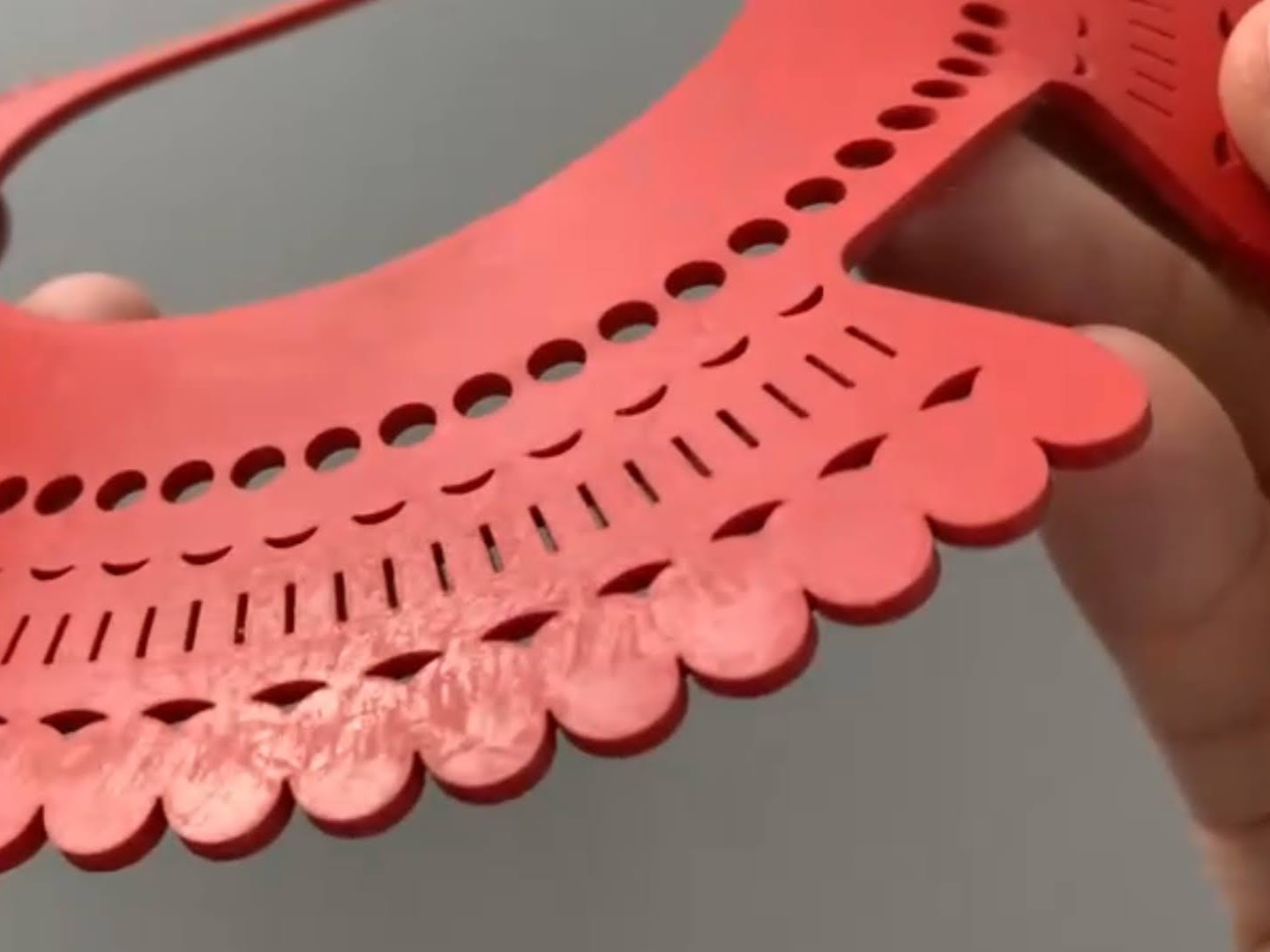
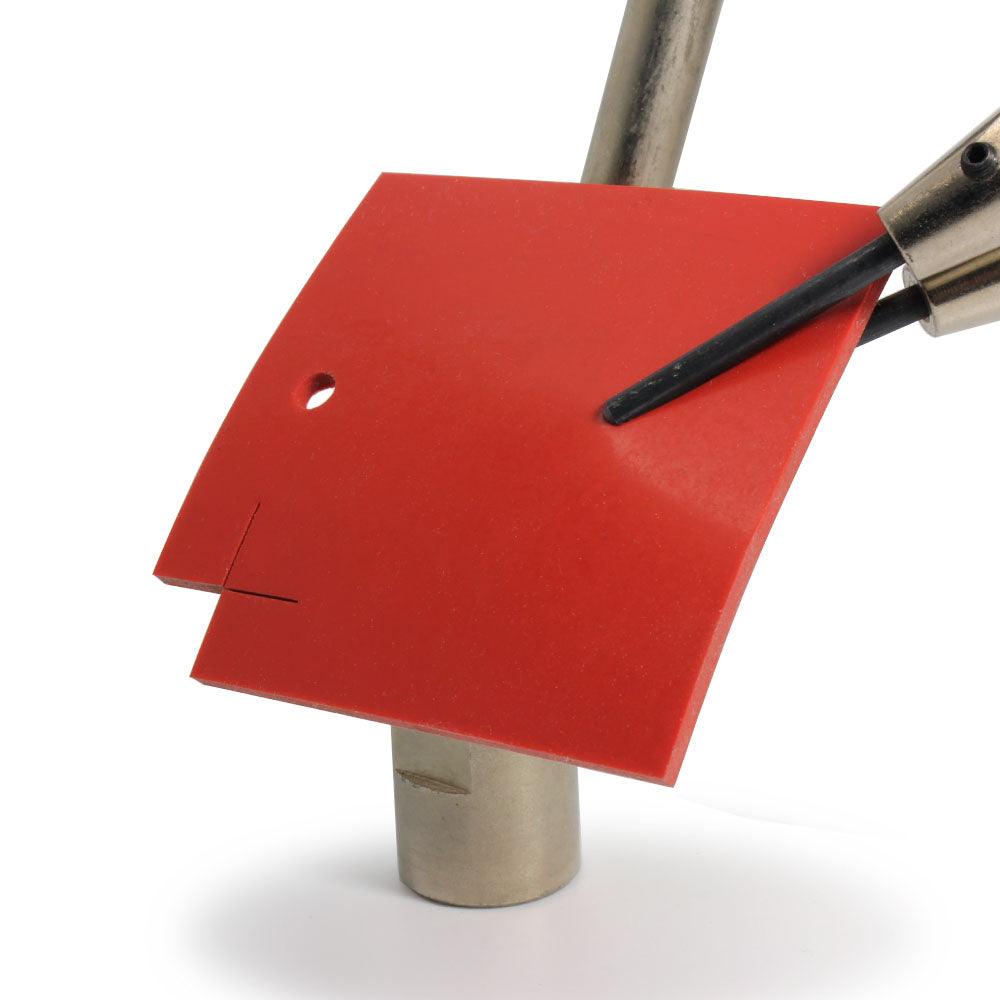
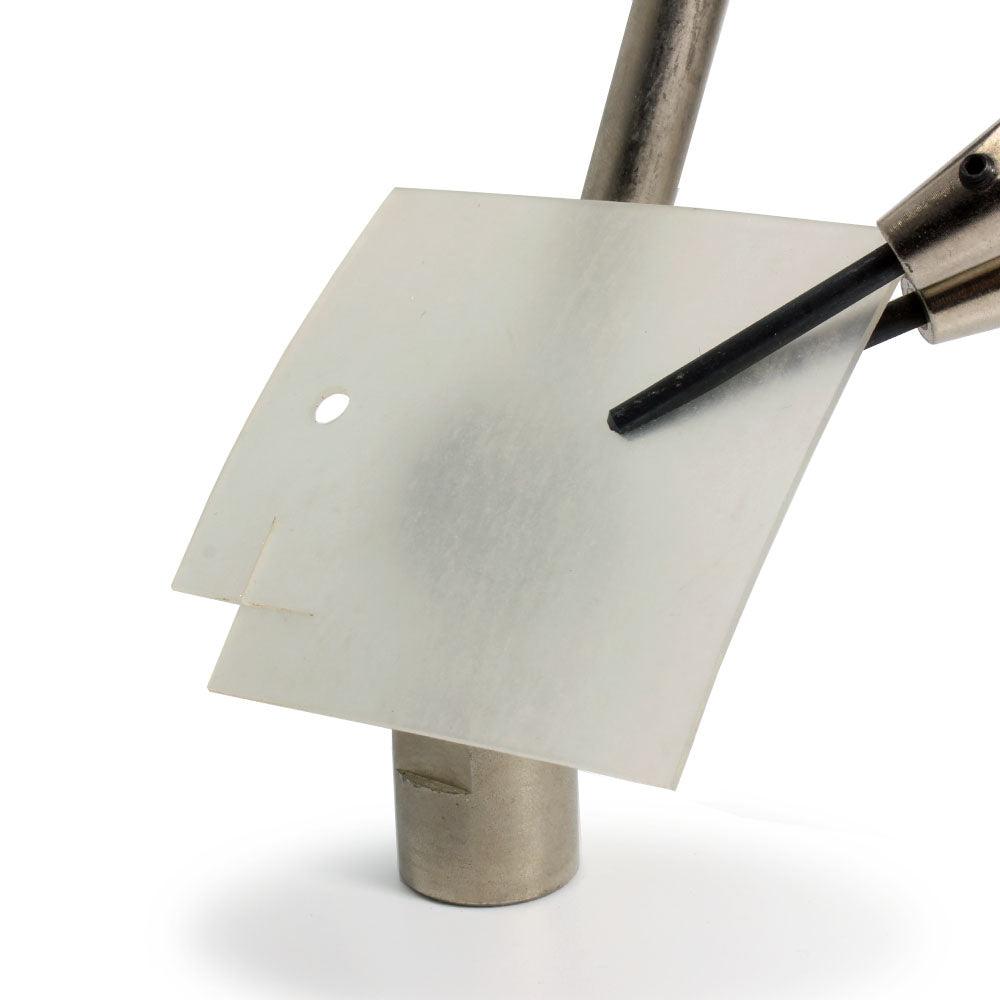
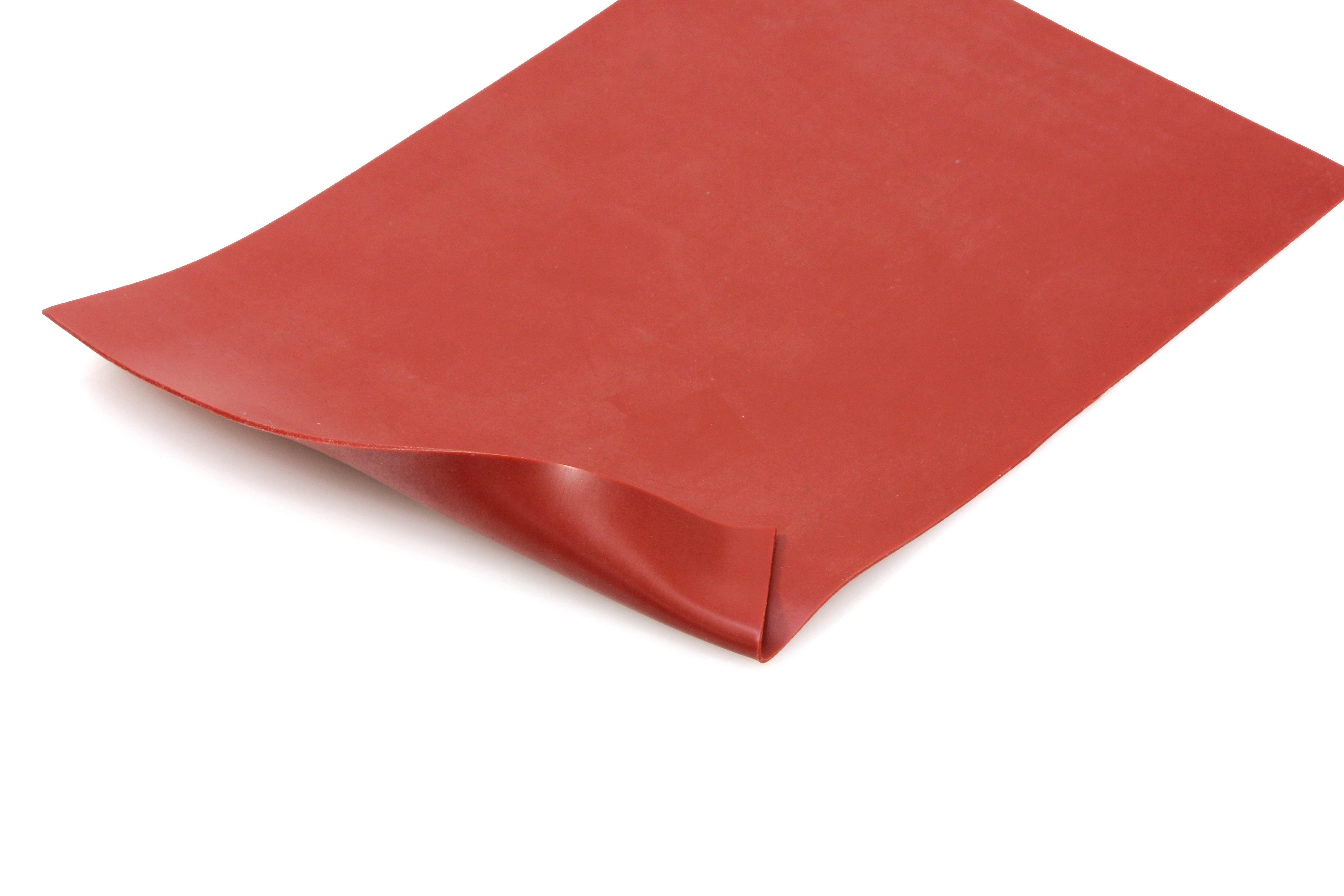
Silicone is a high-end rubber type with a very wide temperature range and high chemical resistance. The material is water-repellent, non-stick, and remains flexible, even under prolonged stress.
- Temperature range from -60 °C to +220 °C
- Excellent resistance to sunlight, gases, and chemicals
- Tough, tear-resistant, and stretchable
Typical applications: medical and food industry, baking mats, impact and heat protection
Features
Silicone has a temperature range of -60° C to +220°C and insulates well. It is tough, tear-resistant and can be stretched far. Silicone is reasonably resistant to chemicals and highly resistant to sunlight and various gases. It is water repellent and does not adhere.
Applications
Silicone is used in the pharmaceutical, medical and food industries. For example, as a baking mat or trivet, but also for seals, insulation and impact protection.
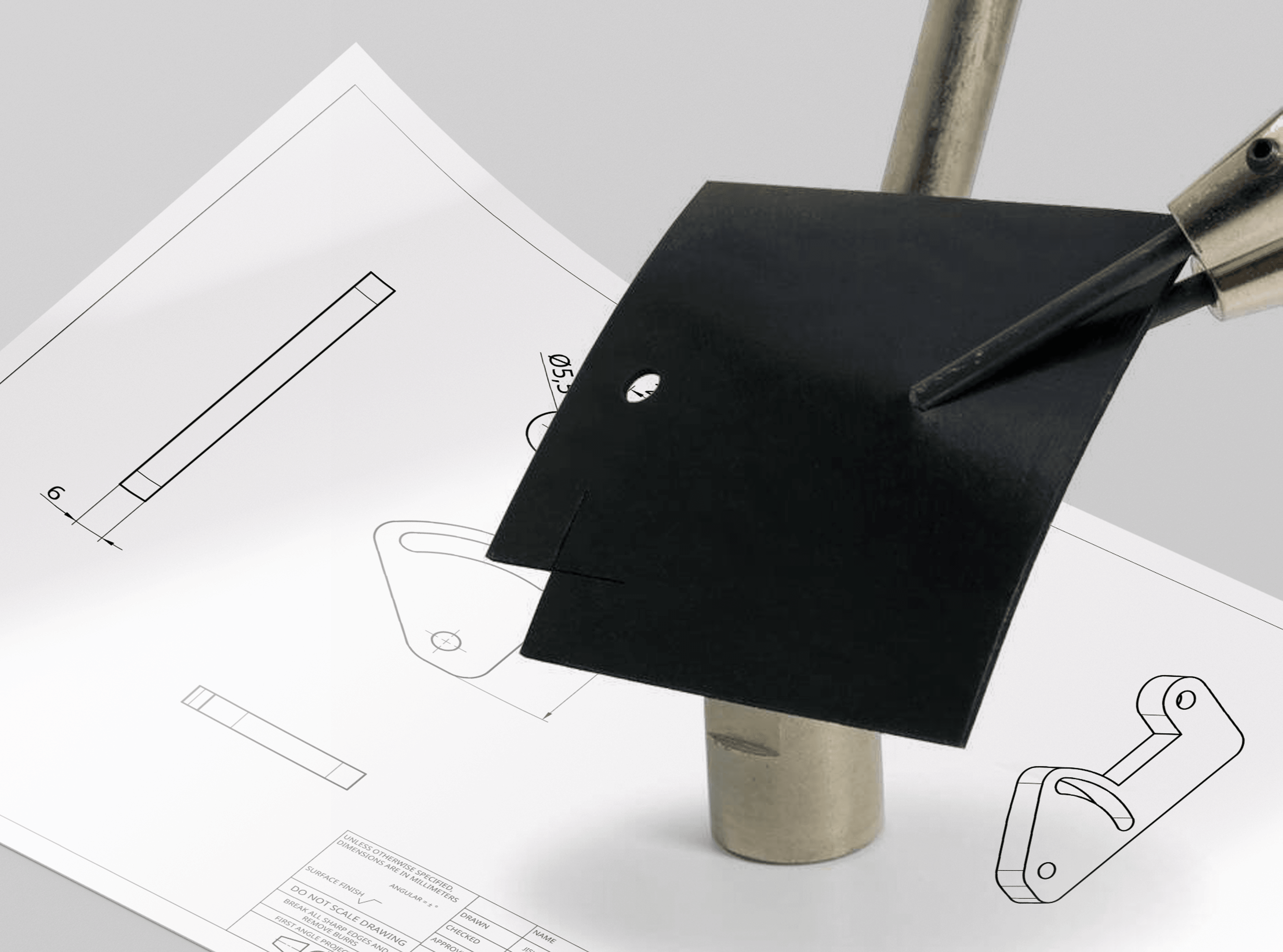
3. CR Rubber
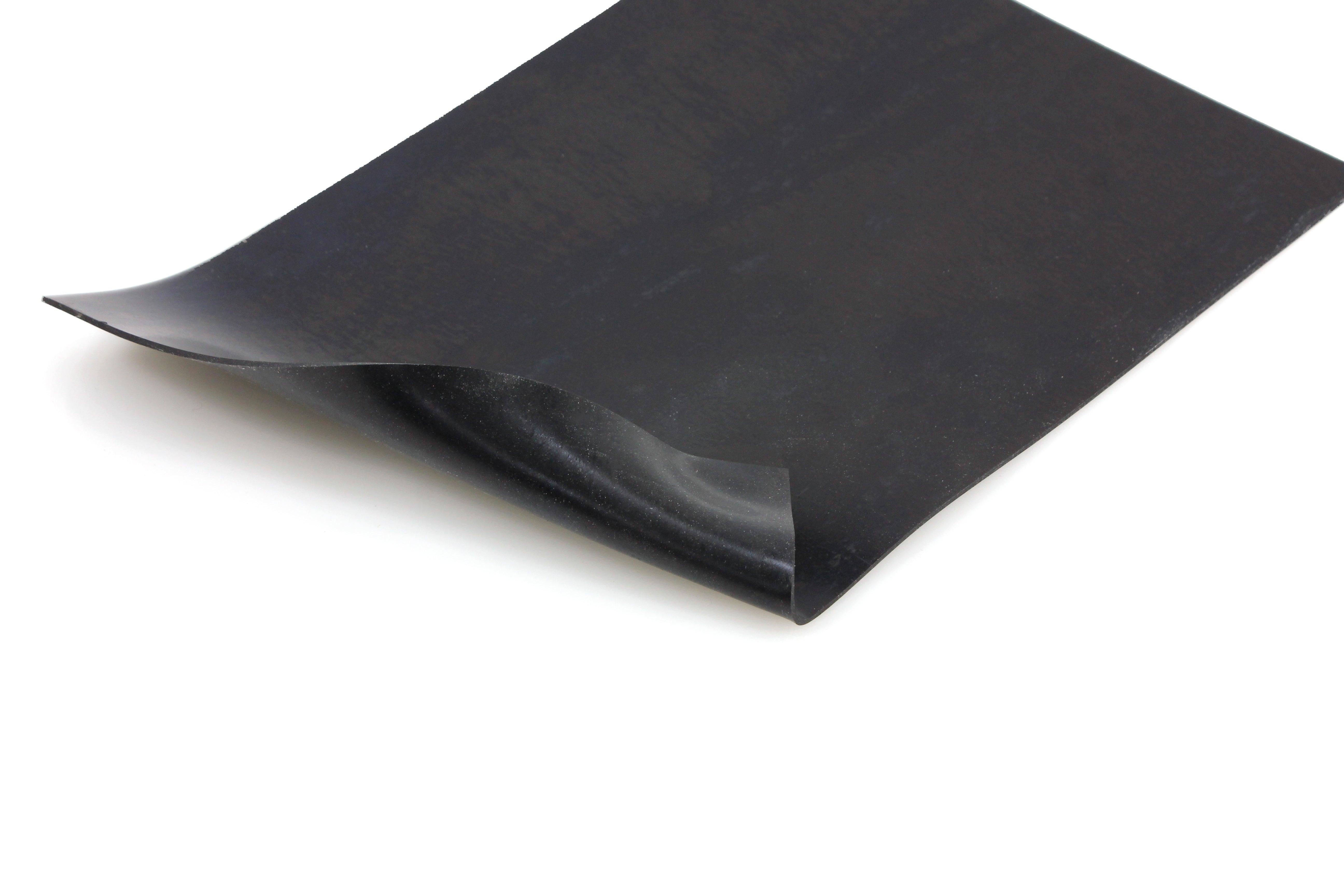
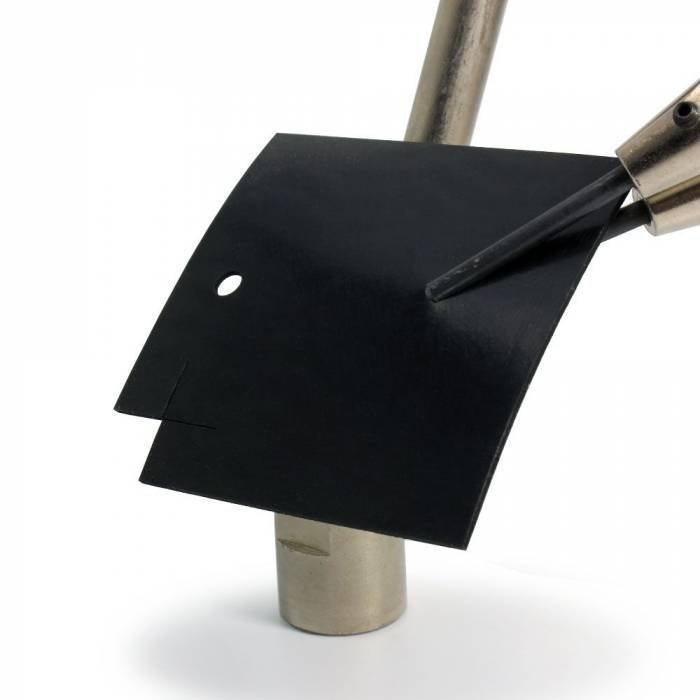
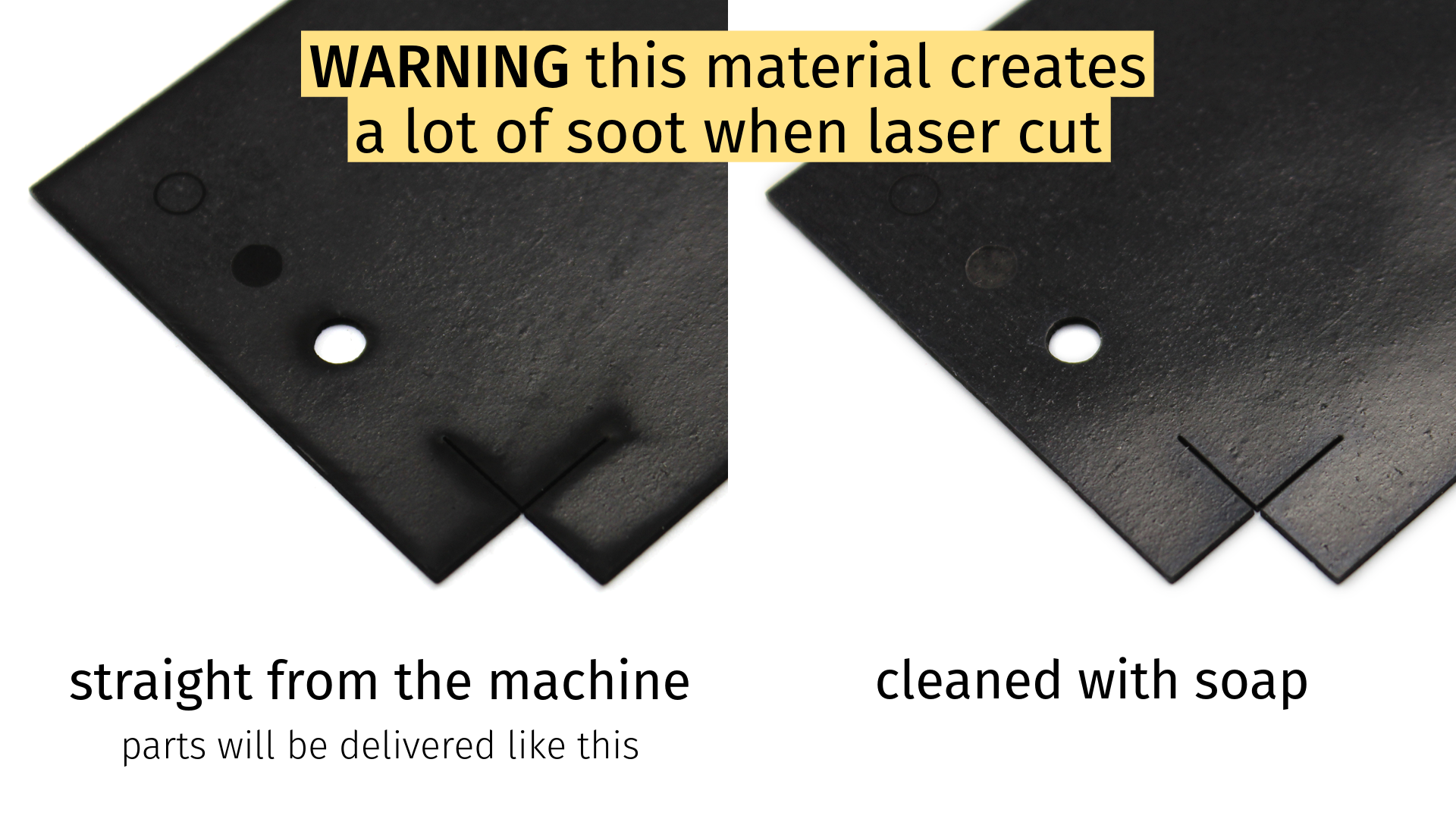
CR rubber (chloroprene/neoprene sheet rubber) is multi-functional and widely used in industry. It is wear-resistant and highly resistant to weather and wind, making it also suitable for outdoor applications.
- Weather-resistant and wear-resistant
- Good mechanical properties
- Suitable for general sealing applications
Typical applications: seals, flange gaskets, industrial applications
Properties
Neoprene sheet rubber is a good multipurpose rubber. It is weather resistant and abrasion resistant.
Applications
Neoprene sheet rubber is used, for example, for seals, gaskets and flange gaskets.
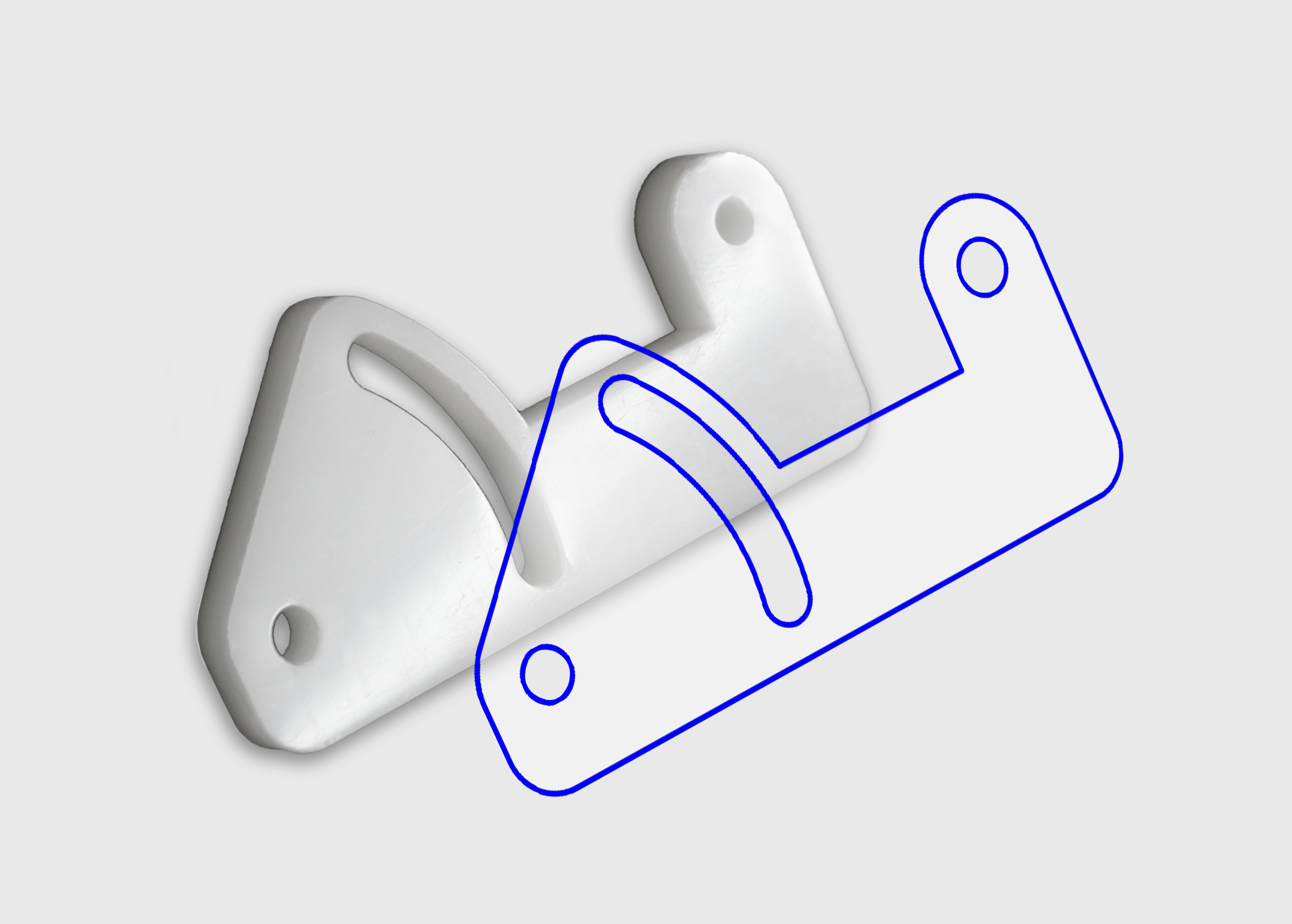
4. Neoprene Foam Rubber
Neoprene foam rubber is a closed-cell foam rubber. It is lightweight, flexible, and has excellent damping and insulating properties. Ideal for seals where compression and damping are important.
- Insulating and damping
- Flexible and wear-resistant
- Suitable for compression and insulation applications
Typical applications: seals, gaskets, insulation panels
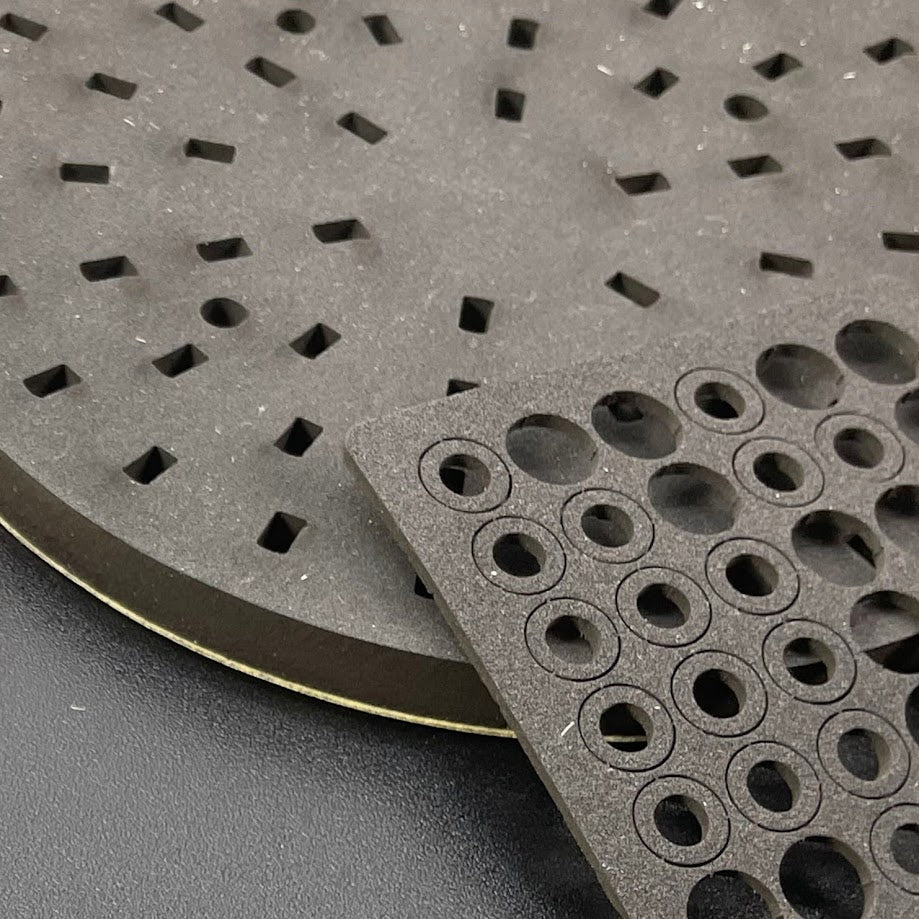
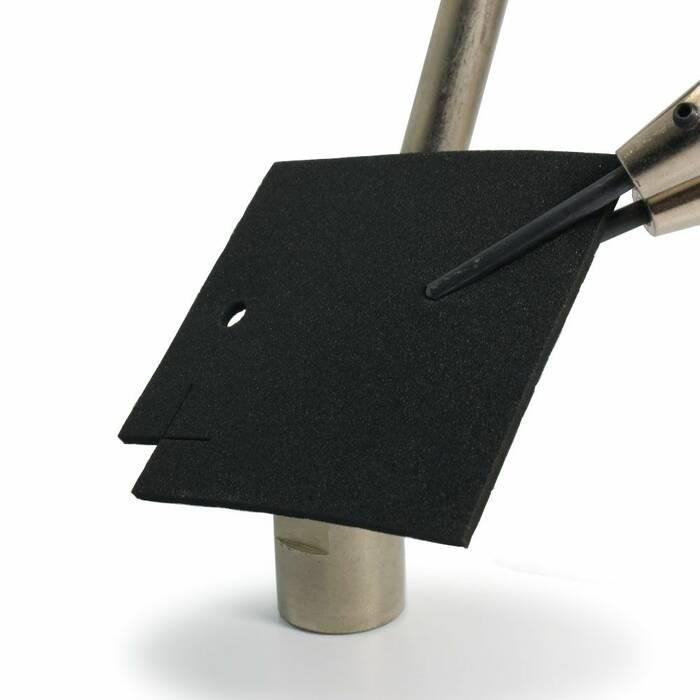
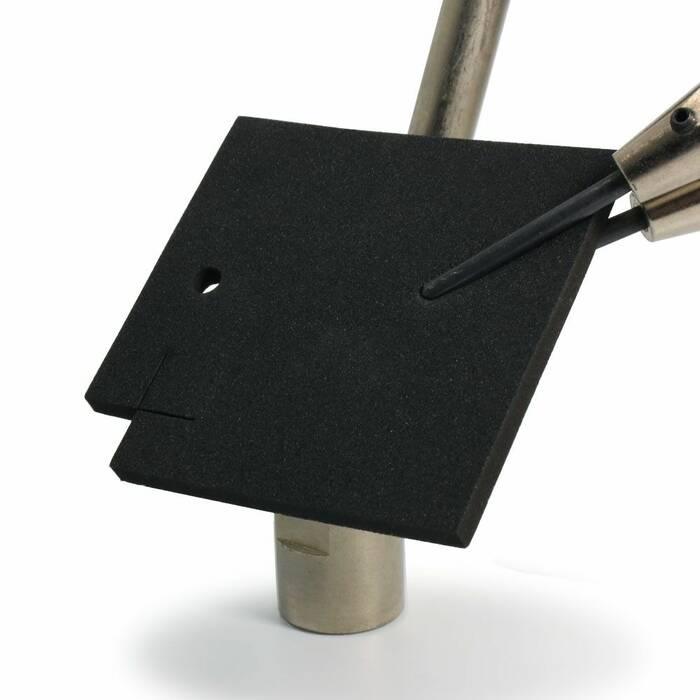
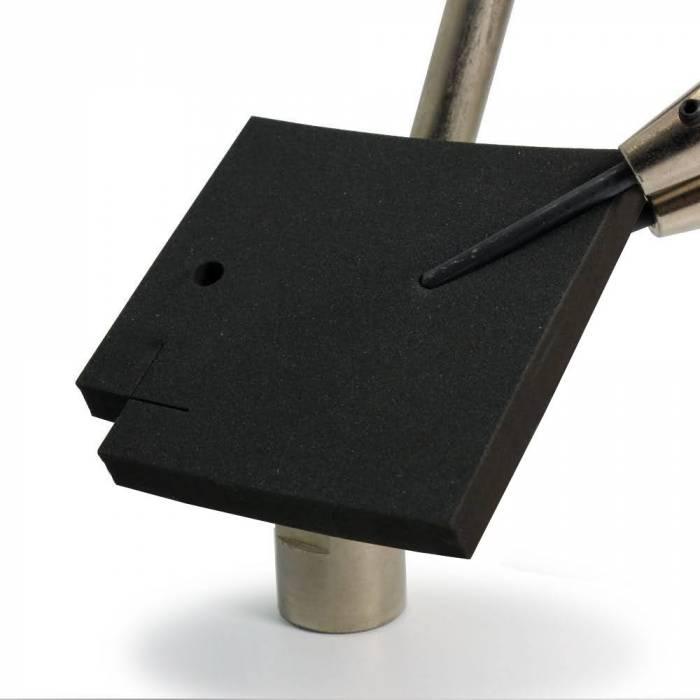
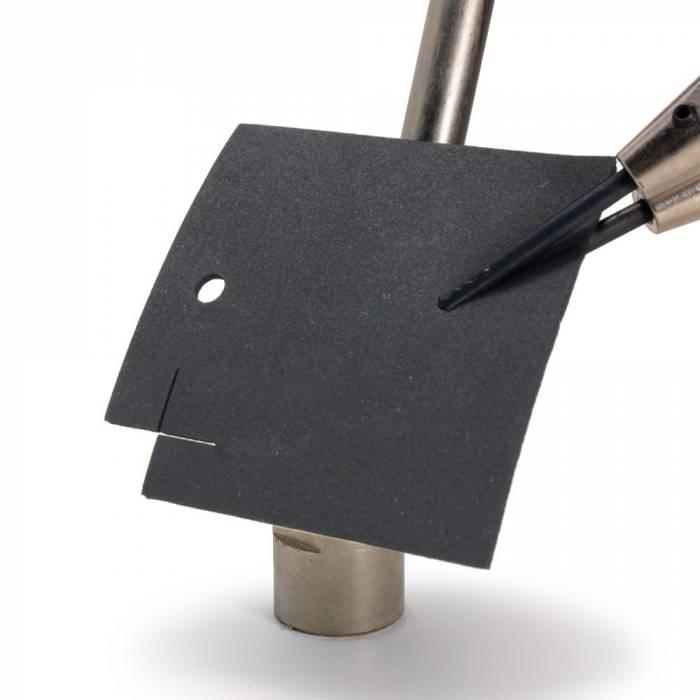
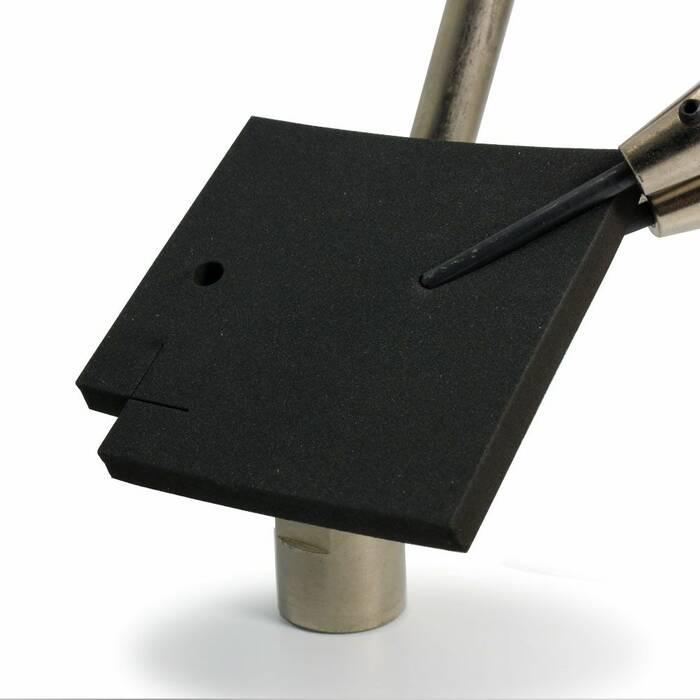
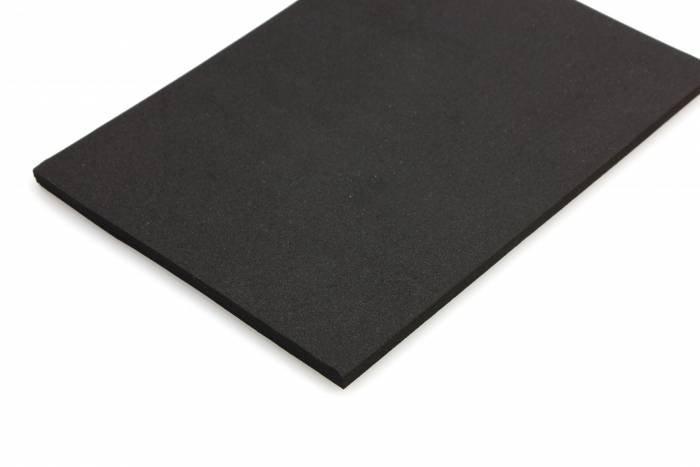
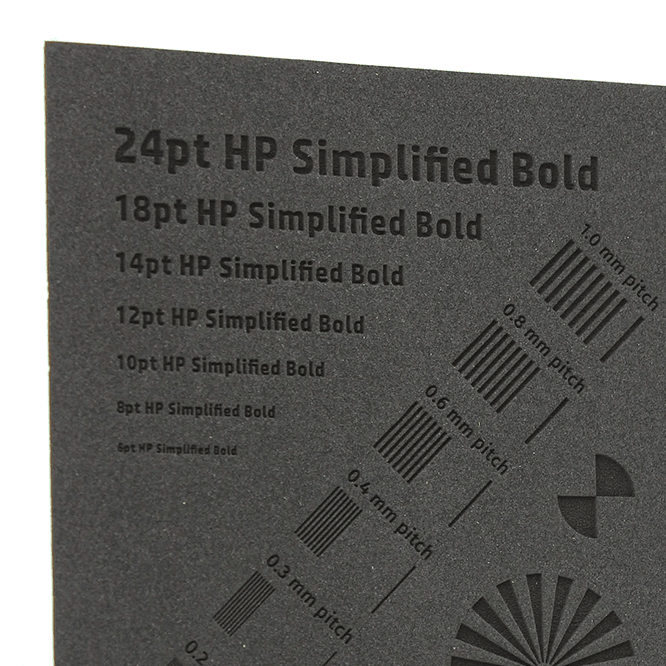
Neoprene closed-cell rubber is a soft foam rubber (CR) with closed cells. Have it custom laser cut for seals, gaskets, vibration dampers, and insulation in enclosures and machinery.
When to choose neoprene closed-cell rubber?
Choose closed-cell rubber if a seal needs to close with low compression force, for example, between a lid and a thin-walled enclosure. The closed cells block water and dust. The material resists oil, fuel, ozone, and UV light, so you can also use it outdoors and in machinery. If the gasket needs to withstand higher pressure or wear, solid CR rubber is the better choice. For firmer inlays, look at PE hard foam.
Laser cutting neoprene closed-cell rubber: what to expect
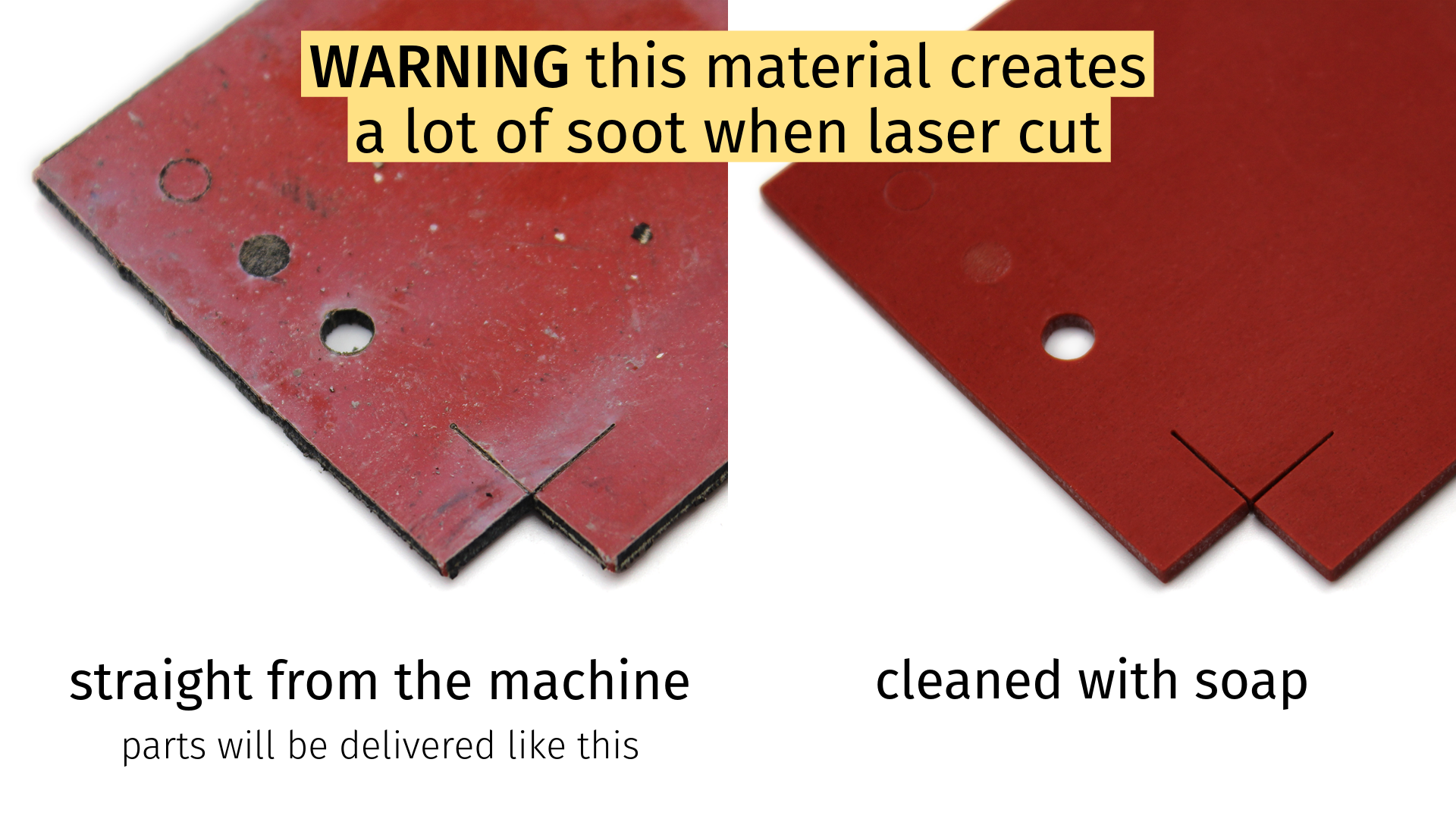
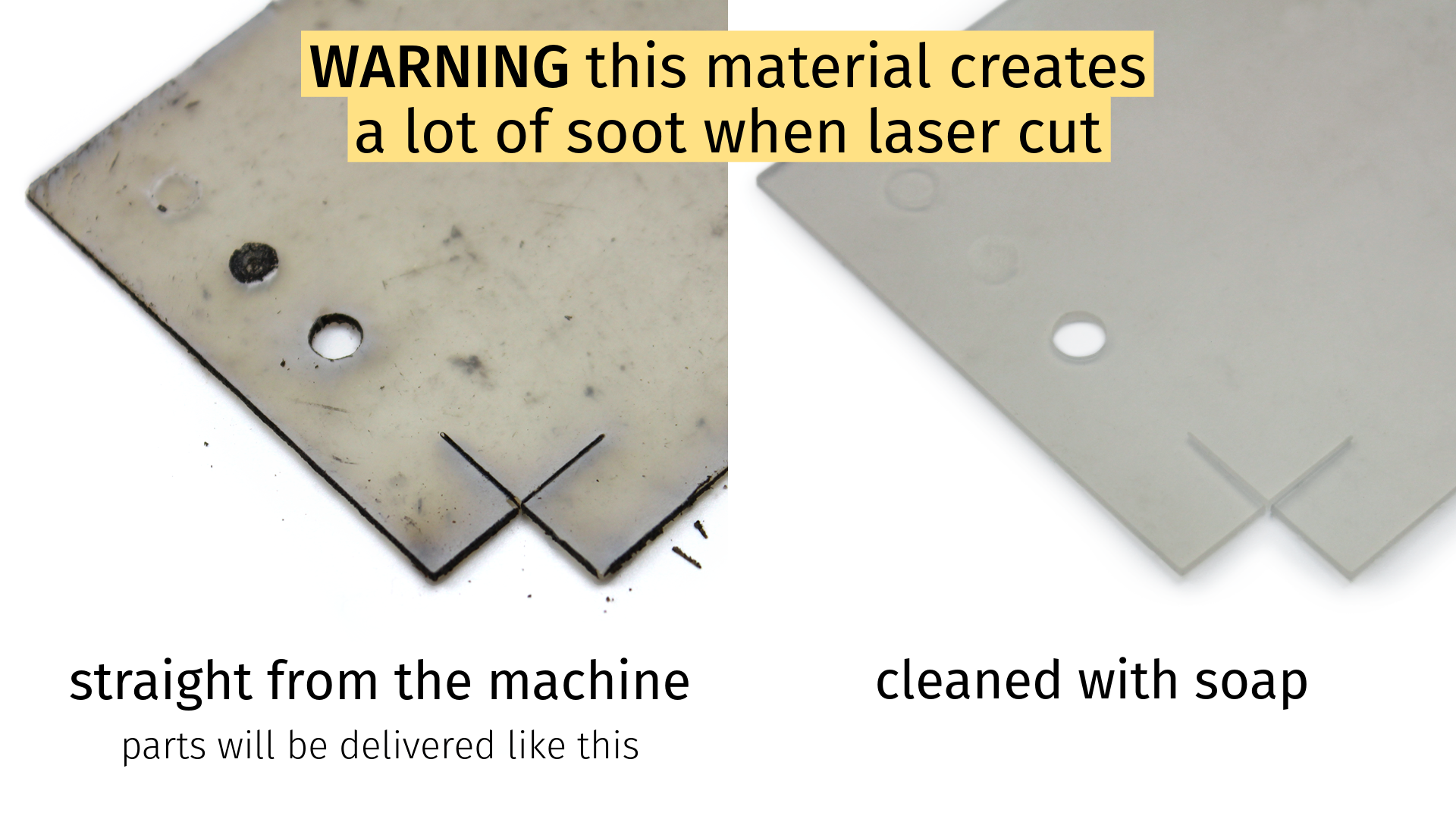
The laser cuts every contour, including bolt holes and locating pins, without a die-cutter. The cut edge will be slightly darker and may show light black residue. If you want to mount the gasket directly, choose the adhesive layer on the underside: the liner is cut along with it. Because the foam is soft, minimum wall widths apply. You'll find these in the design tips.

Compare foam samples?
Order a sample chain and compare all types of gasket in your own hand. This way, you can make a well-informed decision about your design.
Samples provide a representative impression of the quality Snijlab delivers.
View samples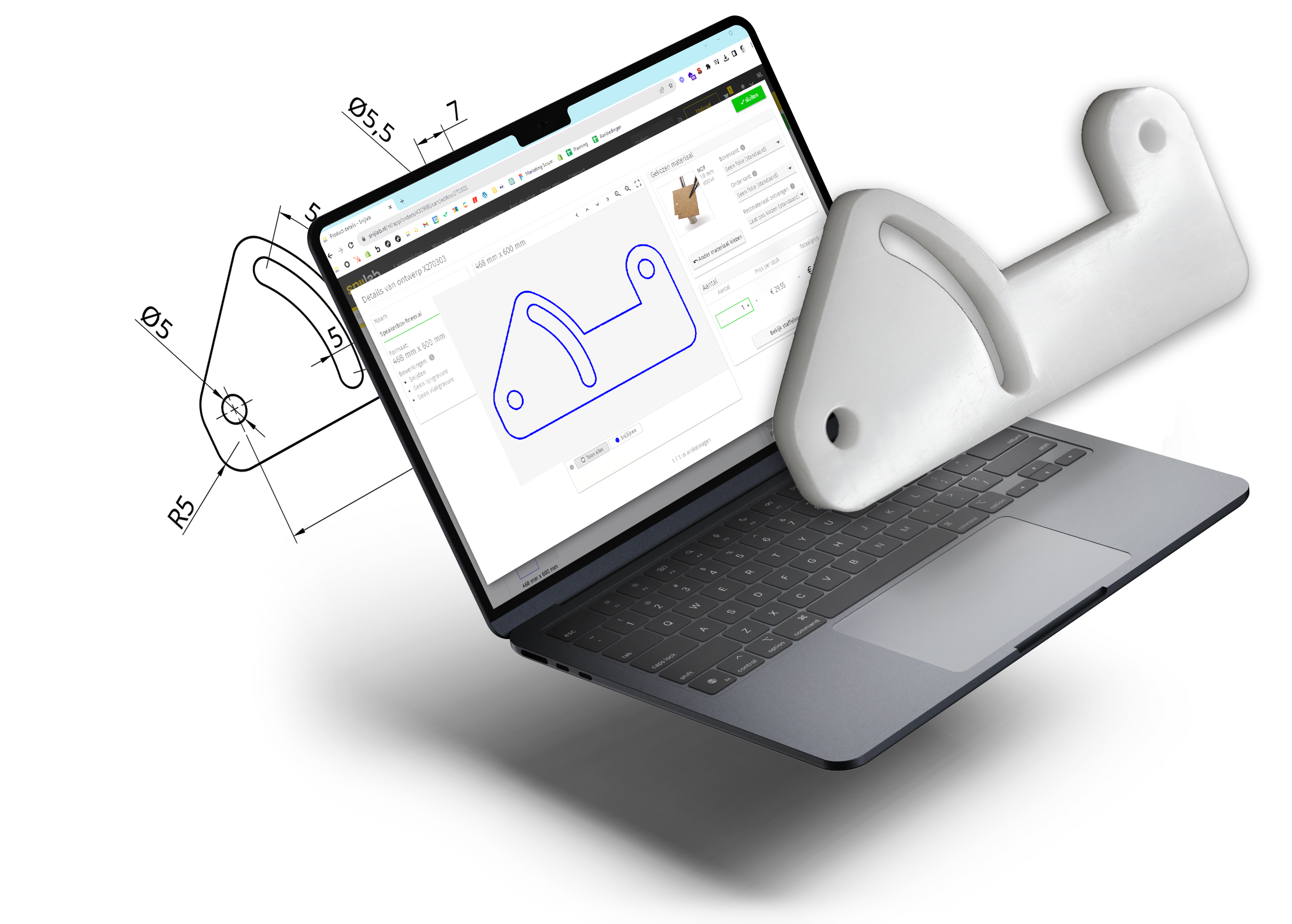
24/7 Instant quotes for laser cutting
Start your project today
- Create your design using our drawing guidelines
- Upload it at account.snijlab.co.uk
- Receive your parts on the delivery date of your choice
Learn how it works. Want to talk it over first? Our support team is ready to help!
Create a free account